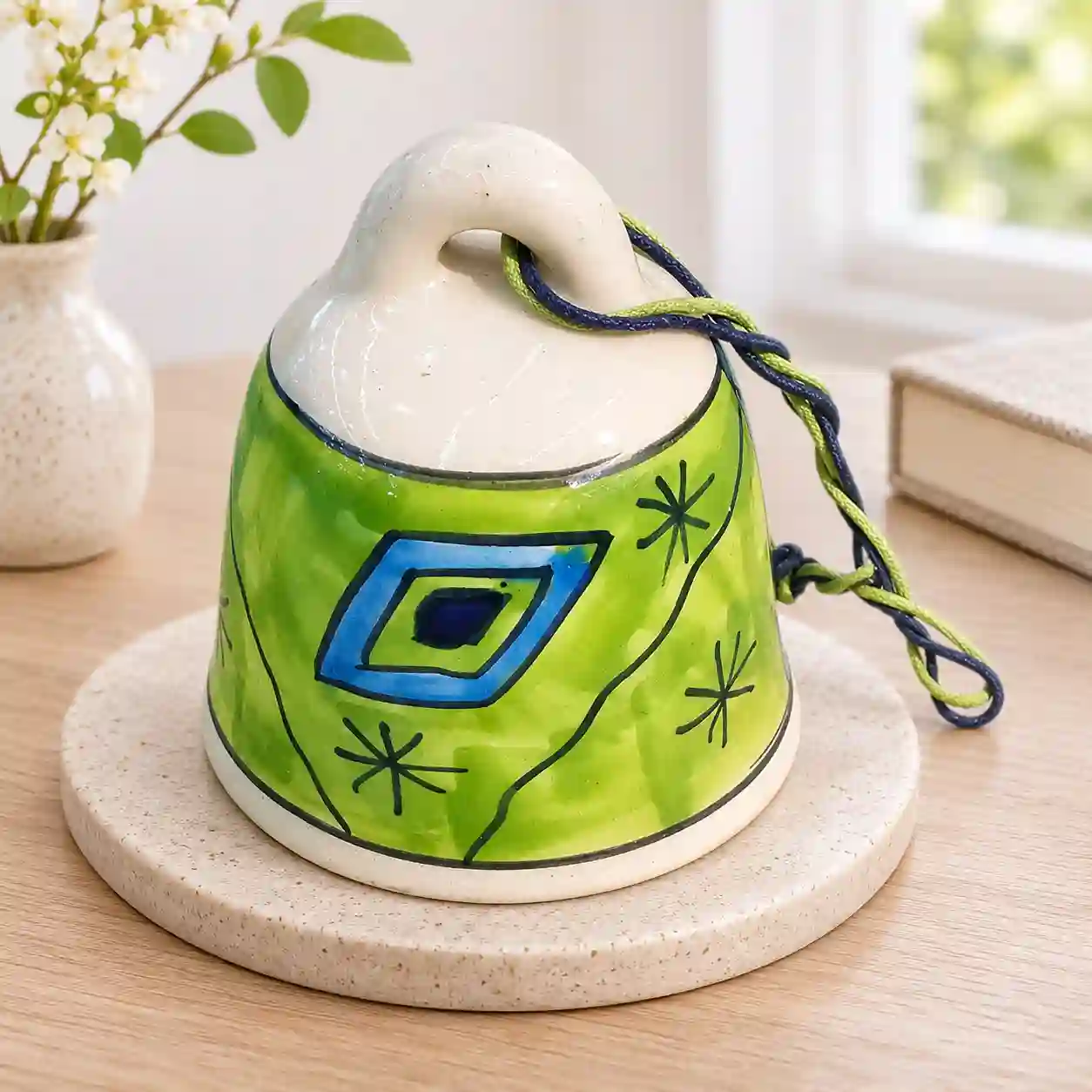
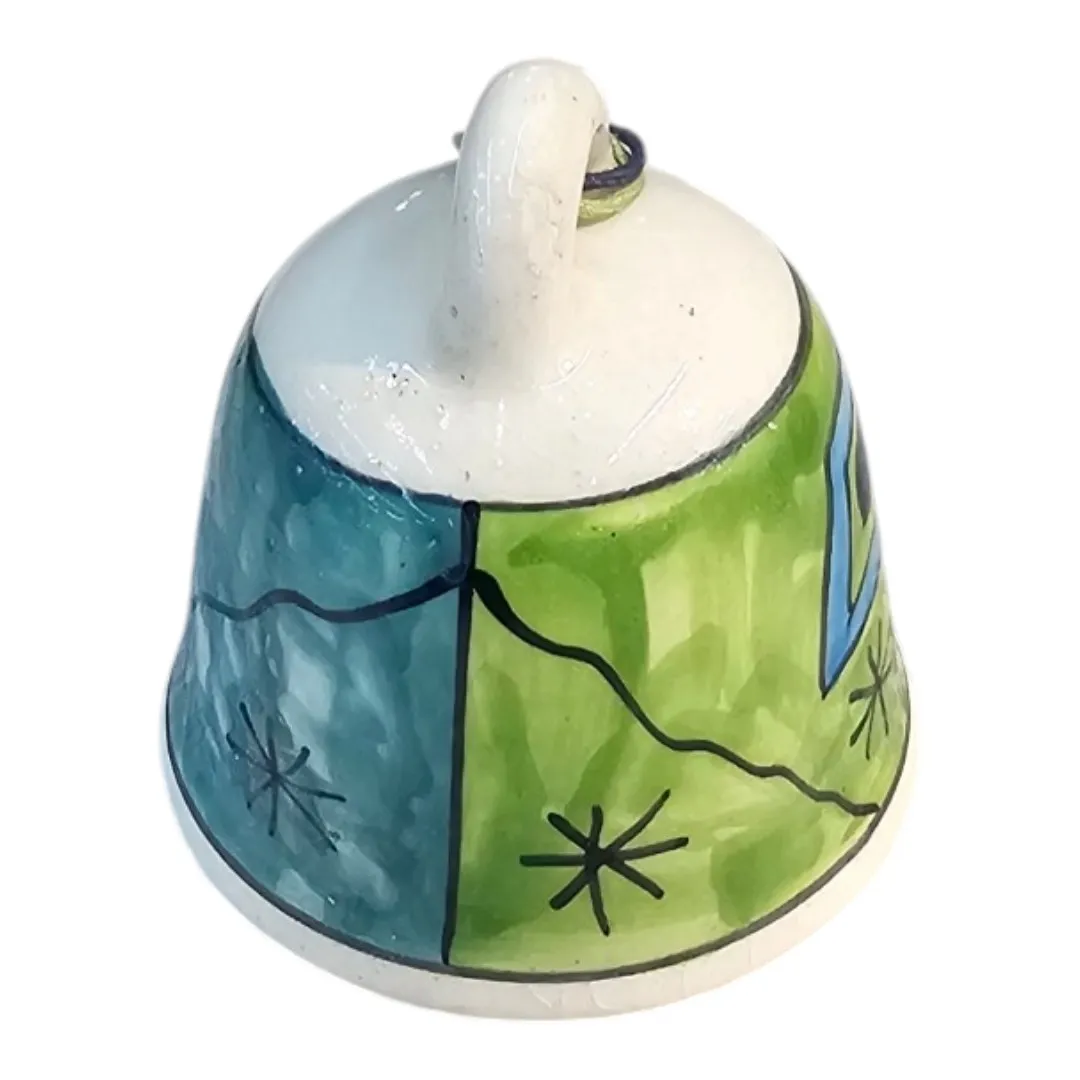
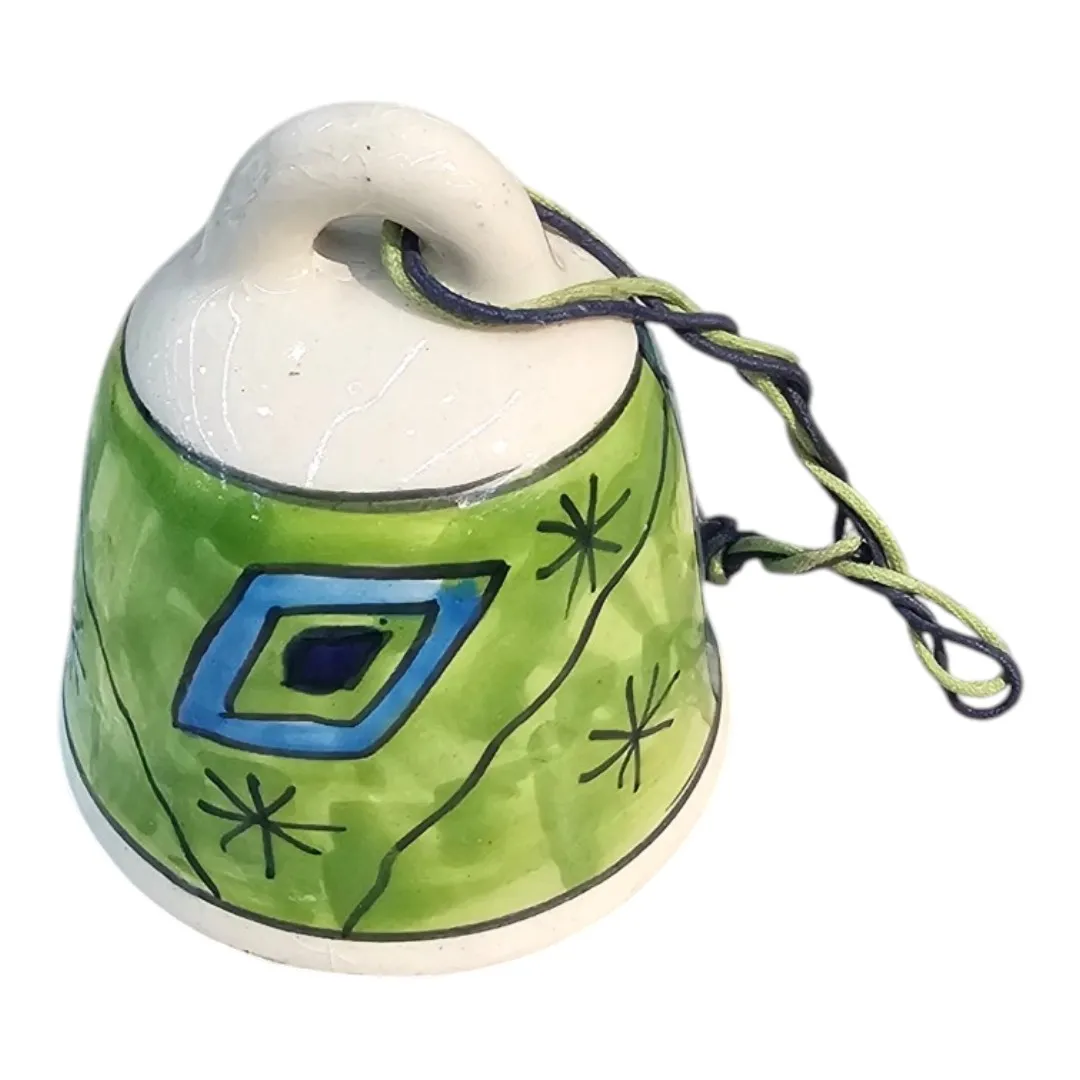
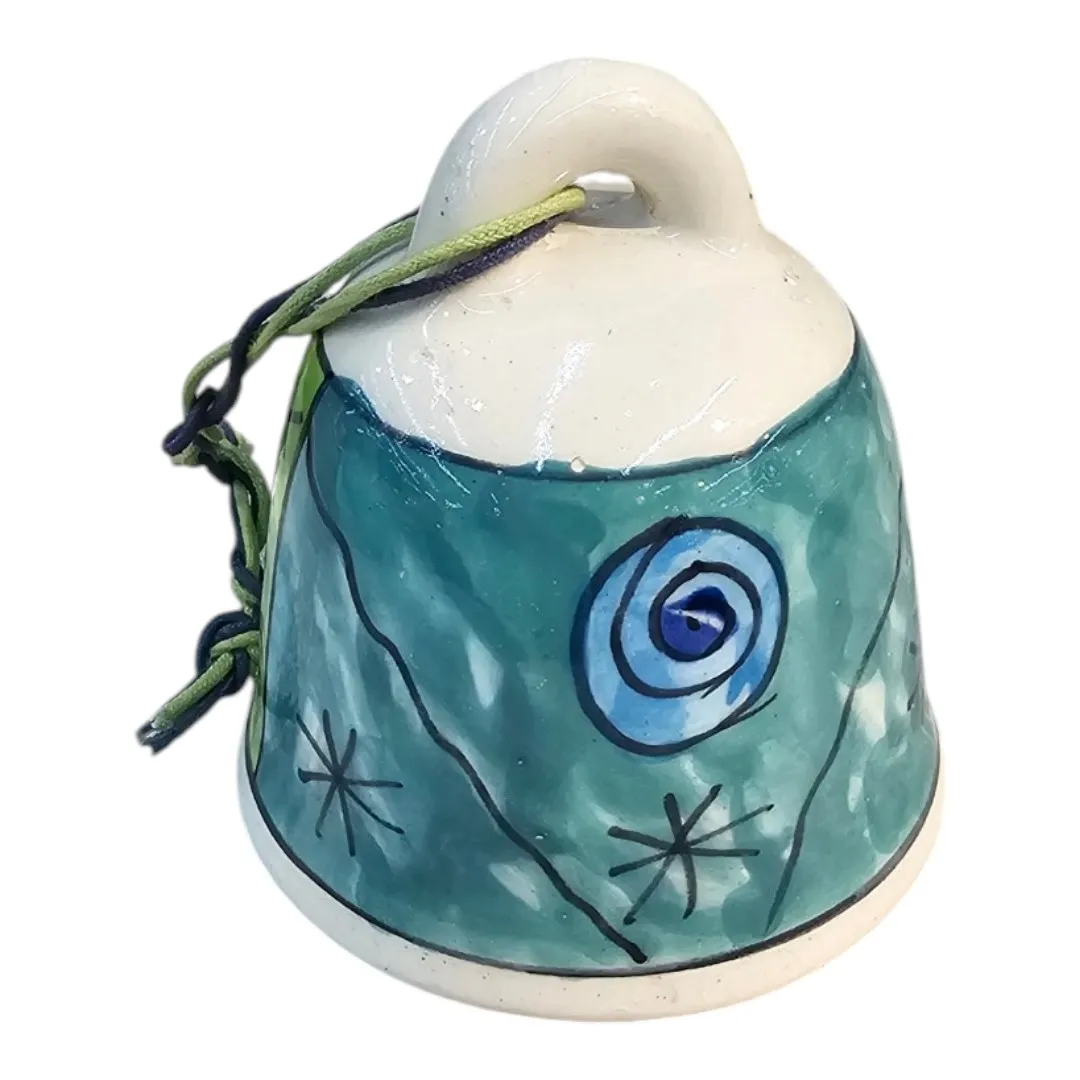
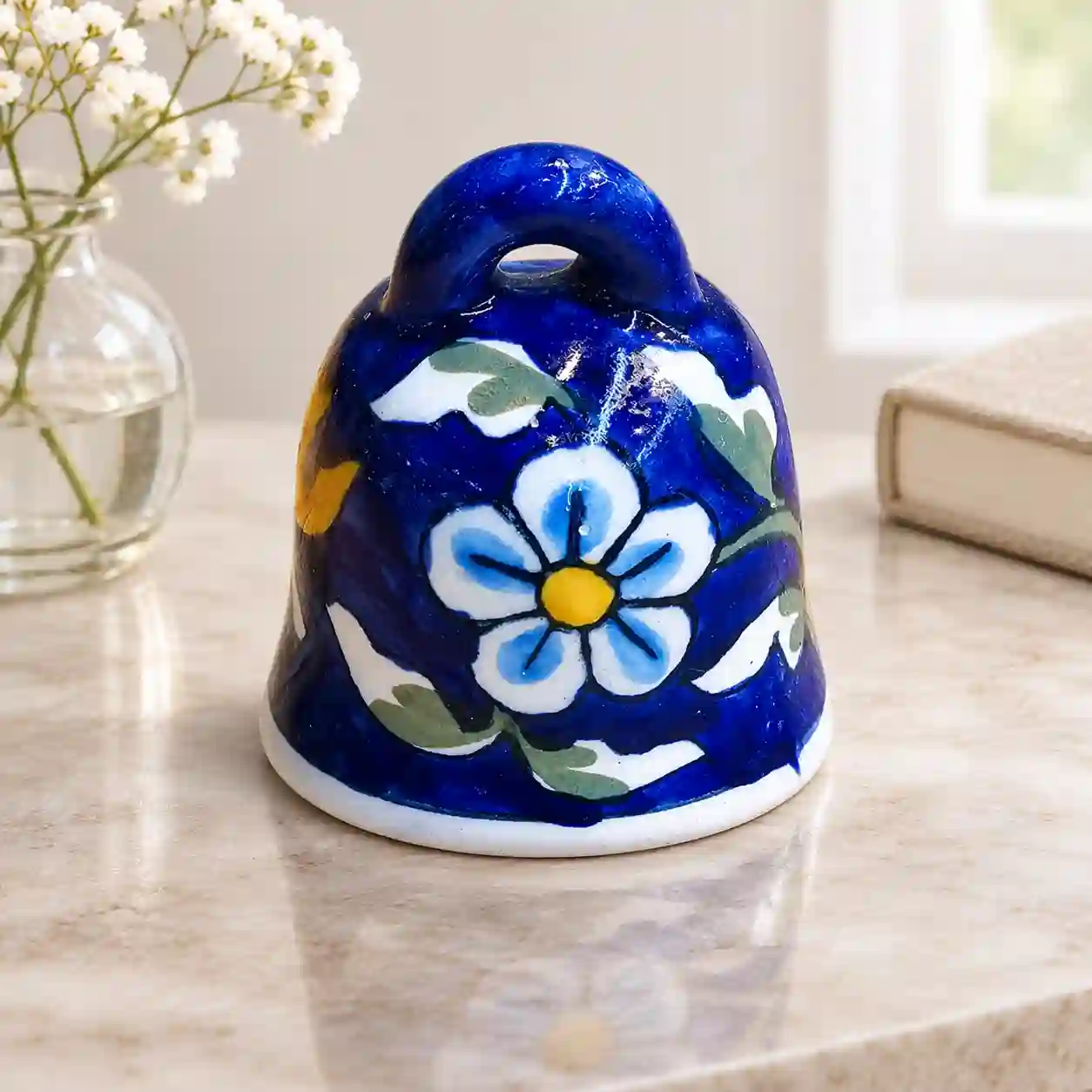
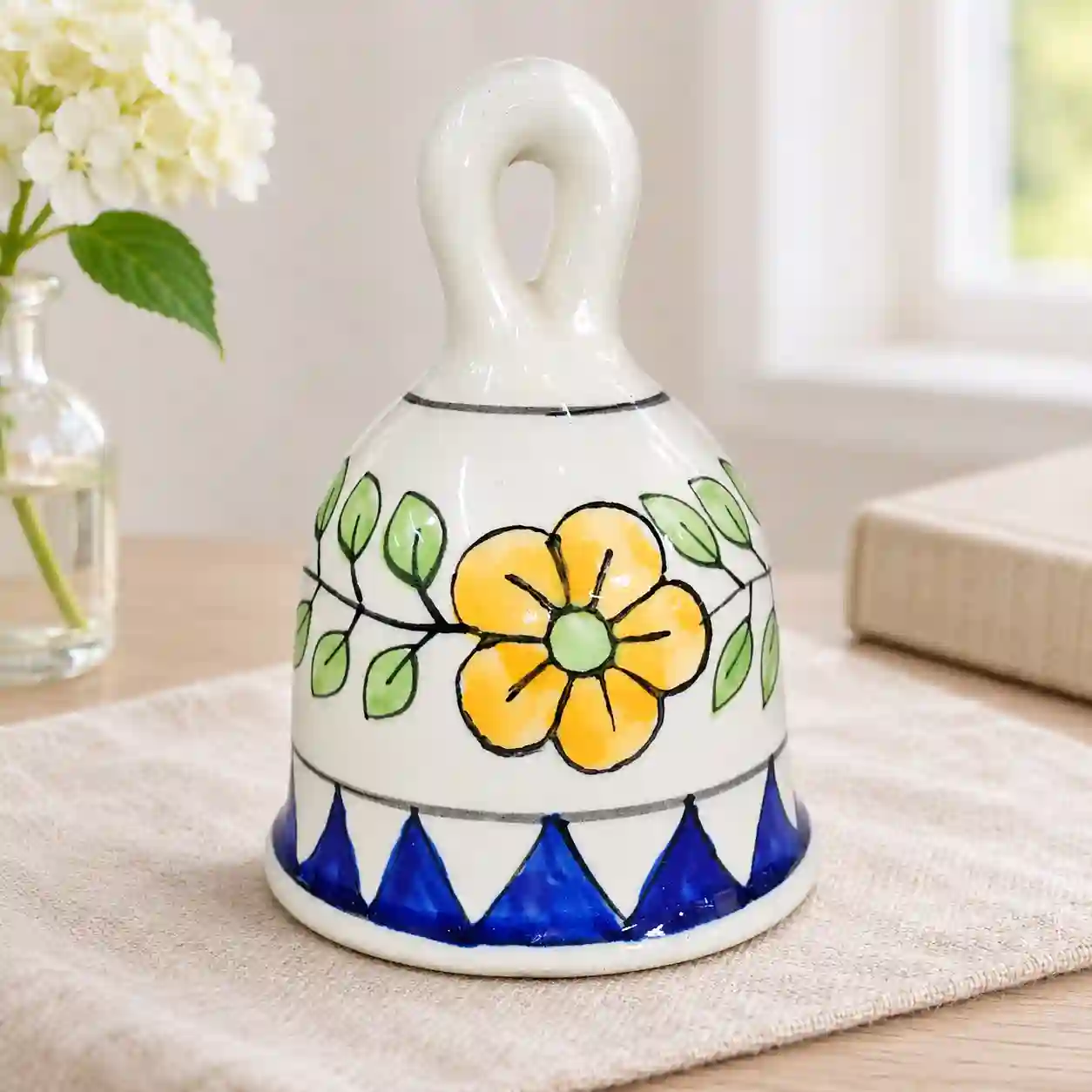
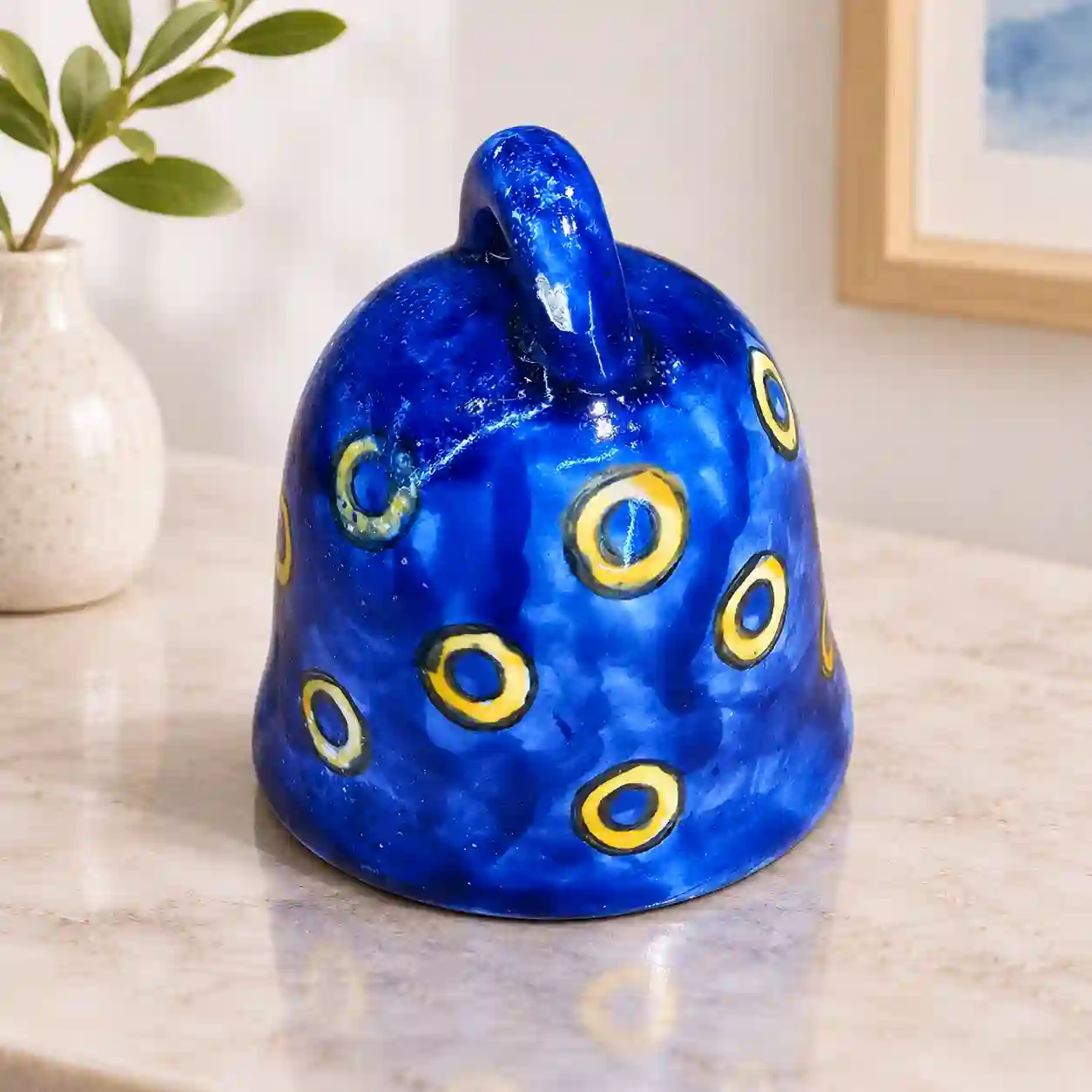
Conceived as a collectible work of decorative art rather than mere utility, The Indus Spiral & Lozenge Dual-Glaze Ceramic Bell transforms an ancient acoustic artifact into a luminous statement of heritage. With its swelling dome silhouette, ivory loop handle, and striking split-panel palette of lagoon teal and meadow green, it brings poised sculptural balance and storied resonance to contemporary interiors.
This design weaves together an ancient cultural lineage spanning South Asia and the Mediterranean. The tradition of resonant ceramic bells traces its earliest roots to the Bronze Age bell-making kilns of the Indus Valley Civilization (along the Indus and Ganges rivers) and ancient Mesopotamia, where resonant vessels were rung to invoke auspicious blessings and welcome travelers. Over millennia, this heritage evolved along historic Silk Road trade routes into the vibrant glazed pottery clusters of Northern India—particularly Khurja in Uttar Pradesh and Rajasthan—where Persian, Central Asian, and Mediterranean ceramic motifs converged. The dual-sided iconography carries deep symbolic meaning: the cobalt spiral on the teal face represents the eternal flow of water, cosmic evolution, and renewal found in ancient Harappan and Minoan pottery, while the concentric diamond lozenge on the green face echoes protective eye amulets and weaver's medallions across Anatolian, Persian, and Rajput folk traditions, flanked by eight-pointed astral stars and meandering river lines. Today, historic exemplars of this glazed ceramic lineage remain preserved in the National Museum in New Delhi and major state heritage collections across Northern India.
Executed through hereditary underglaze ceramic painting, artisans first throw refined white clay on the potter's wheel into a resonant bell dome and loop handle. Once bisque-fired, master painters divide the dome with a crisp black vertical seam, brushing translucent mineral washes of teal and meadow green before detailing the spiral, nested diamond, and starburst motifs freehand. A transparent vitreous glaze is flooded over the form before high-temperature kiln firing fuses the pigments permanently beneath a glass-like barrier—a patient, weeks-long endeavor requiring generational expertise.
Formed from dense, high-fired ceramic, the bell offers reassuring weight and crisp acoustic clarity. Subtle variations in mineral wash density and organic glaze pooling authenticate its genuine handmade origin. Because every line and star is brushed freehand, no two bells are identical, positioning each piece as a singular, collectible heirloom. In modern residences, this dual-faced bell bridges centuries-old Indian ceramic mastery with expressive folk symbolism, infusing entryways and living spaces with joyful color and tactile soul.
STYLE DETAILS
Architectural Influences: Indo-Gangetic bell-making traditions, ancient Indus Valley and Minoan spiral pottery, and Northern Indian glazed ceramic ateliers.
Pattern Style: Dual-sided composition featuring a concentric cobalt spiral on teal and a nested diamond lozenge on meadow green, framed by meandering wave lines and eight-pointed starbursts.
Decorative Elements: Lagoon teal, meadow green, imperial cobalt, sky blue, ivory white, and jet-black mineral pigments beneath a high-gloss glaze, paired with a braided navy-and-olive cord.
CRAFTSMANSHIP DETAILS
Technique Used and Its Significance: Traditional underglaze ceramic painting and high-temperature kiln firing, preserving centuries of Indo-Persian and South Asian pottery heritage in India.
Skill Level Required: Master ceramic painters possessing over 15 years of freehand brushwork apprenticeship.
Distinguishing Handcrafted Features: Hand-drawn black dividing seams, translucent watercolor-like mineral washes, and an organically shaped ivory loop handle.
Finishing Process: Underglaze color application, vitreous clear glazing, and multi-stage kiln firing.
CERAMIC FINISH CHARACTERISTICS
Type and Grain Richness: Smooth, fine-grained ivory ceramic body exhibiting luminous optical depth beneath the glaze.
Depth and Texture: Translucent teal and green washes create painterly tonal depth and a glass-like sheen.
Difference from Mass-Produced Furniture: Freehand brushwork and kiln-fired glaze pooling reflect living human artistry rather than printed factory uniformity.
Longevity and Aging Beauty: Vitrified ceramic construction ensures museum-grade permanence, resisting fading or surface wear across generations.
WHY YOU’LL LOVE IT / INVESTMENT VALUE
Offers two distinct artistic viewpoints in one piece—rotating between lagoon teal and meadow green.
Carries a profound cultural narrative of Indus bell traditions, water spirals, and protective diamond lore.
Forged from high-fired vitrified ceramic for multi-generational permanence.
One-of-a-kind hand-painted execution guarantees true collector rarity.
Transforms everyday interior styling into an elevated, artful ritual of sound and color.
SUGGESTIONS FOR INCORPORATION
Placement Ideas: Suspend in a sunlit entryway window, hang from a decorative wall hook, or display on an open library shelf.
Styling Tips: Pair with carved mango-wood furnishings, honed limestone surfaces, and natural woven textiles to echo its earthy green and aquatic blue tones.
Lifestyle Use: Serves as an expressive acoustic chime, welcoming entryway talisman, or unique decorative centerpiece.
DETAILED SPECIFICATIONS
Color: Dual-sided lagoon teal and meadow green with cobalt blue, sky blue, ivory white, and jet-black accents.
Finish: High-gloss transparent vitreous protective glaze.
Origin: Handcrafted in India.
Age/Period Influence: Ancient Indus-Mediterranean Symbolism & Traditional Indian Glazed Pottery.
PERFECT FOR
Entryway consoles, sunlit foyers, and window alcoves
Living room mantelpieces and open bookshelf styling
Boutique hospitality suites and curated gallery spaces
Artisanal housewarming and cultural gifting
INTERIOR TYPES
Modern Luxury, Contemporary Arabian, Bohemian Luxe, Eclectic Heritage, Coastal Organic, Traditional Mediterranean