Wipe gently with a soft, dry microfiber cloth to maintain the high-gloss glaze luster.
Avoid abrasive scouring pads or harsh chemical bleaches on the hand-painted surface.
Handle with care to protect the acoustic ceramic body.

Product code: 18228 E
Dimensions: 7.5 (Length) x 7.5 (Width) x 8 (Height) cm
Material: High-fired ceramic (refined clay and quartz) with natural underglaze mineral pigments.
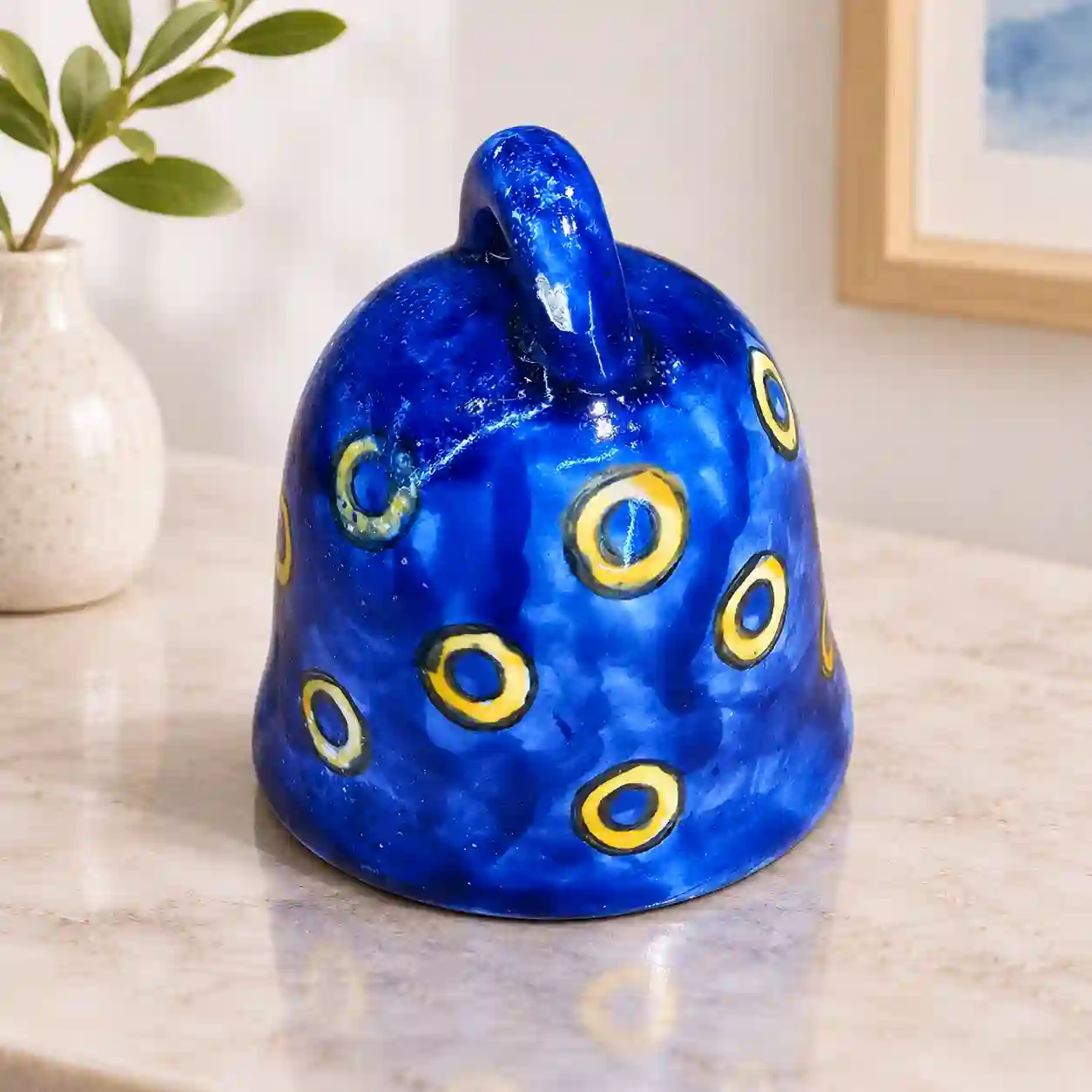
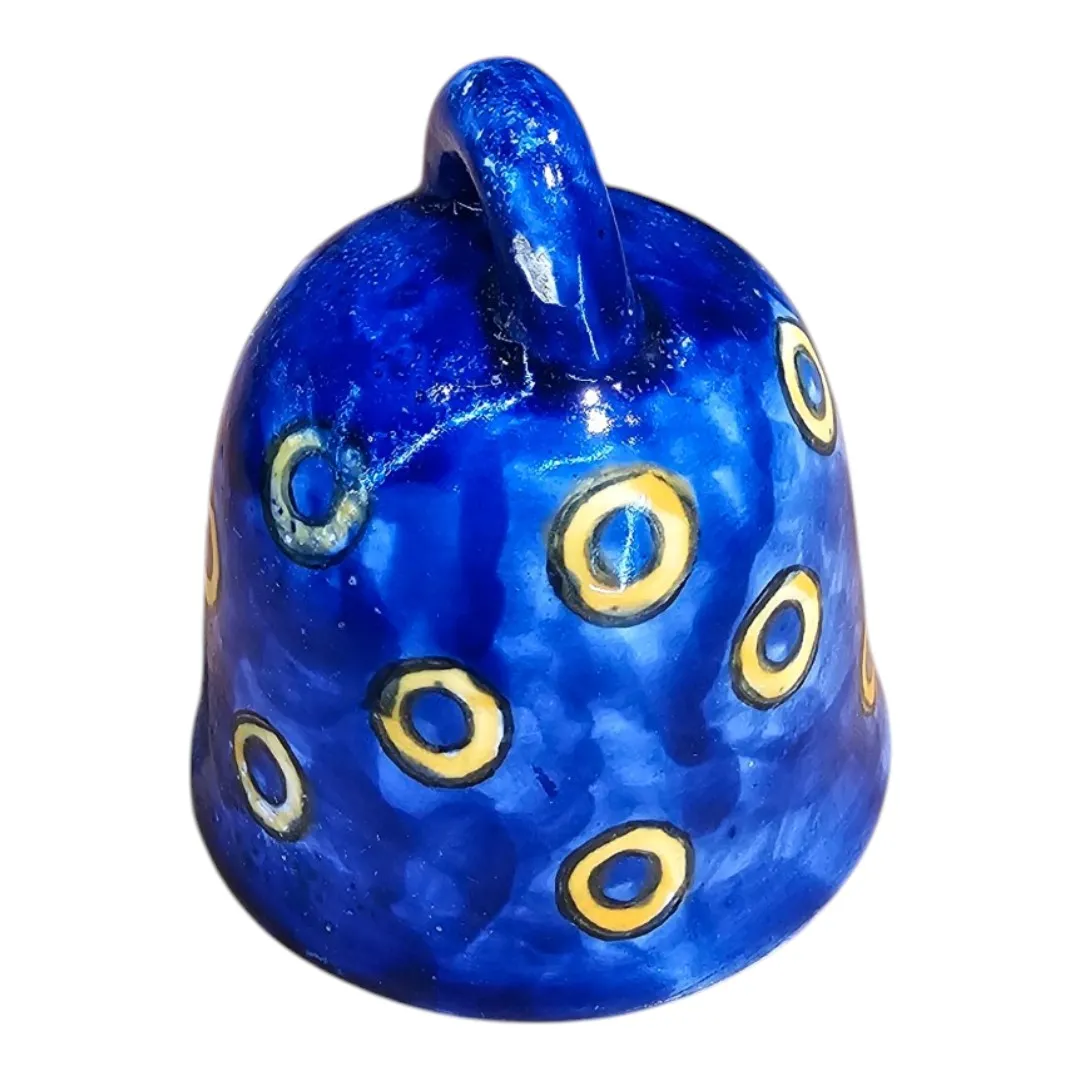
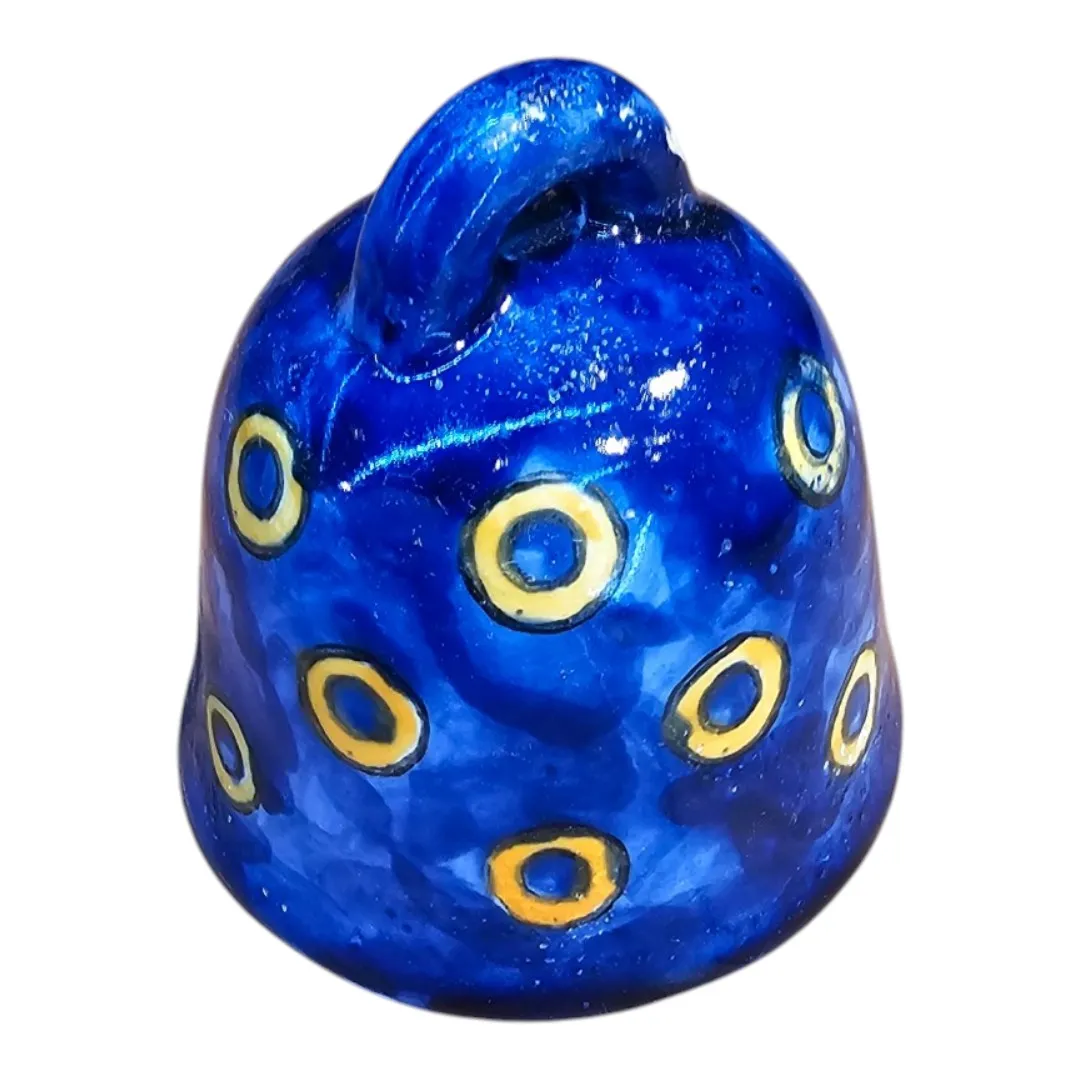
Named Al-Naqous Mayura to unite the Arabic word for a resonant bell with the Sanskrit term for the royal peacock, this Indian-crafted ceramic bell honors ancient acoustic traditions and Mughal garden symbolism. Hand-painted with concentric peacock-eye medallions in cobalt, ivory, and saffron yellow over a deep blue glaze, it brings protective grace and melodic charm to modern interiors.
FEATURES
Conceived as a collectible work of sacred decorative art rather than mere utility, the Al-Naqous Mayura Peacock-Eye Hand-Painted Ceramic Bell transforms an ancient acoustic artifact into a luminous statement of heritage. With its swelling dome silhouette, sculpted loop handle, and jewel-like cobalt-and-gold palette, it brings poised spiritual gravity and storied resonance to refined living spaces.
This design weaves together a rich cultural lineage across Eurasia. The tradition of resonant ceramic bells traces its earliest roots to the bell-making kilns of the Bronze Age Indus Valley Civilization (along the Indus and Ganges rivers) and ancient Mesopotamia (along the Tigris and Euphrates rivers), where resonant vessels were rung to invoke auspicious blessings, welcome travelers, and mark sacred hours. Over millennia, this heritage evolved along historic trade routes into the vibrant blue pottery clusters of Northern India—particularly Khurja in Uttar Pradesh and Jaipur in Rajasthan—artistic hubs established by Persian, Turkish, and Central Asian ceramicists during the 14th-century Tughlaq and Mughal dynasties. The central motif of the concentric peacock eye (Mayura in Sanskrit; Chashm-e-Bulbul in Persian) holds profound significance across Mughal and Rajput royal courts: representing the thousand-eyed vigilance of the heavens, spiritual protection against negative energy, royal sovereignty, and the auspicious arrival of monsoon rains. Today, historic exemplars of this Indo-Persian glazed lineage remain preserved in the National Museum in New Delhi, Jaipur’s City Palace Museum, and royal state collections across Rajasthan and Uttar Pradesh.
Executed through hereditary underglaze ceramic painting, artisans first shape refined white clay on the potter's wheel into a resonant bell dome and loop handle. Once bisque-fired, master painters brush the deep cobalt ground and individually outline each concentric peacock-eye ring in jet-black, ivory, and saffron yellow freehand using fine sable brushes. A transparent vitreous glaze is flooded over the form before high-temperature kiln firing fuses the mineral pigments permanently beneath a glass-like barrier—a patient, weeks-long endeavor requiring generational expertise.
Formed from dense, high-fired ceramic, the bell offers reassuring weight and crisp acoustic clarity. Subtle variations in brushstroke density and organic glaze pooling authenticate its genuine handmade origin.
Because every peacock-eye medallion is brushed freehand, no two bells are identical, positioning each creation as a singular, collectible heirloom.
In contemporary residences, this piece bridges centuries-old Indian ceramic mastery with sacred talismanic artistry, infusing modern entryways and living rooms with protective soul and tactile luxury.
STYLE DETAILS
Architectural Influences: Indo-Gangetic bell-making traditions, 16th-century Mughal palace ornamentation, and Persian-Mughal glazed ceramic ateliers in Northern India.
Pattern Style: Repeating concentric peacock-eye medallions (ocelli) scattered across a deep cobalt field.
Decorative Elements: Imperial cobalt blue, saffron yellow, ivory white, and jet-black mineral pigments under a high-gloss vitreous glaze.
CRAFTSMANSHIP DETAILS
Technique Used and Its Significance: Traditional underglaze ceramic painting and high-temperature kiln firing, preserving centuries of Indo-Persian pottery heritage in India.
Skill Level Required: Master ceramic painters possessing over 15 years of freehand brushwork apprenticeship.
Distinguishing Handcrafted Features: Hand-drawn peacock-eye rings, nuanced mineral pigment washes, and an organically shaped resonance handle.
Finishing Process: Underglaze color application, vitreous clear glazing, and multi-stage kiln firing.
CERAMIC FINISH CHARACTERISTICS
Type and Grain Richness: Smooth, fine-grained ivory ceramic body exhibiting luminous optical depth beneath the rich cobalt glaze.
Depth and Texture: Deep cobalt, ivory, and saffron pigments create striking tonal contrast and a glass-like sheen.
Difference from Mass-Produced Furniture: Freehand brushwork and kiln-fired glaze pooling reflect living human artistry rather than printed factory uniformity.
Longevity and Aging Beauty: Vitrified ceramic construction ensures museum-grade permanence, resisting fading or surface wear across generations.
WHY YOU’LL LOVE IT / INVESTMENT VALUE
Commands a gallery-worthy presence on entryway consoles, meditation altars, or open shelving.
Carries a profound cultural narrative of Indus bell traditions and royal peacock-eye symbolism.
Forged from high-fired vitrified ceramic for multi-generational permanence.
One-of-a-kind hand-painted execution guarantees true collector rarity.
Transforms everyday interior styling into an elevated, artful ritual of sound and sacred color.
SUGGESTIONS FOR INCORPORATION
Placement Ideas: Suspend in a double-height foyer, rest upon a console table beside a ceramic vase, or display on a library bookshelf.
Styling Tips: Pair with carved mango-wood furnishings, honed limestone surfaces, and woven textiles to accentuate its deep cobalt and saffron hues.
Lifestyle Use: Serves as an expressive ceremonial acoustic accent, welcoming entryway talisman, or unique decorative centerpiece.
DETAILED SPECIFICATIONS
Color: Imperial cobalt blue, saffron yellow, ivory white, and jet-black.
Finish: High-gloss transparent vitreous protective glaze.
Origin: Handcrafted in Khurja and Jaipur ceramic clusters, India.
Age/Period Influence: 16th-Century Indo-Persian Mughal & Ancient Indus Heritage.
PERFECT FOR
Entryway consoles and ceremonial foyer tables
Living room mantelpieces and open bookshelf styling
Boutique hospitality suites and curated gallery spaces
Artisanal housewarming and cultural gifting
INTERIOR TYPES
Modern Luxury, Contemporary Arabian, Bohemian Luxe, Eclectic Heritage, Rustic Refined, Traditional Mediterranean
Wipe gently with a soft, dry microfiber cloth to maintain the high-gloss glaze luster.
Avoid abrasive scouring pads or harsh chemical bleaches on the hand-painted surface.
Handle with care to protect the acoustic ceramic body.
No reviews for this product variant yet. Shop the product to add reviews