Wash gently by hand using warm soapy water and a soft sponge to preserve the glossy glaze.
Avoid abrasive scouring pads or harsh chemical bleaches.
Safe for holding hot utensils directly from simmering pots and pans.

Product code: 18211 F
Dimensions: 23 (Length) x 9.3 (Width) x 2 (Height) cm
Material: High-fired ceramic (clay, feldspar, and quartz) with mineral underglaze pigments.
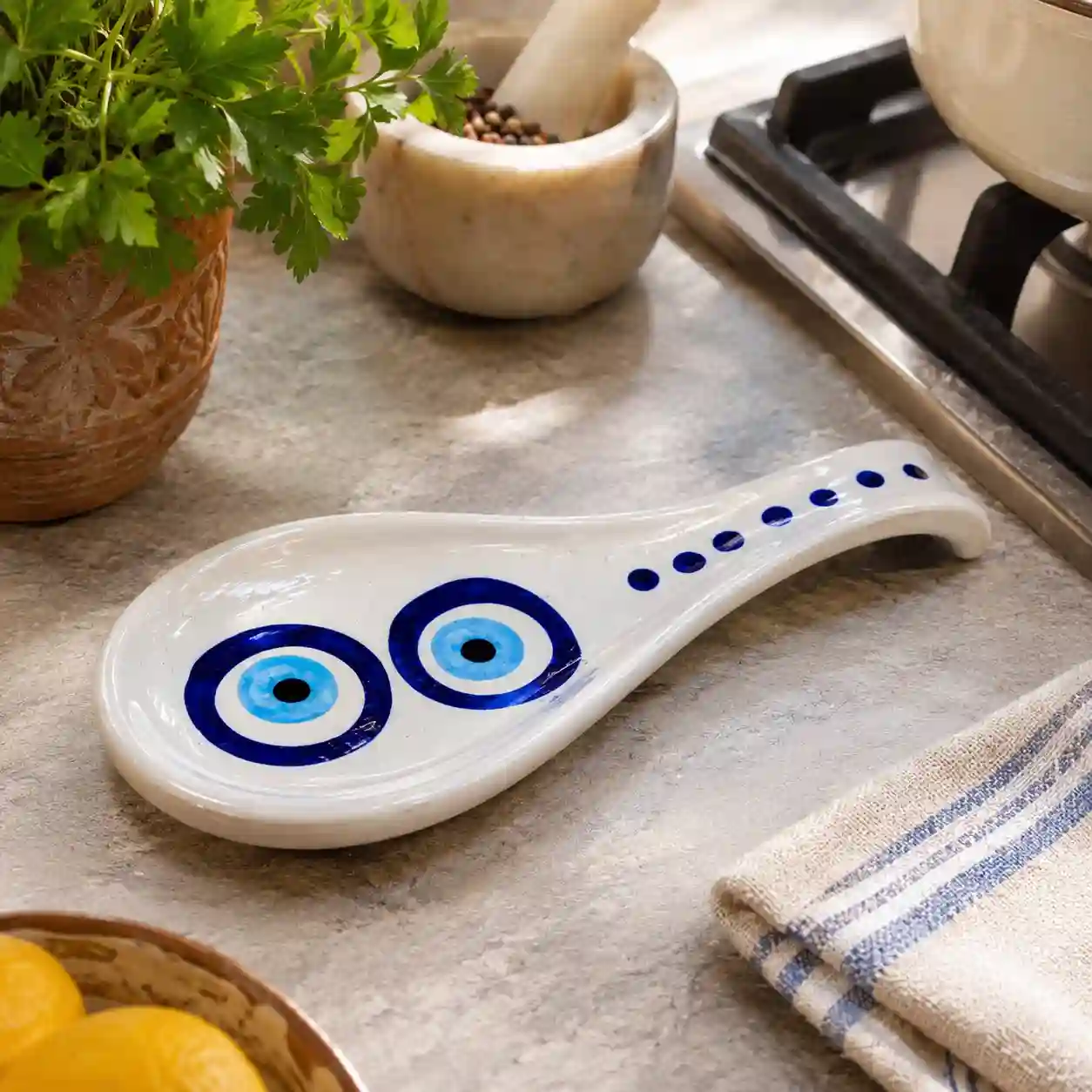
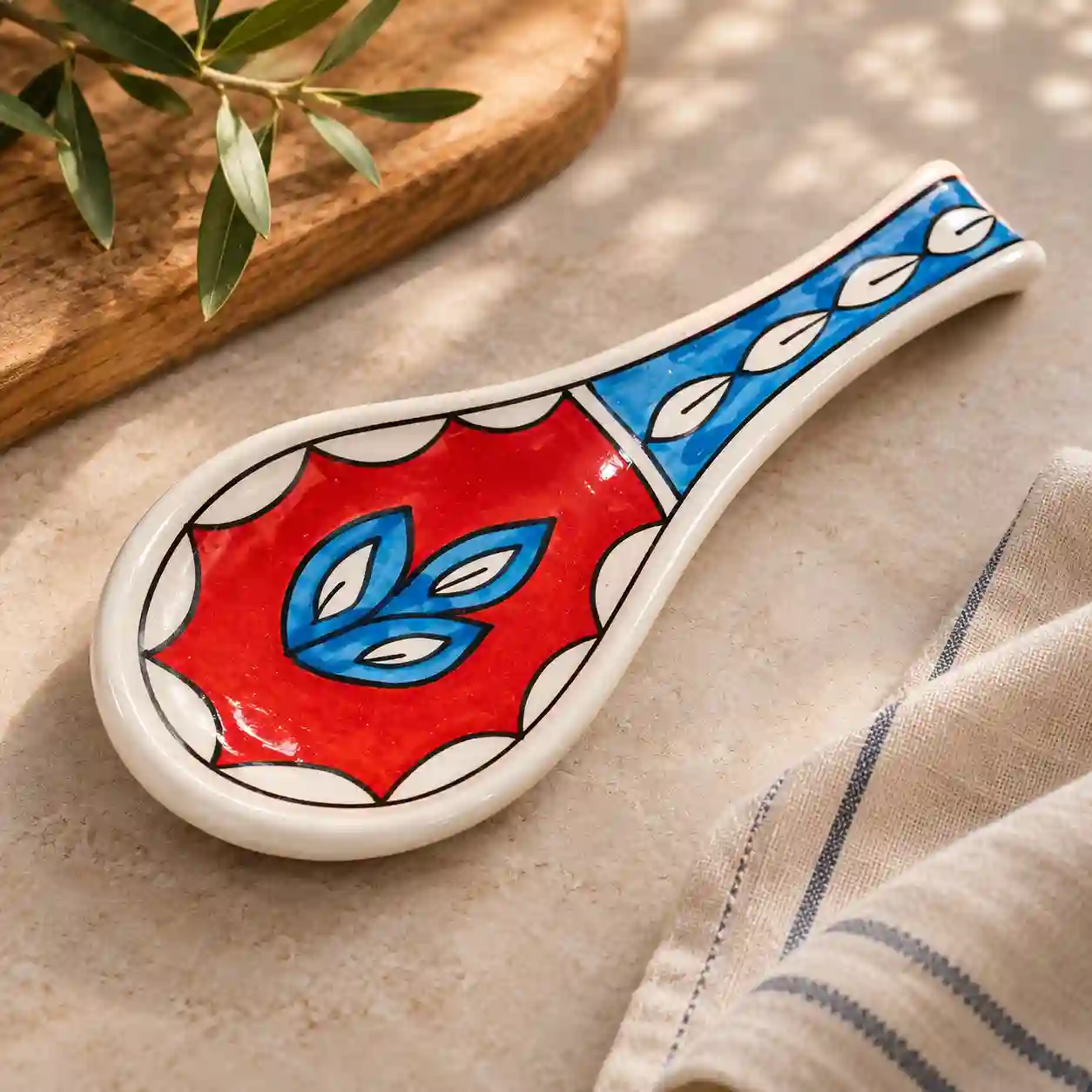
Named Al-Ayn Nazar-e-Noor—uniting the Arabic Al-Ayn (the watchful eye) with the Persian-Turkish Nazar-e-Noor (gaze of luminous protection)—this Indian-crafted ceramic spoon rest pairs ancient Mediterranean talismanic lore with glazed Indian pottery mastery. Hand-brushed in deep cobalt and azure circles, it cradles hot culinary tools while safeguarding countertops with storied grace.
FEATURES
Hand-molded and hand-painted by Indian master ceramicists using traditional underglaze cobalt and azure brushwork.
Crafted from high-fired glazed ceramic enriched with feldspar and quartz, sealed beneath a luminous transparent vitreous glaze.
Safely cradles hot cooking ladles, wooden spoons, and spatulas straight from simmering pots, keeping countertops spotless.
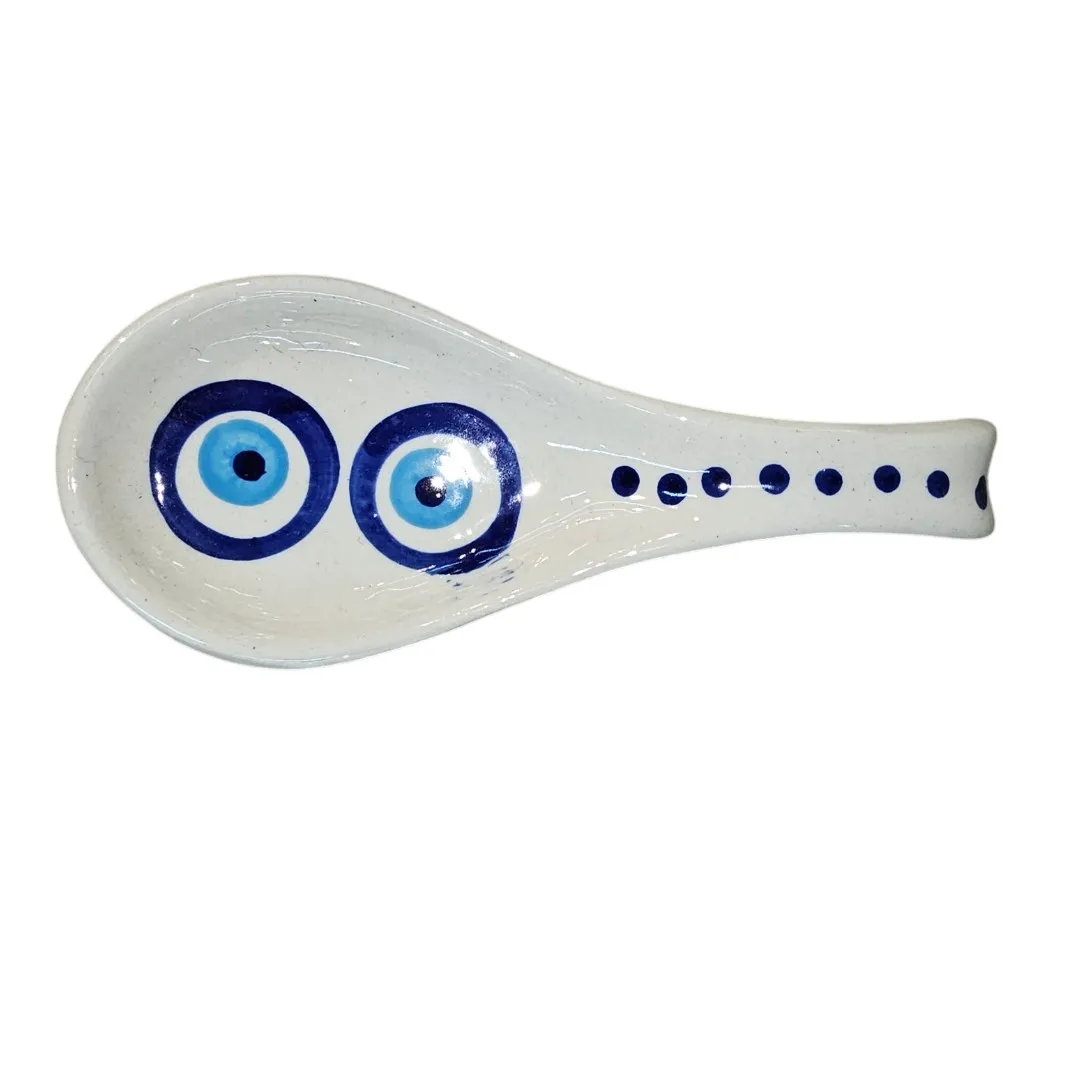
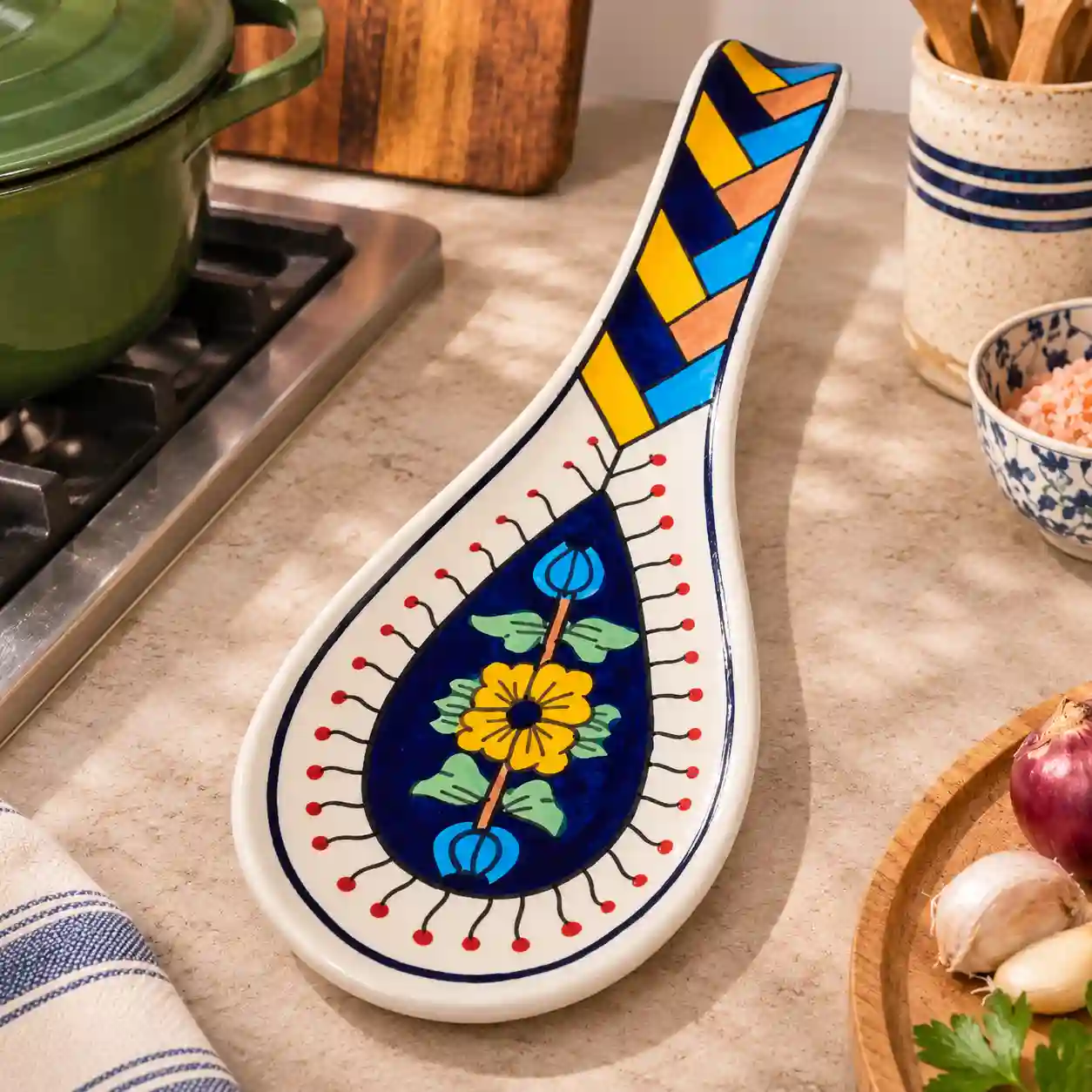
Features an ergonomically upturned handle rest, twin concentric talismanic eye motifs in the bowl, and graduating cobalt dot detailing along the stem.
Named Al-Ayn Nazar-e-Noor—celebrating the ancient protective eye (Al-Ayn) alongside the luminous cobalt gaze (Nazar-e-Noor) revered across Mediterranean and Near Eastern cultures—this hand-painted ceramic spoon rest transforms an everyday culinary tool into a collectible work of decorative art. With its fluid teardrop silhouette and striking cobalt-and-azure palette, it brings poised grace and storied heritage to modern kitchen islands and dining tables.
This design unites two ancient cultural lineages along the Indo-Mediterranean trade corridor. The talismanic eye motif traces its origins to 3300 BCE in ancient Mesopotamia (discovered at Tell Brak in modern-day Syria) before flourishing around 1500 BCE across Ancient Egypt, Greece, Rome, and the Ottoman Empire, where Turkish glassmakers in Izmir perfected the iconic blue nazar boncuğu. Symbolizing vigilance, spiritual purity, and good fortune, the concentric blue rings act as a visual shield—reflecting envious or harmful gazes away from the home and hearth. Crafted in India within the 600-year-old GI-tagged glazed pottery clusters of Khurja (Uttar Pradesh) and Jaipur (Rajasthan)—founded by migrant potters from Persia, Syria, and Egypt during the 14th-century Tughlaq and Mughal eras—this piece channels centuries of Indo-Persian ceramic mastery. Today, historic exemplars of this cobalt-glazed lineage remain preserved in Istanbul’s Topkapi Palace, New Delhi’s National Museum, and Jaipur’s City Palace Museum.
Executed through hereditary underglaze ceramic painting, Indian artisans first blend locally sourced clay with ground feldspar and quartz before hand-forming the curved cradle. Once air-dried, master painters brush on concentric rings of mineral cobalt and turquoise oxides freehand. A transparent vitreous glaze is flooded over the surface before high-temperature kiln firing fuses the pigments permanently beneath a glass-like barrier—requiring years of steady brushwork mastery unattainable via machine printing.
Formed from dense, high-fired ceramic, the body offers reassuring weight and thermal resilience against hot utensils. Subtle variations in brushstroke density and organic glaze pooling authenticate its genuine handmade origin.
Because every ring and dot is painted freehand, no two spoon rests are identical, positioning each piece as an heirloom-quality culinary artifact.
Contemporary Relevance In contemporary Gulf and international kitchens, this piece bridges centuries-old Mediterranean talismanic lore with Indian ceramic artistry, infusing daily cooking with vibrant color and protective soul.
STYLE DETAILS
Architectural Influences: Ancient Mesopotamian and Ottoman talismanic motifs paired with 14th-century Mughal-Indian glazed pottery traditions.
Pattern Style: Twin concentric eye medallions (Nazar) in the basin paired with a graduating linear dot trail along the handle.
Decorative Elements: Deep cobalt blue, sky azure, and jet-black pupils set against a luminous ivory-white glazed ground.
CRAFTSMANSHIP DETAILS
Technique & Significance: Traditional Indian underglaze cobalt painting and high-temperature kiln glazing, preserving 600-year-old Khurja and Jaipur ceramic heritage.
Skill Level Required: Master ceramic painters with over 10 to 15 years of freehand brushwork apprenticeship.
Distinguishing Handcrafted Features: Hand-drawn concentric circles, nuanced mineral cobalt washes, and an organically contoured handle lip.
Finishing Process: High-temperature kiln firing that vitrifies the transparent protective glaze into a luminous, non-porous surface.
CERAMIC FINISH CHARACTERISTICS
Grain & Richness: Smooth, fine-grained ivory ceramic body enriched with quartz and feldspar for luminous optical clarity.
Depth & Texture: Rich cobalt and azure mineral pigments display subtle tonal depth beneath a glass-like sheen.
Difference from Mass-Produced Décor: Freehand brushwork and natural glaze variations distinguish it completely from machine-stamped decals.
Longevity & Aging Beauty: High-fired vitrified glaze resists staining, heat, and fading across decades of daily culinary use.
WHY YOU’LL LOVE IT / INVESTMENT VALUE
Brings ancient Mediterranean protective symbolism and Indian ceramic mastery directly to your stovetop.
Protects marble, quartz, and wooden counters from sauces and hot utensils.
High-fired ceramic construction ensures enduring, everyday resilience.
Hand-painted execution guarantees that each spoon rest is a singular collector’s piece.
Elevates routine meal preparation into a tactile, visually inspiring ritual.
SUGGESTIONS FOR INCORPORATION
Placement Ideas: Rest beside the stovetop range, place on a central prep island, or set on a dining buffet during family gatherings.
Styling Tips: Pair with honed limestone countertops, carved mango-wood planters, and striped woven linen towels to echo its Mediterranean-Indian palette.
Lifestyle Use: Functions effortlessly as a cooking ladle cradle, serving spoon rest, or small tabletop dish for tea bags and spices.
DETAILED SPECIFICATIONS
Color: Deep cobalt blue, sky azure, jet-black pupils, and luminous ivory white.
Finish: High-gloss transparent vitreous protective glaze.
Origin: Handcrafted in India.
Age/Period Influence: Ancient Mesopotamian-Mediterranean Talismanic & 14th-Century Indo-Persian Glazed Tradition.
PERFECT FOR
Stovetop ranges and kitchen island prep stations
Dining table serving spoon and ladle staging
Artisanal housewarming and protective culinary gifting
INTERIOR TYPES
Mediterranean Revival, Modern Luxury, Bohemian Luxe, Contemporary Arabian, Eclectic Heritage
Wash gently by hand using warm soapy water and a soft sponge to preserve the glossy glaze.
Avoid abrasive scouring pads or harsh chemical bleaches.
Safe for holding hot utensils directly from simmering pots and pans.
No reviews for this product variant yet. Shop the product to add reviews