Hand-wash gently using warm water, mild soap, and a soft cloth to preserve the high-gloss vitreous glaze.
Avoid abrasive scouring pads or harsh chemical cleaners.
Thermally stable for holding hot cooking utensils directly from simmering pots.

Product code: 18211 E
Dimensions: 23 (Length) x 9.3 (Width) x 2 (Height) cm
Material: High-fired vitrified ceramic and natural mineral underglaze pigments.
Named after Rajasthan’s monumental Amber Citadel, this Indian-crafted ceramic spoon rest embodies imperial Mughal-Rajput craftsmanship and architectural poise. Sculpted from high-fired vitrified ceramic with rich crimson and cobalt mineral glazes, it stands as a museum-grade culinary artifact engineered to protect stone kitchen islands with historical permanence.
FEATURES
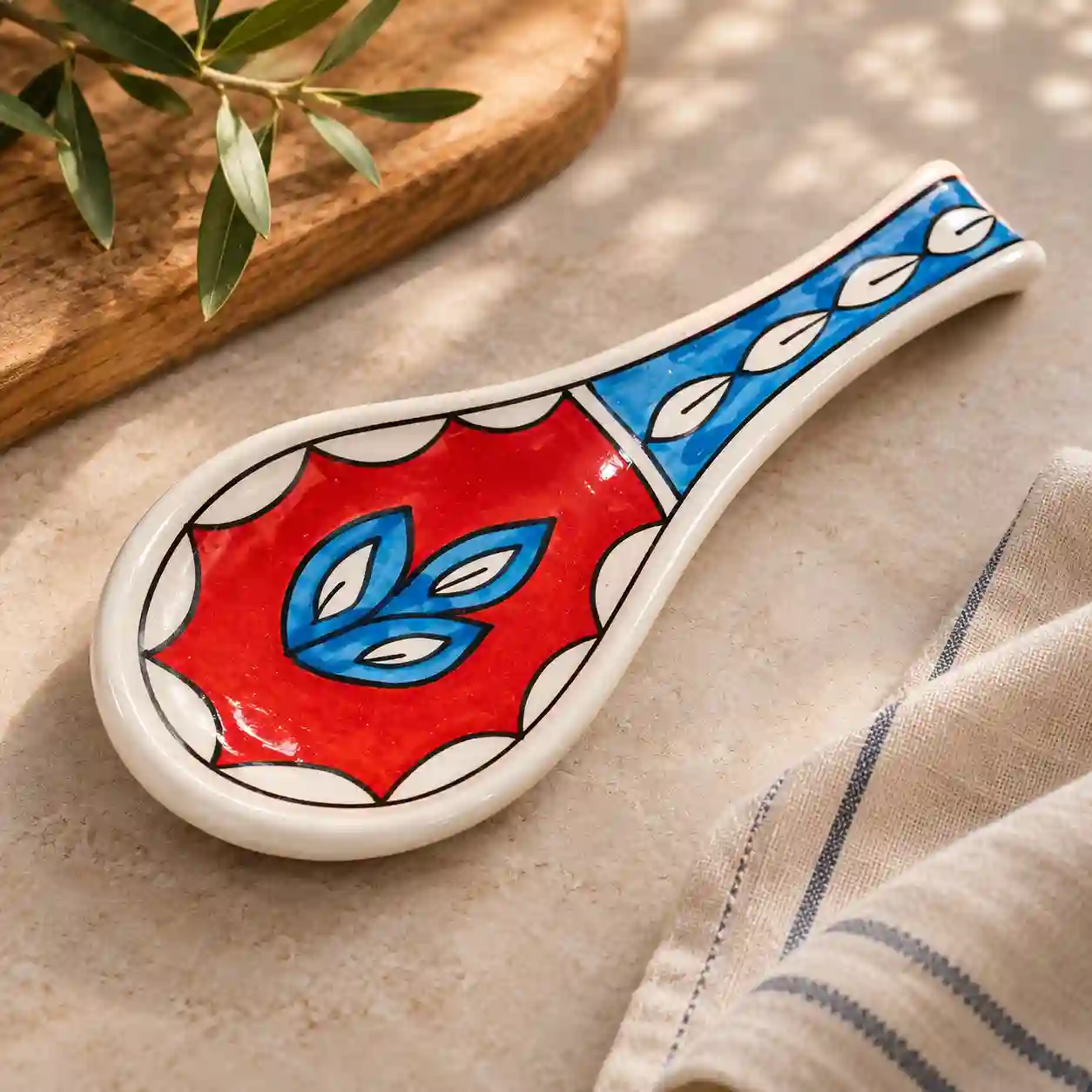
Named Amber Fort Silk-Road Hand-Painted Ceramic Spoon Rest after the historic sandstone and marble citadel of Jaipur, this Indian ceramic vessel distills centuries of courtly pottery tradition into a striking functional artifact. With its dense ceramic mass, fluid teardrop silhouette, and bold crimson-and-cobalt palette, it commands quiet authority on honed marble and limestone counters.
Handcrafted in India within the imperial pottery traditions of Jaipur (Rajasthan) and Khurja (Uttar Pradesh) along the Indo-Gangetic trade corridor, this ceramic lineage reflects the 16th- and 17th-century artistic convergence of the Silk Road. As Persian and Central Asian master potters worked under Mughal-Rajput patronage, scrolling arabesque vines and the sacred four-petaled lotus (Padma)—symbolizing spiritual purity, cosmic order, and sovereign abundance—were united with geometric chahar-bagh garden checkers. Today, priceless historic exemplars of this glazed tradition remain preserved within Jaipur’s City Palace Museum, Amber Fort, and the National Museum in New Delhi.
Executed using hereditary underglaze ceramic techniques, each spoon rest begins with refined clay formed by hand in Indian workshops. Master artisans trace crisp black contours freehand before applying natural mineral pigments and sealing the vessel in a heavy-gauge clear vitreous glaze. High-temperature kiln firing fuses the colors permanently beneath the glass-like surface—a labor-intensive craft requiring decades of mastery.
Formed from heavy-gauge vitrified ceramic, the body boasts exceptional thermal stability and structural weight. The non-porous glazed surface withstands hot utensils straight from simmering cookware while preserving pristine color depth across generations.
Exclusivity & Artistic Value Each spoon rest is individually hand-painted, rendering every piece an unrepeatable collector’s culinary artifact of heirloom permanence.
Contemporary Relevance In monumental contemporary residences, the piece provides rich mineral color and tactile contrast against honed travertine, Carrara marble, and blackened steel.
STYLE DETAILS
Architectural Influences: 16th-century Amber Fort tilework, Mughal-Rajput imperial ateliers, and Silk Road ceramic geometry.
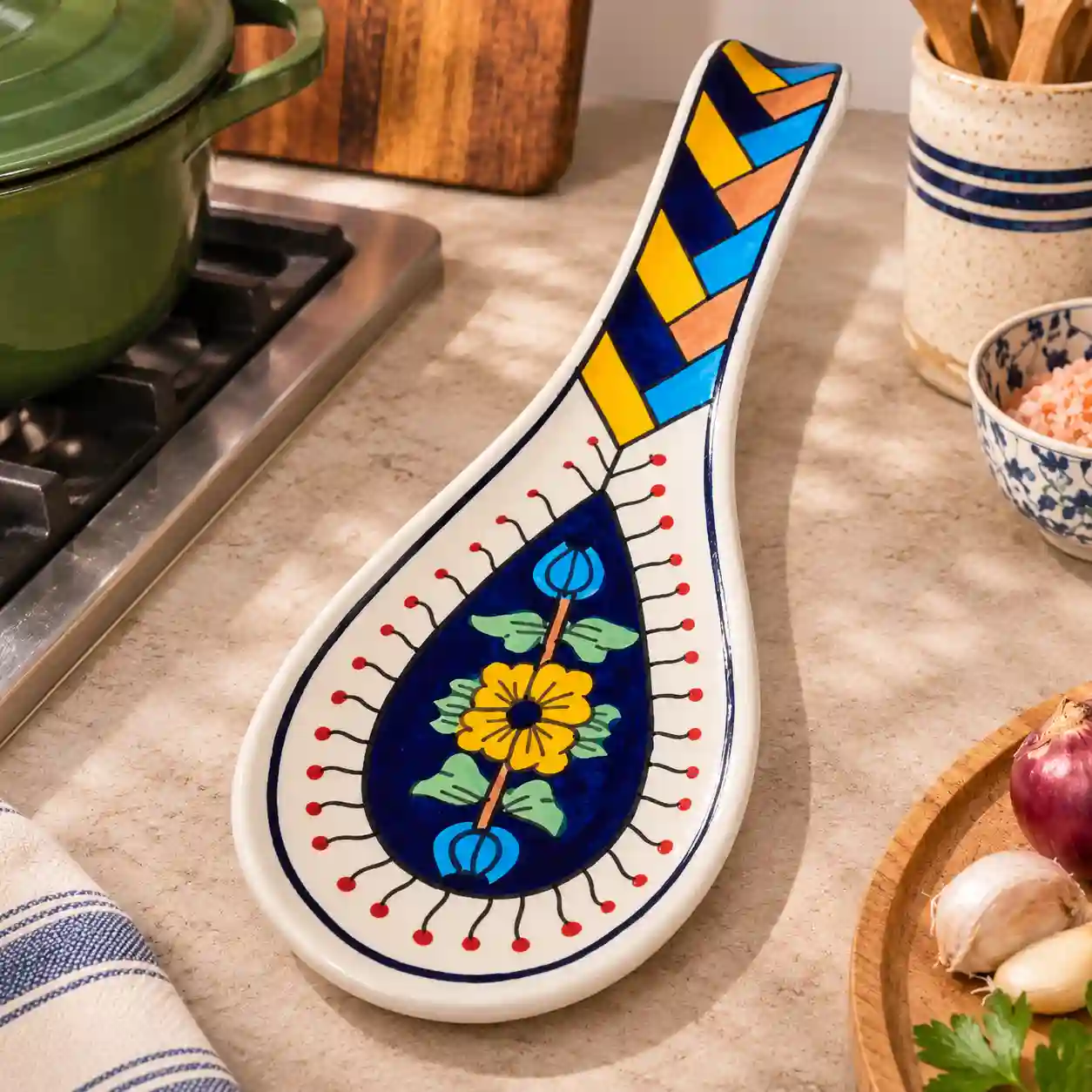
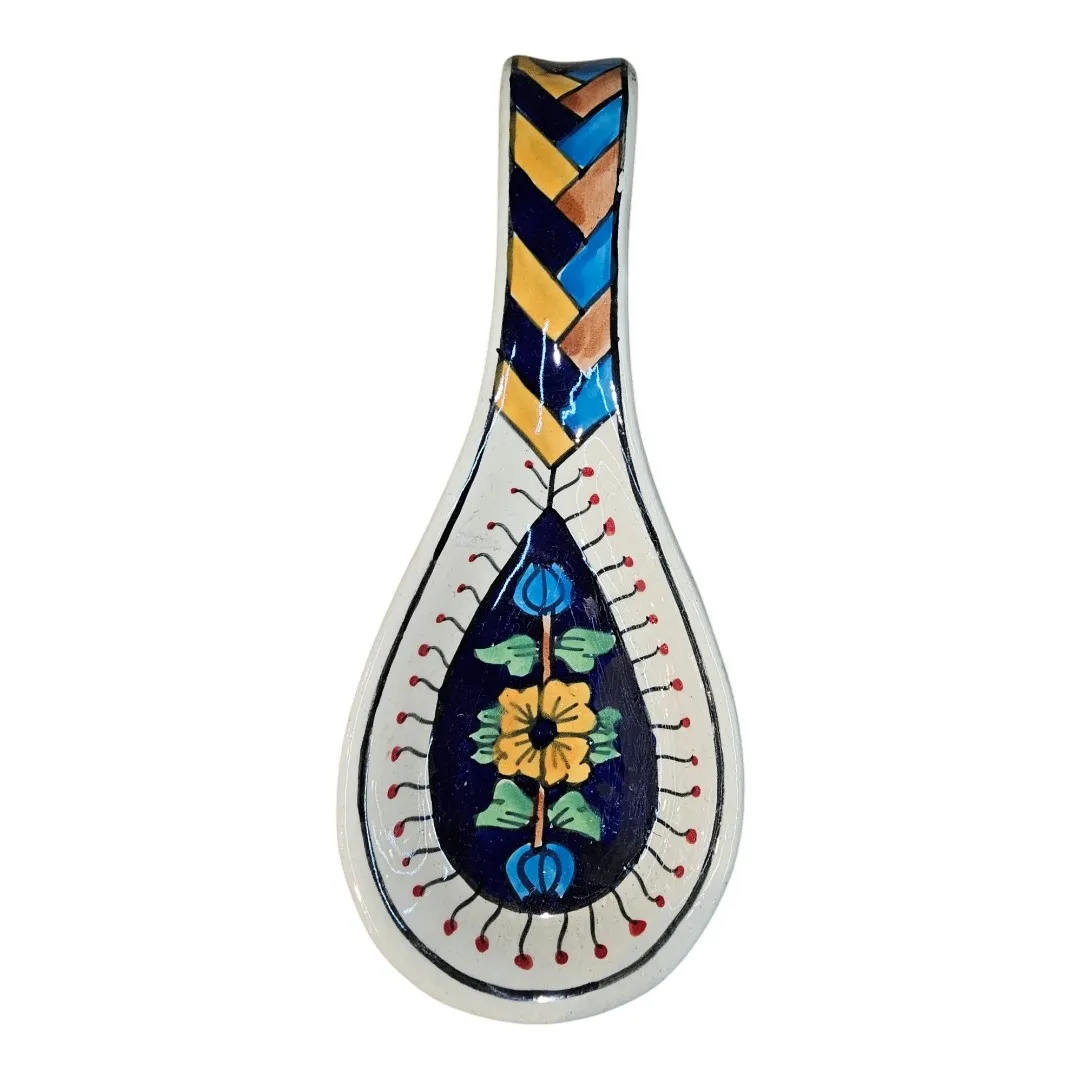
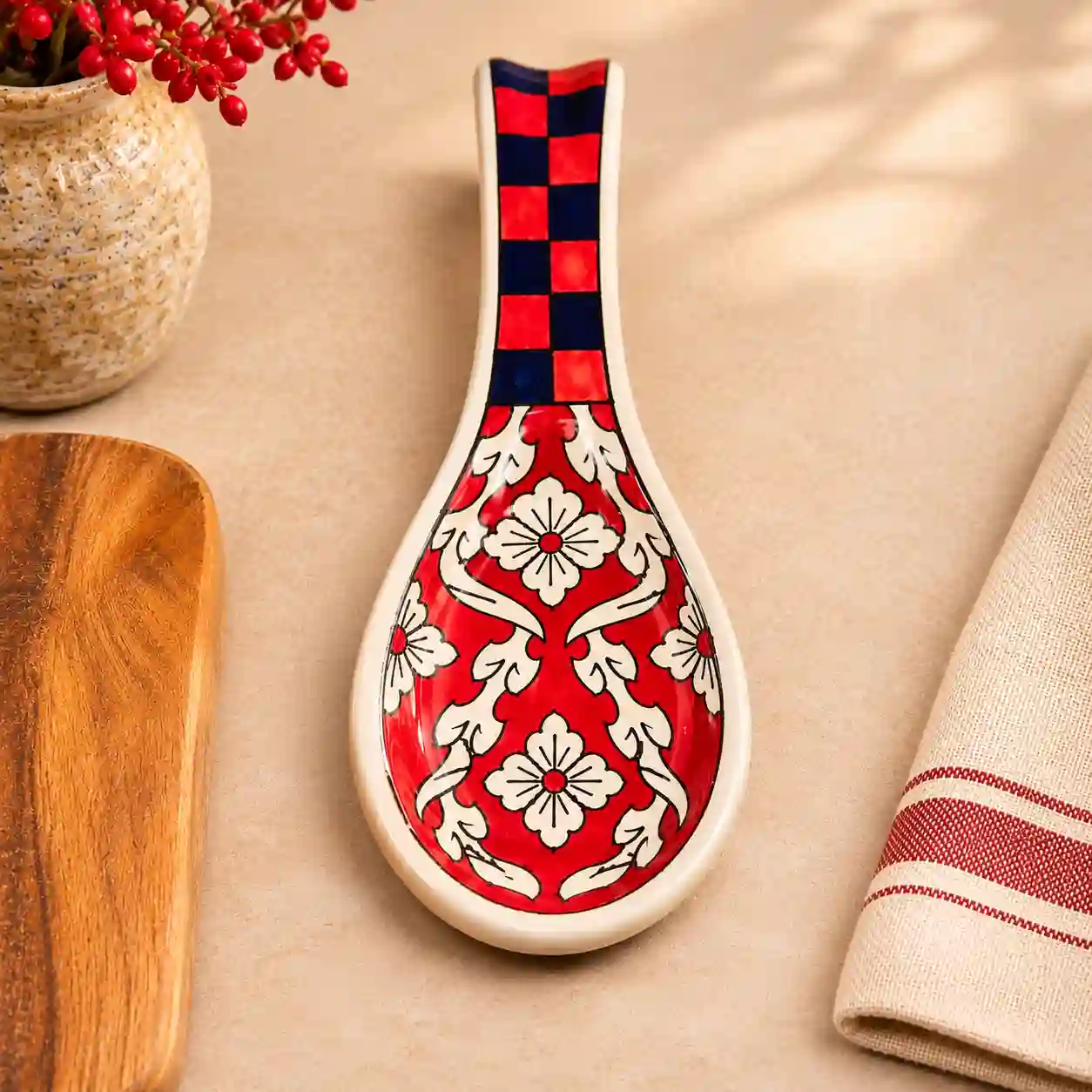
Pattern Style: Central four-petaled lotus rosette (Padma), scrolling botanical vines, and alternating crimson-cobalt checkerboard handle.
Decorative Elements: Imperial crimson red and deep cobalt blue underglaze pigments framed in black contours beneath a high-gloss glaze.
CRAFTSMANSHIP DETAILS
Technique Used and Its Significance: Traditional Indian underglaze ceramic painting and high-temperature kiln vitrification, preserving courtly craft.
Skill Level Required: Master Indian ceramic artists with over 15 to 20 years of hereditary workshop experience.
Distinguishing Handcrafted Features: Hand-drawn black outlines, nuanced mineral glaze pooling, and robust handle geometry.
Finishing Process: Underglaze mineral painting, vitreous clear glazing, and multi-stage kiln firing.
CERAMIC FINISH CHARACTERISTICS
Type and Grain Richness: Heavy-gauge, porcelain-dense white ceramic body valued for structural heft and deep optical glaze clarity.
Depth and Texture: Rich crimson red and cobalt blue tones create dramatic tonal contrast beneath a glass-like finish.
Difference from Mass-Produced Décor: Authentic brush marks and kiln-fired nuances distinguish it entirely from printed factory ceramics.
Longevity and Aging Beauty: Built to endure for generations, retaining museum-grade color brilliance and thermal durability.
WHY YOU’LL LOVE IT / INVESTMENT VALUE
Anchors luxury kitchen islands and honed stone counters with historical gravitas.
Embodies centuries of Indo-Persian Silk Road artistry and royal Indian craft heritage.
Forged from high-fired vitrified ceramic for multi-generational permanence.
Singular hand-painted execution guarantees museum-grade collector exclusivity.
Introduces authentic, human-touched history to restrained architectural kitchens.
SUGGESTIONS FOR INCORPORATION
Placement Ideas: Position alongside a professional-grade range, anchor a monolithic stone kitchen island, or display on an open gallery shelf.
Styling Tips: Pair with honed travertine surfaces, aged brass fixtures, and heavy cast-iron cookware to emphasize its mineral palette.
Lifestyle Use: Serves as a statement culinary antiquity and functional ladle rest in private estates and luxury culinary suites.
DETAILED SPECIFICATIONS
Color: Imperial crimson red, deep cobalt blue, warm ivory white, and jet-black outlines.
Finish: High-gloss heavy-gauge vitreous protective glaze.
Origin: Handcrafted in Jaipur & Khurja ceramic clusters, India.
Age/Period Influence: 16th–17th Century Mughal-Rajput Silk Road Tradition.
PERFECT FOR
Grand estate kitchen islands and honed stone prep counters
Luxury culinary suites and architectural pantry displays
Collectors of monumental Indian antiquities and fine ceramics
INTERIOR TYPES
Modern Architectural, Belgian Minimalist, Industrial Luxury, Eclectic Estate, Classic European
Hand-wash gently using warm water, mild soap, and a soft cloth to preserve the high-gloss vitreous glaze.
Avoid abrasive scouring pads or harsh chemical cleaners.
Thermally stable for holding hot cooking utensils directly from simmering pots.
No reviews for this product variant yet. Shop the product to add reviews