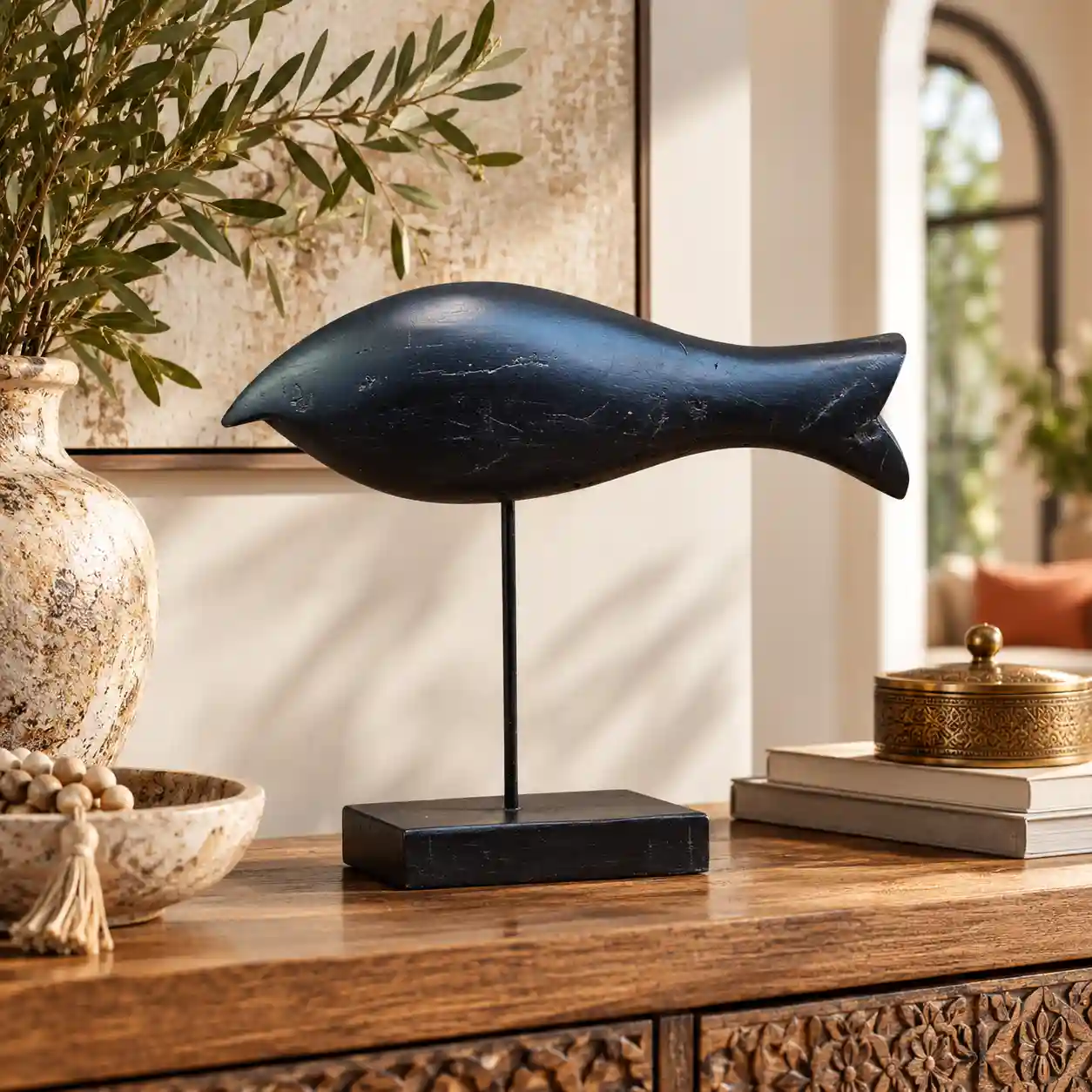
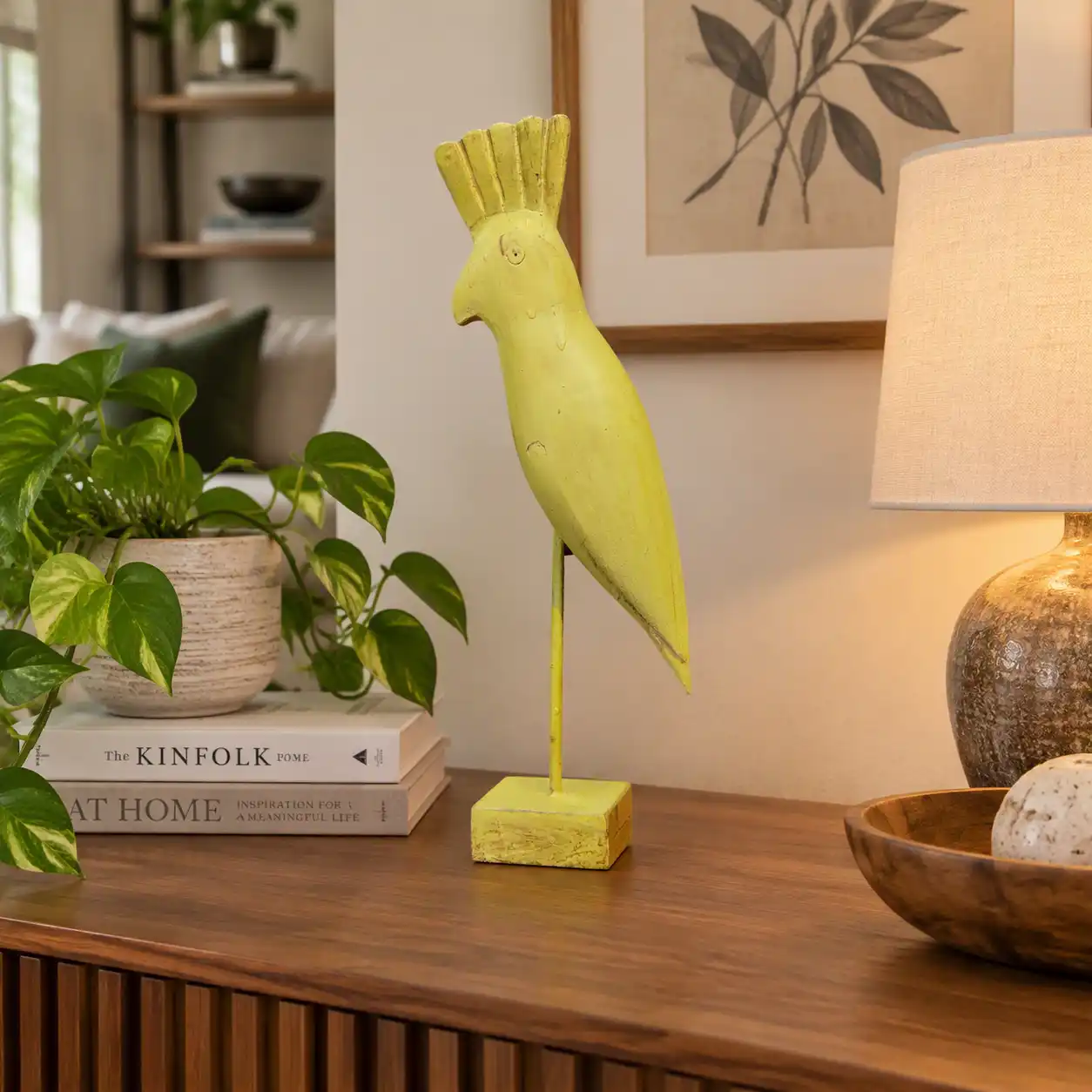
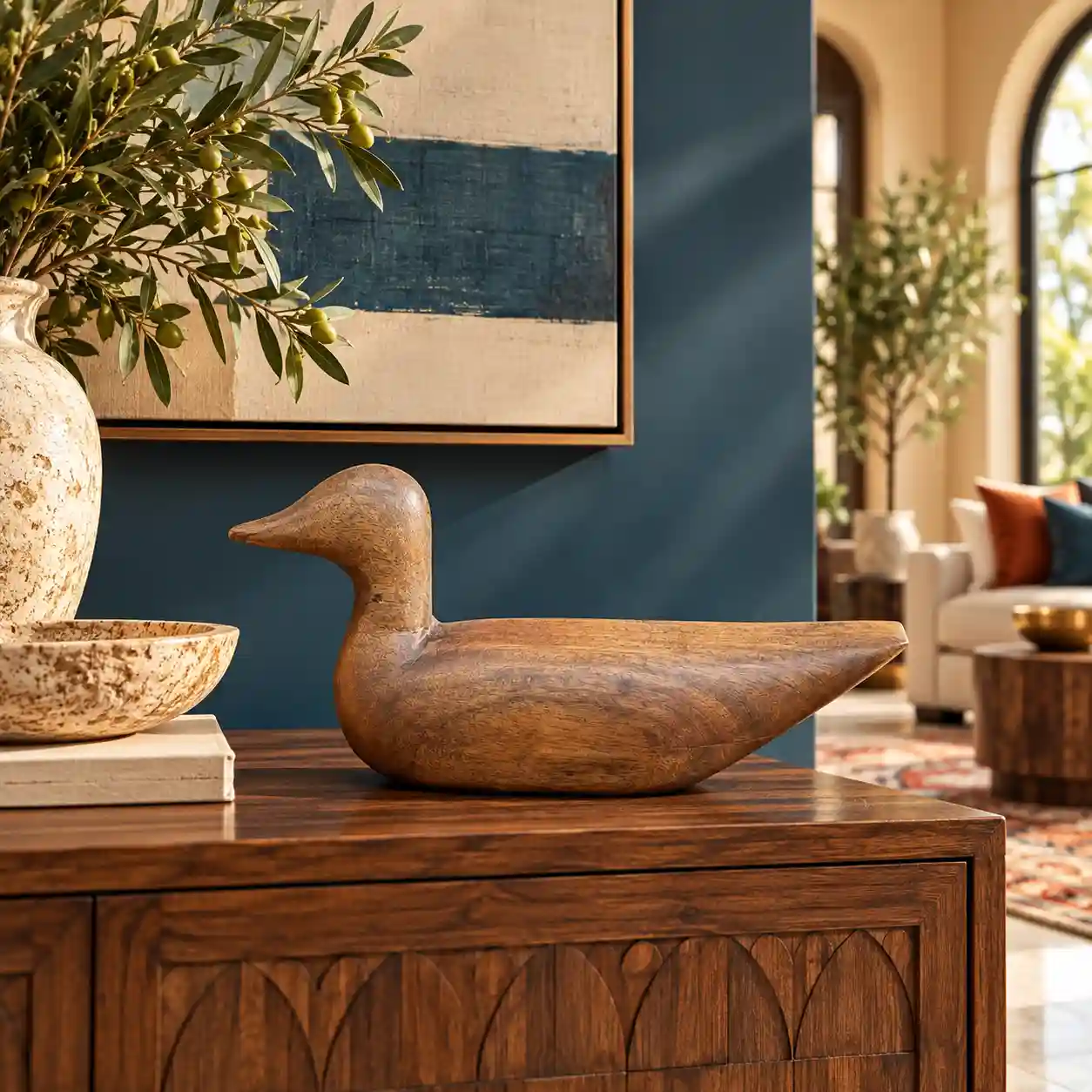
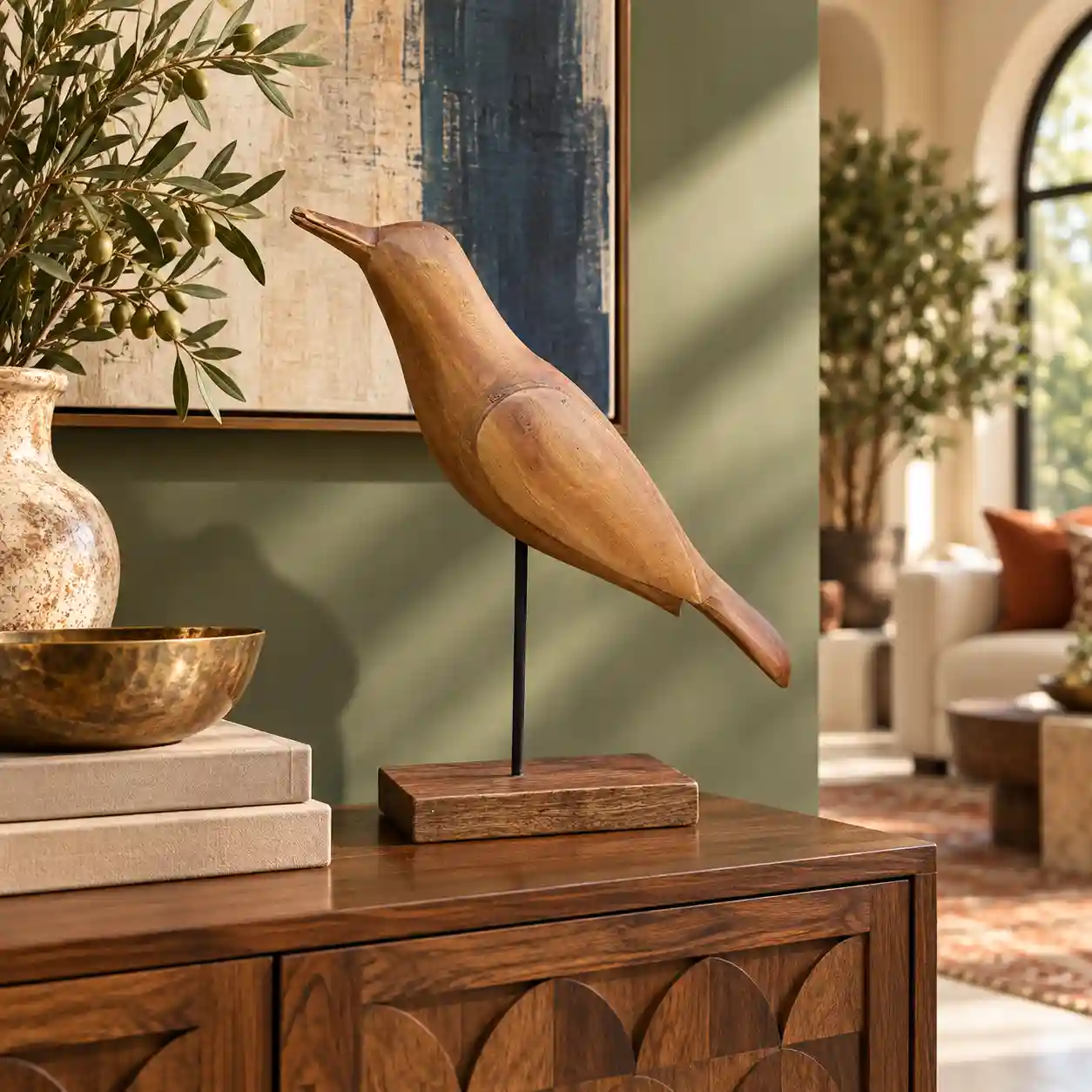
Dust regularly with a soft, dry microfiber cloth.
Keep away from excessive moisture, standing water, and direct prolonged sunlight to preserve the historical wood patina.

Product code: 16913_2
Dimensions: 16 (Length) x 10 (Width) x 29 (Height) cm
Material: Reclaimed Indian hardwood, wrought iron stem, solid wood base.
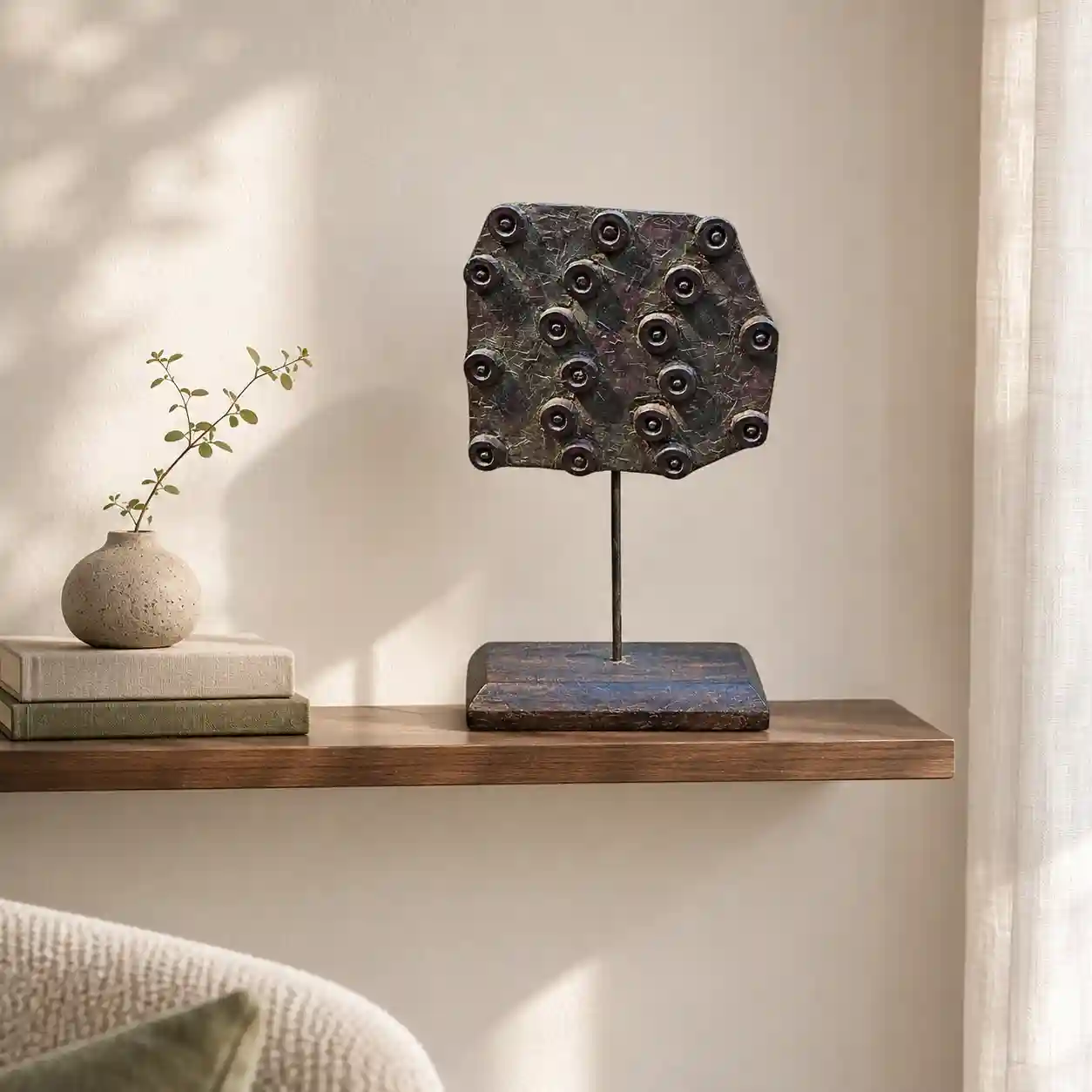
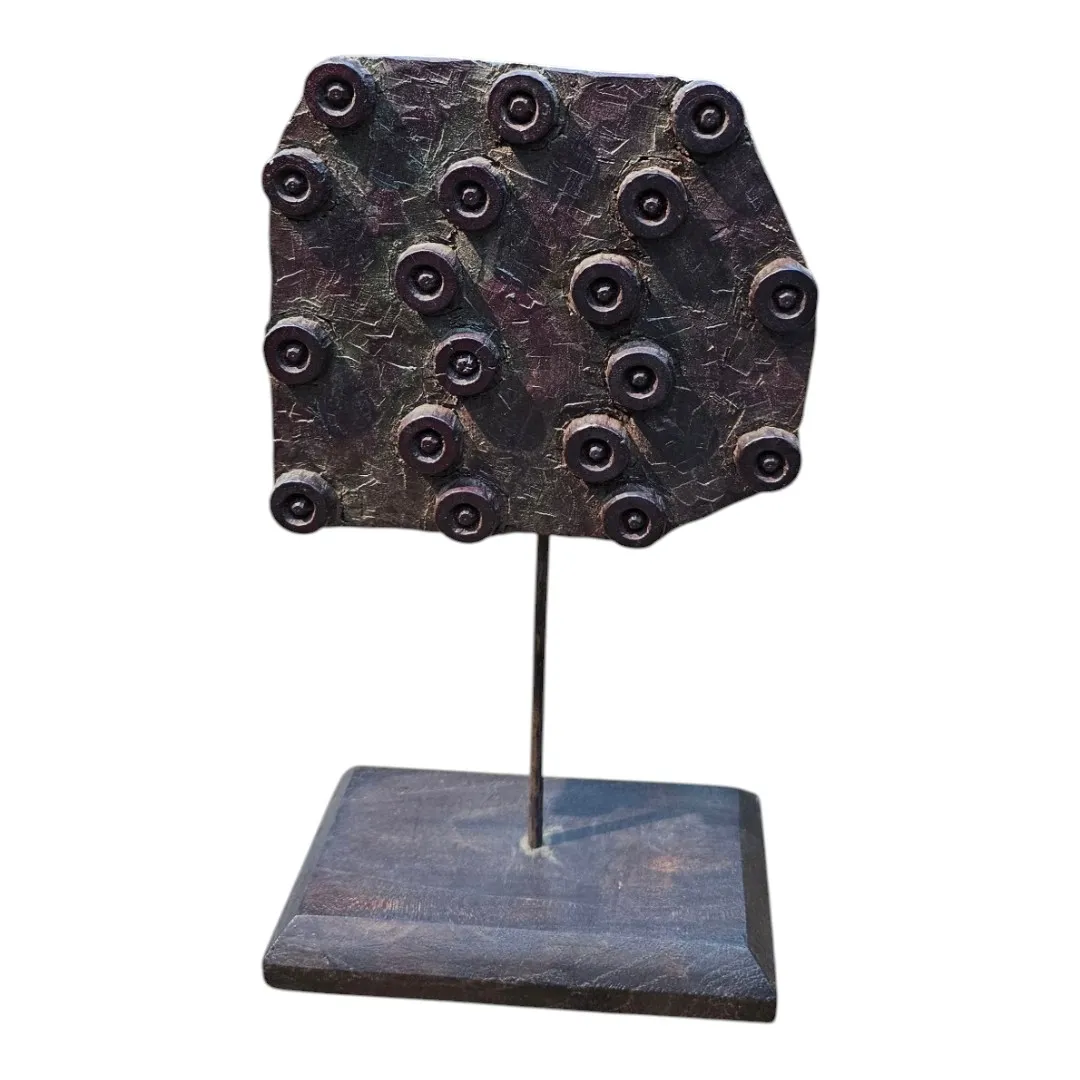
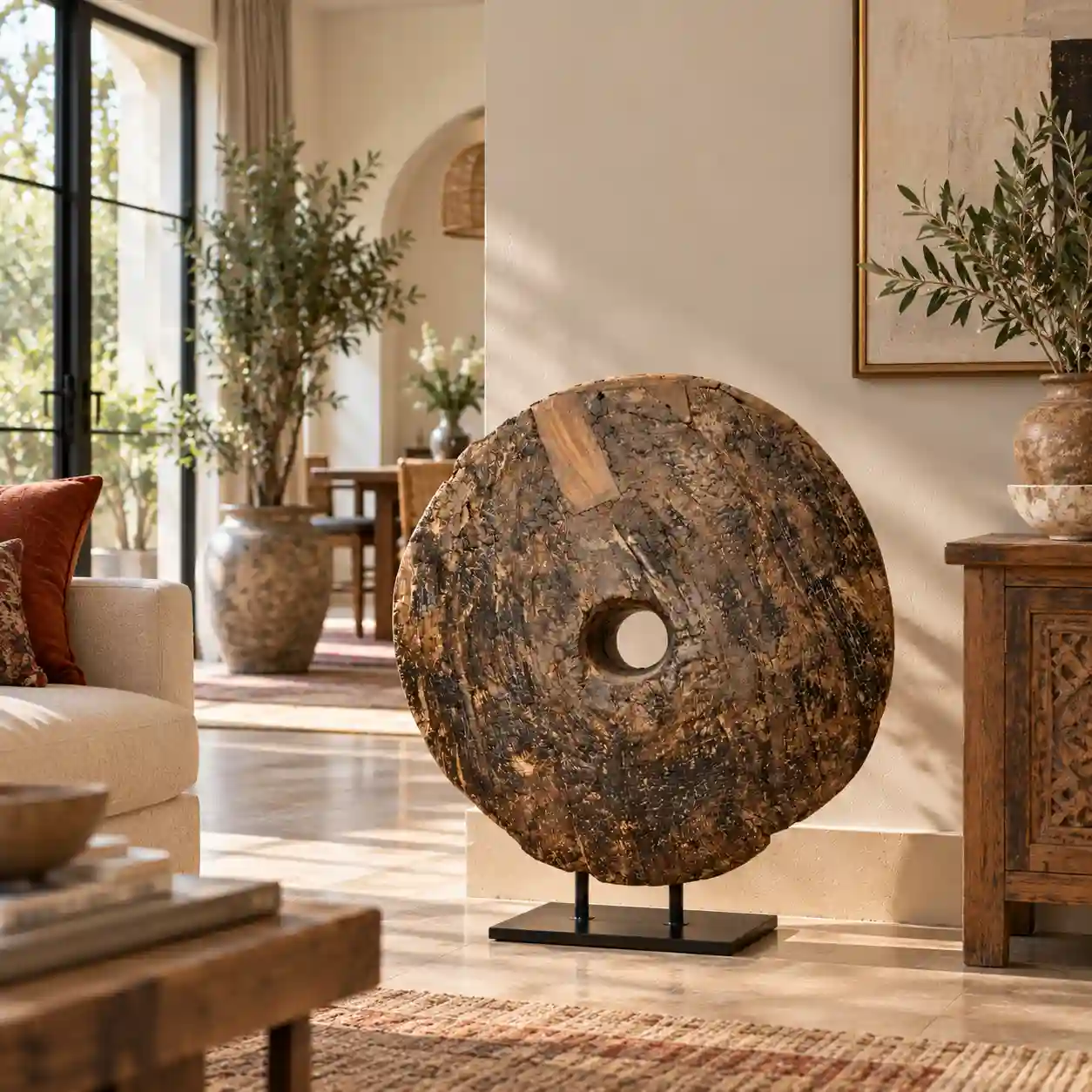
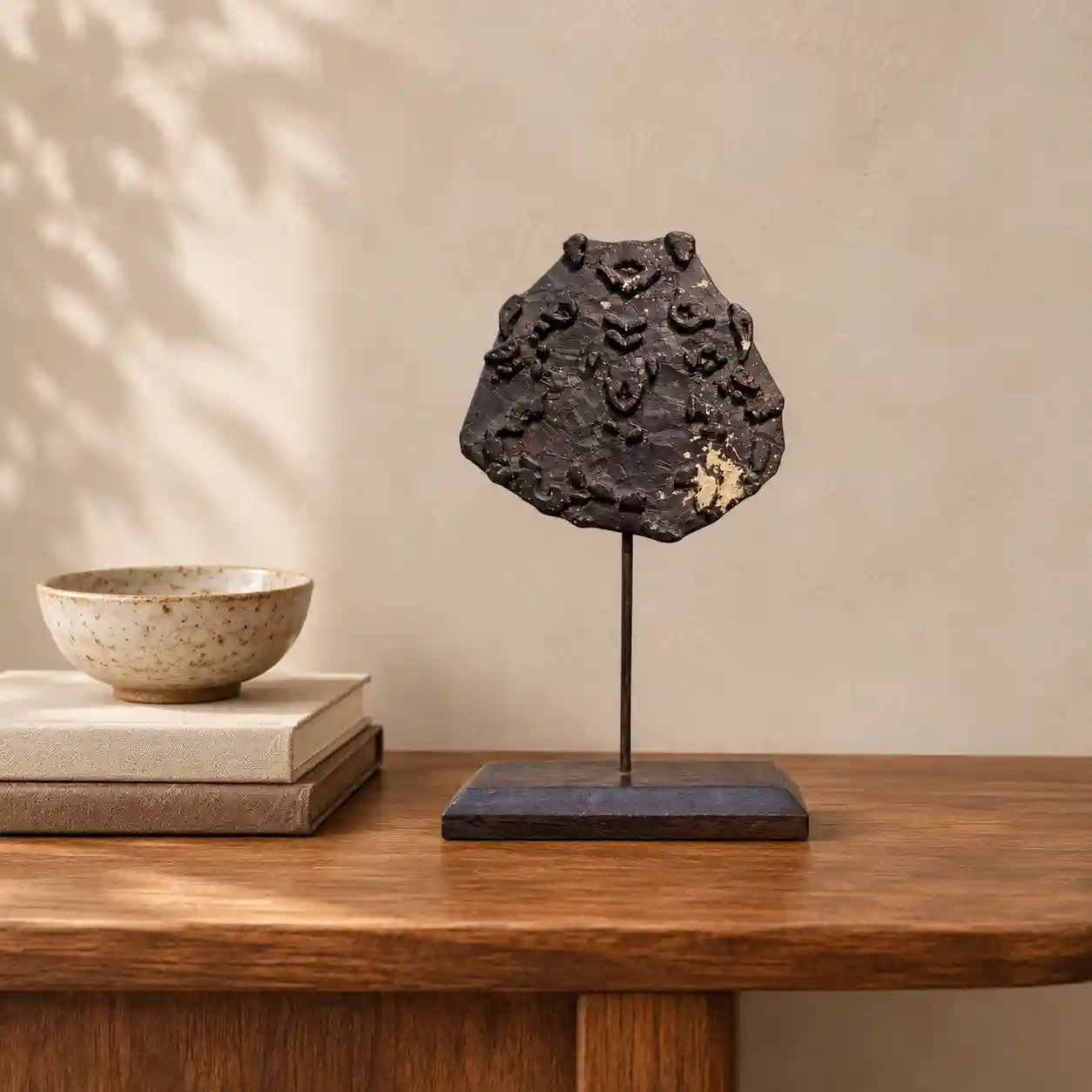
Derived from the Sanskrit Chhaapa (impression) and Shilp (sculptural art), the Chhaapa Shilp Carved Textile Block Sculpture elevates an authentic heritage woodblock—originating from the legendary craft clusters of Rajasthan (Jaipur, Bagru, Sanganer) and Gujarat (Kutch, Ahmedabad)—into a museum-worthy sculptural accent. Hand-carved from seasoned timber with intricate botanical reliefs, this reclaimed workshop artifact is mounted on a slender iron stem to honor ancient South Asian textile traditions within modern living spaces.
FEATURES
The Chhaapa Shilp Carved Textile Block Sculpture stands as an evocative testament to ancient artisan legacies. Originally hand-carved as a wooden textile printing block (bunty or chhap) in the legendary craft hubs of Rajasthan (such as Jaipur, Bagru, and Sanganer) and Gujarat (such as Kutch and Ahmedabad), this piece has been salvaged, restored, and preserved on a gallery display stand. It bridges the gap between historical workshop utility and refined contemporary curation.
While woodblock printing on paper and silk originated in China around the 3rd century CE, woodblock printing on cotton textiles originated in the Indian subcontinent (modern-day India and Pakistan). Rooted deep in the Indus Valley Civilization, archaeological finds at Mohenjo-daro show that cotton fabrics were being dyed and printed with mordants as early as 3000 BCE. Later, fragments of block-printed Indian cotton dating to the medieval period were discovered in Fustat, Egypt, proving that India was exporting these stamped textiles across the ancient world. Rather than a single inventor, the craft evolved organically among ancient Indus Valley artisans who discovered how to carve relief patterns into wood and use natural plant and mineral dyes—such as indigo, madder root, and iron rust—to permanently bond designs to cotton fibers. The art form reached its aesthetic peak in South Asia during the Mughal Empire (16th–18th centuries), when royal patronage inspired delicate floral and symmetrical motifs. Historically, these carved blocks were crafted by a specialized caste of master woodcarvers known as Kharadi from seasoned hardwoods like teak (sagwan) or rosewood (sheesham), and then supplied to traditional cloth-printers known as Chhipas. Once the wood became too worn down from thousands of hand-presses to print crisp lines on fabric, these vintage blocks were salvaged, cleaned, and mounted on museum-style stands for home decor.
The creation of the original block involved an arduous carving process called Billa Kala. Master carvers hand-planed dense, seasoned timber before transferring intricate hand-drawn patterns onto the block surface. Using specialized miniature chisels (takkana), the carver painstakingly hollowed out the negative space to leave raised relief impressions. Having spent decades in traditional dye workshops stamping thousands of meters of fabric, this reclaimed artifact carries authentic dye remnants and hand-worn patinas that no modern machinery can replicate. Mounted on a minimalist steel stem, it transitions effortlessly into contemporary interiors, infusing living spaces with organic texture, historical depth, and global soul.
STYLE DETAILS
Architectural Influences: Traditional South Asian craft heritage and gallery-grade museum display.
Pattern Style: Intricate botanical motifs, floral rosettes (Phool Buti), and geometric repeats.
Decorative Elements: Hand-chiseled negative-relief carvings, aged workshop patinas, and a blackened iron armature.
CRAFTSMANSHIP DETAILS
Technique Used & Significance: Heritage hand block carving (Billa Kala) and professional artifact mounting, symbolizing sustainable indigenous craft preservation.
Skill Level Required: Master woodcarvers (Kharadi) requiring over twenty years of generational apprenticeship.
Distinguishing Handcrafted Features: Deeply cut relief grooves, hand-chiseled indentations, and time-softened edges.
Finishing Process: Deep-cleaning of historical dye deposits, hand-sanding, and a protective coat of organic paste wax.
TeakWood FINISH CHARACTERISTICS
Type and Grain Richness: Dense, tight-grained historical hardwood with deep tonal variations and organic fissuring.
Depth and Texture of Finish: Tactile, matte-waxed surface with rich, dark undertones born from natural dye exposure over time.
Difference from Mass-Produced Furniture: Absolute singularity; every fissure and carved line reflects genuine human history and manual toolwork.
Longevity and Aging Beauty: Seasoned over decades, the timber remains structurally rock-solid while acquiring a warmer, richer patina across generations.
WHY YOU’LL LOVE IT / INVESTMENT VALUE
Statement-making sculptural presence that grounds modern rooms with authentic historical narrative.
Deep emotional and artistic appeal derived from genuine cultural heritage.
Heirloom-quality durability forged from dense, seasoned historical wood.
Absolute exclusivity as no two reclaimed printing blocks are identical.
Elevates interior styling beyond standard factory-made accessories.
SUGGESTIONS FOR INCORPORATION
Placement Ideas: Foyer console tables, living room bookshelves, mantlepieces, or executive office credenzas.
Styling Tips: Pair alongside minimalist ceramics, architectural brass lamps, and textured linen runners.
Lifestyle Use: Acts as a daily visual anchor for thoughtful, globally inspired interior curation.
DETAILED SPECIFICATIONS
Color: Deep charcoal, espresso brown, and subtle indigo undertones.
Finish: Hand-rubbed antique wax.
Origin: India.
Age/Period Influence: 19th to early 20th-century artisan heritage.
PERFECT FOR
Room Placements: Entryway foyers, main living rooms, home libraries, and executive offices.
Functional Uses: Decorative tabletop sculpture, art display object, and conversation centerpiece.
INTERIOR TYPES
ModernLuxury, BohemianLuxury, GlobalEclectic, Transitional, IndustrialModern
Dust regularly with a soft, dry microfiber cloth.
Keep away from excessive moisture, standing water, and direct prolonged sunlight to preserve the historical wood patina.
No reviews for this product variant yet. Shop the product to add reviews