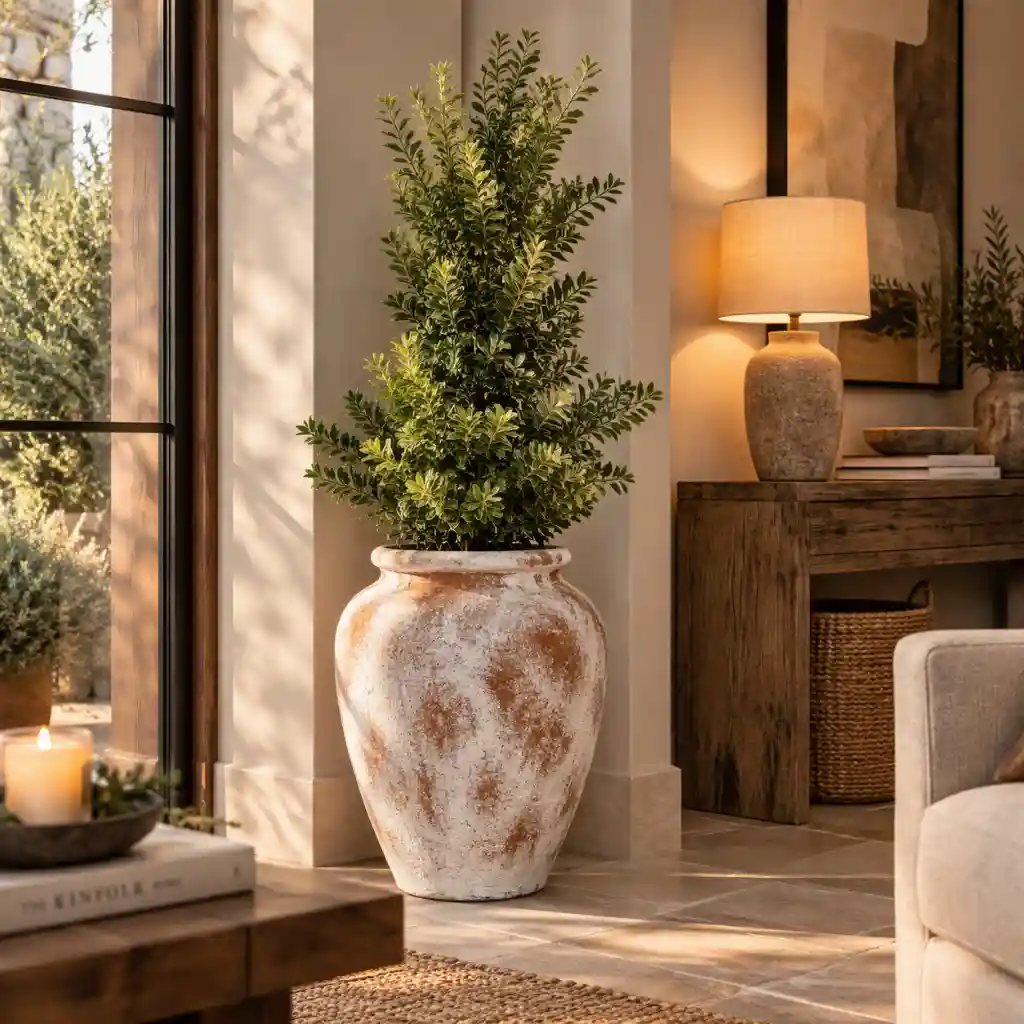
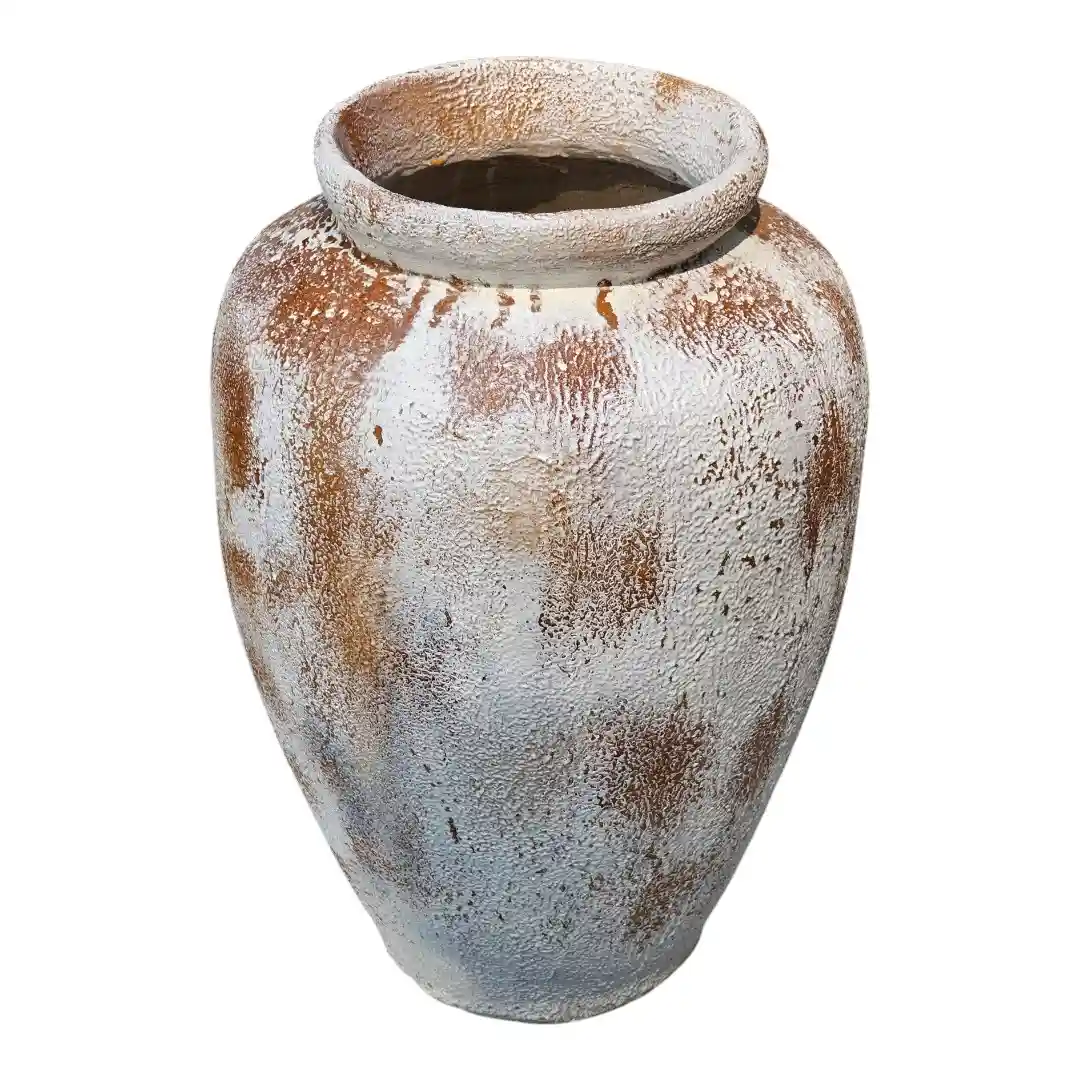
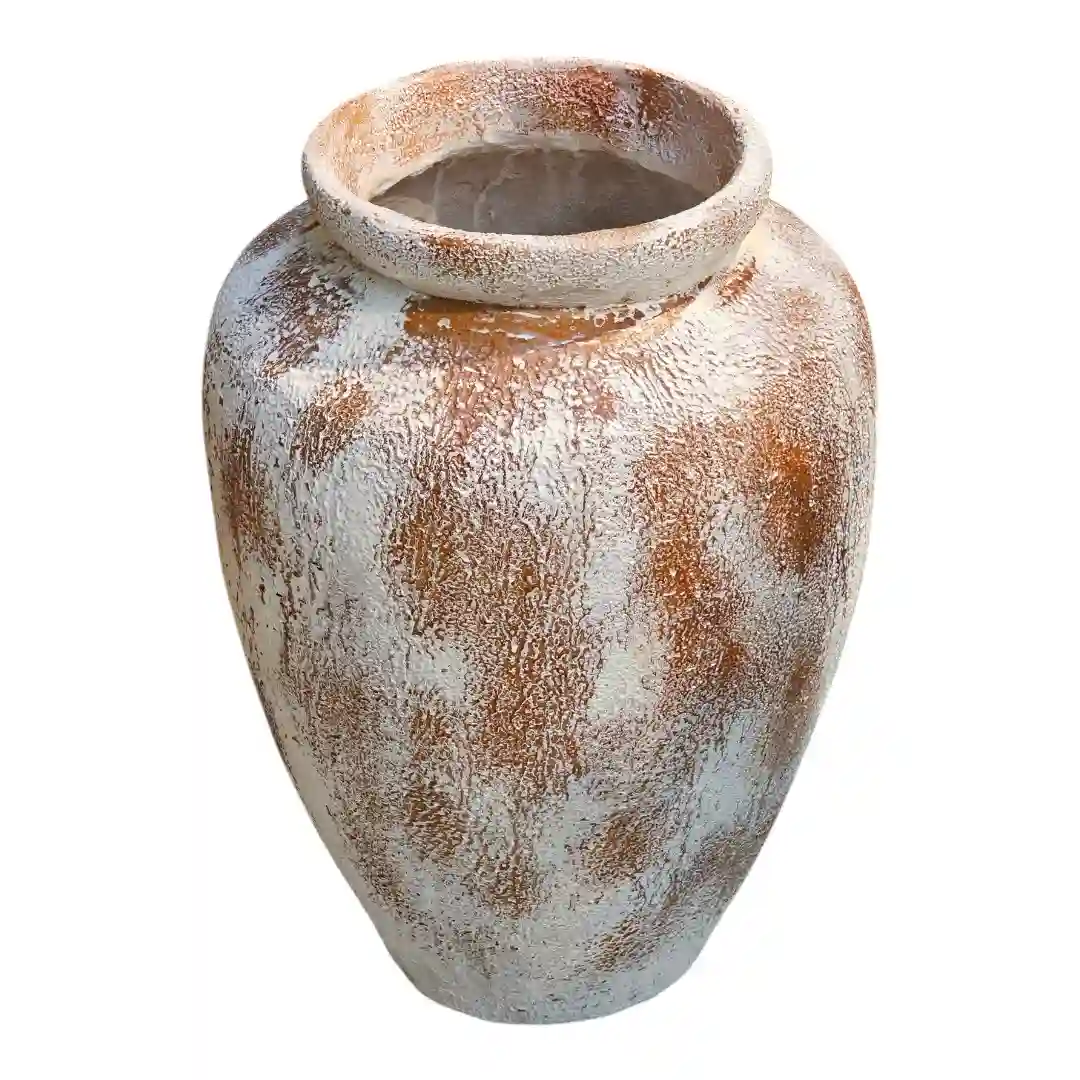
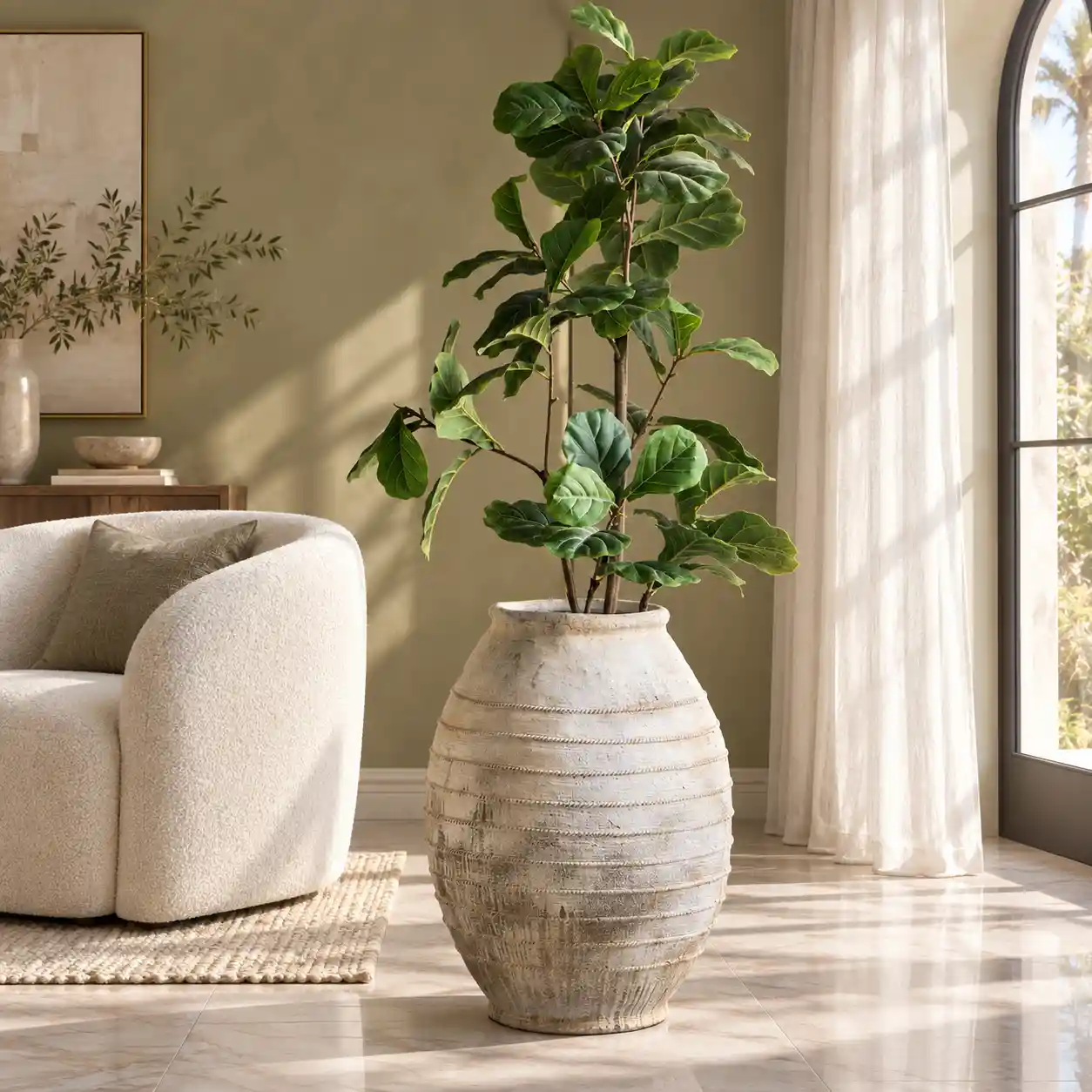
Named Vase de Terre Craquelé to reflect the time-worn, chalky crackle surfaces found across 18th-century French country manors in Provence, this grand floor vessel celebrates the intersection of European architectural heritage and authentic Indian handcraft. The silhouette draws inspiration from historic storage urns and Kumbha vessels crafted across the Indus Valley and the desert state of Rajasthan, India, where potters have shaped earthen water jars for over three millennia.
Crafted by master Kumbhar potters, each urn begins as a massive mound of mineral-rich riverbed clay. Artisans build up the wide, rounded walls using wooden mallets (thapa) and hand pads, beating the wet clay to compact its grain structure before forming the sweeping neck and thick collar rim on a slow wheel. The piece is then pit-fired using traditional wood fuel, allowing natural flames to scorch the clay with dark burnt-sienna and terracotta hues.
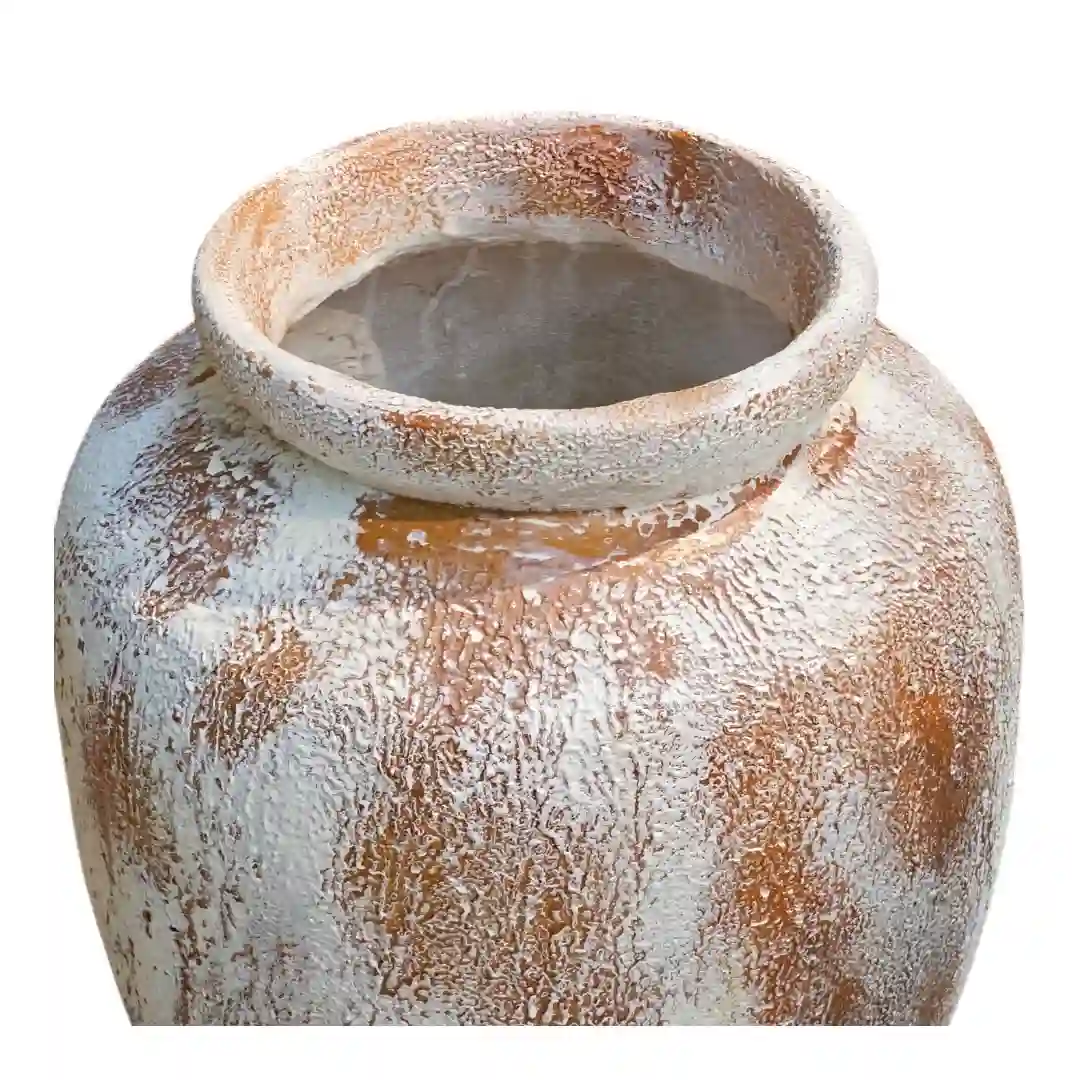
To achieve its signature antiqued look, artisans hand-apply layers of natural mineral lime slip, manually distressing the dry surface to create a craquelé effect. The chalky off-white exterior peels back to reveal raw earthen textures, mineral spots, and flame marks underneath.
With its massive depth, this monolithic vessel effortlessly accommodates tall indoor olive trees, palms, or ficus plants, bringing natural drama, historical soul, and architectural presence into high-end luxury interiors.
STYLE DETAILS
Architectural Influence: 18th-Century French Provençal and Indian Vernacular Earthen Pottery.
Pattern Style: Weathered organic distress with heavy stippled crackle texture.
Decorative Elements: Sculpted rolled lip collar, multi-tone lime-wash slip, exposed raw sienna clay.
CRAFTSMANSHIP DETAILS
Technique Used: Traditional hand-coiling, paddle-beating (Thapa Kaam), and open-pit kiln firing.
Skill Level Required: Master ceramic artisan with over 20 years of heritage pottery experience.
Distinguishing Features: Unique hand-distressed wash pattern, subtle asymmetrical body contour, heavily textured surface.
Finishing Process: Pit-fired at high temperatures, coated in mineral lime slip, and manually aged by hand.
TERRACOTTA FINISH CHARACTERISTICS
Type & Grain Richness: High-density natural terracotta clay with rich iron-oxide undertones.
Depth & Texture: Tactile chalky lime exterior layered over coarse, pit-fired burnt clay.
Difference from Mass-Produced: Free of uniform ceramic molds or synthetic spray glazes; every wash pattern reflects individual handwork.
Longevity & Aging: Maintains structural integrity while acquiring an increasingly rich antique patina across decades.
WHY YOU’LL LOVE IT / INVESTMENT VALUE
Commands immediate attention as a museum-grade sculptural ceramic artwork.
Generous scale perfectly houses large indoor trees, transforming floor spaces.
Infuses minimalist and modern architectural interiors with organic warmth and ancient story.
Solid pit-fired earthenware construction delivers lasting heirloom durability.
SUGGESTIONS FOR INCORPORATION
Anchor a grand entryway or foyer holding a mature indoor ficus or fiddle-leaf fig tree.
Position in a double-height living room corner to introduce grounding scale and historical texture.
Pair alongside low-profile stone or timber furniture to accent natural room materiality.
DETAILED SPECIFICATIONS
Color: Chalky White, Mineral Sanded Beige, Deep Burnt Sienna.
Finish: Weathered Matte Lime-Wash Crackle.
Origin: India.
Age/Period Influence: 18th-Century French Rustic / Ancient Indian Vernacular.
PERFECT FOR
Housing large indoor trees, palms, and mature botanical displays.
Grand foyer staging, courtyard corridors, and high-ceiling living rooms.
INTERIOR TYPES
Modern Luxury,Heritage Organic,Wabi-Sabi,Contemporary Classic,Eclectic