Dust wood and metal surfaces regularly with a soft dry microfiber cloth
Clean ceramic tile accents gently with a slightly damp microfiber towel
Avoid harsh liquid chemical sprays and direct moisture pooling on timber surfaces

Furniture >> Inlay Furniture >> Dining Chairs >> Brass Inlay >> Tile Inlay
Product code: 18188
Dimensions: 45 (Length) x 45 (Width) x 100 (Height) cm
Material: Solid Indian rosewood (Sheesham), brass sheet metal, glazed ceramic, wrought iron hardware
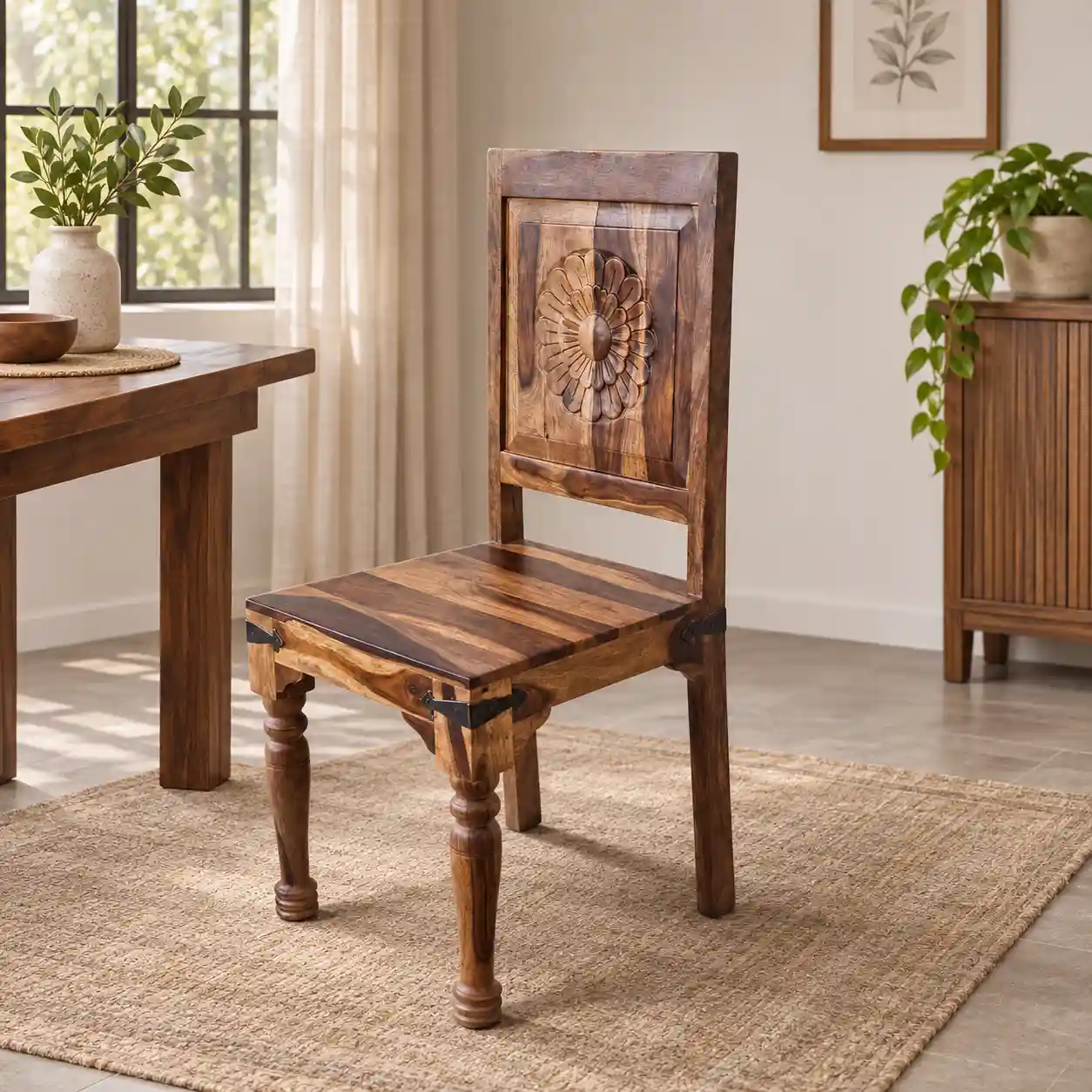
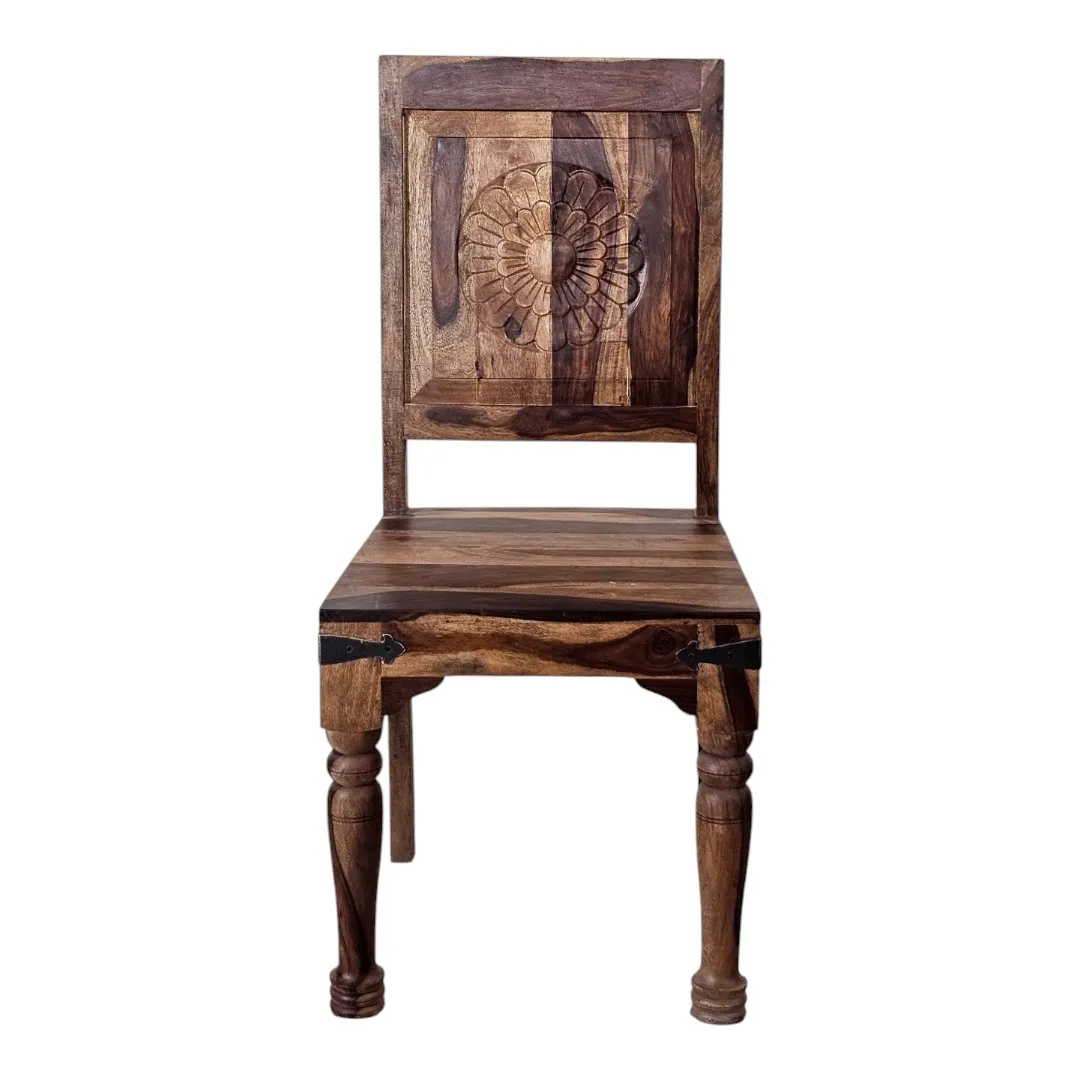
Embodying courtly grace and artisanal mastery, the Silla Gul-e-Zarrin—meaning "The Golden Blossom"—bridges dense Indian rosewood craftsmanship with hand-pressed brass and ceramic tilework. Featuring a hand-carved rosette facade and turned front legs, this dining chair transforms everyday seating into a storied culinary accent of enduring heritage and functional elegance.
Features
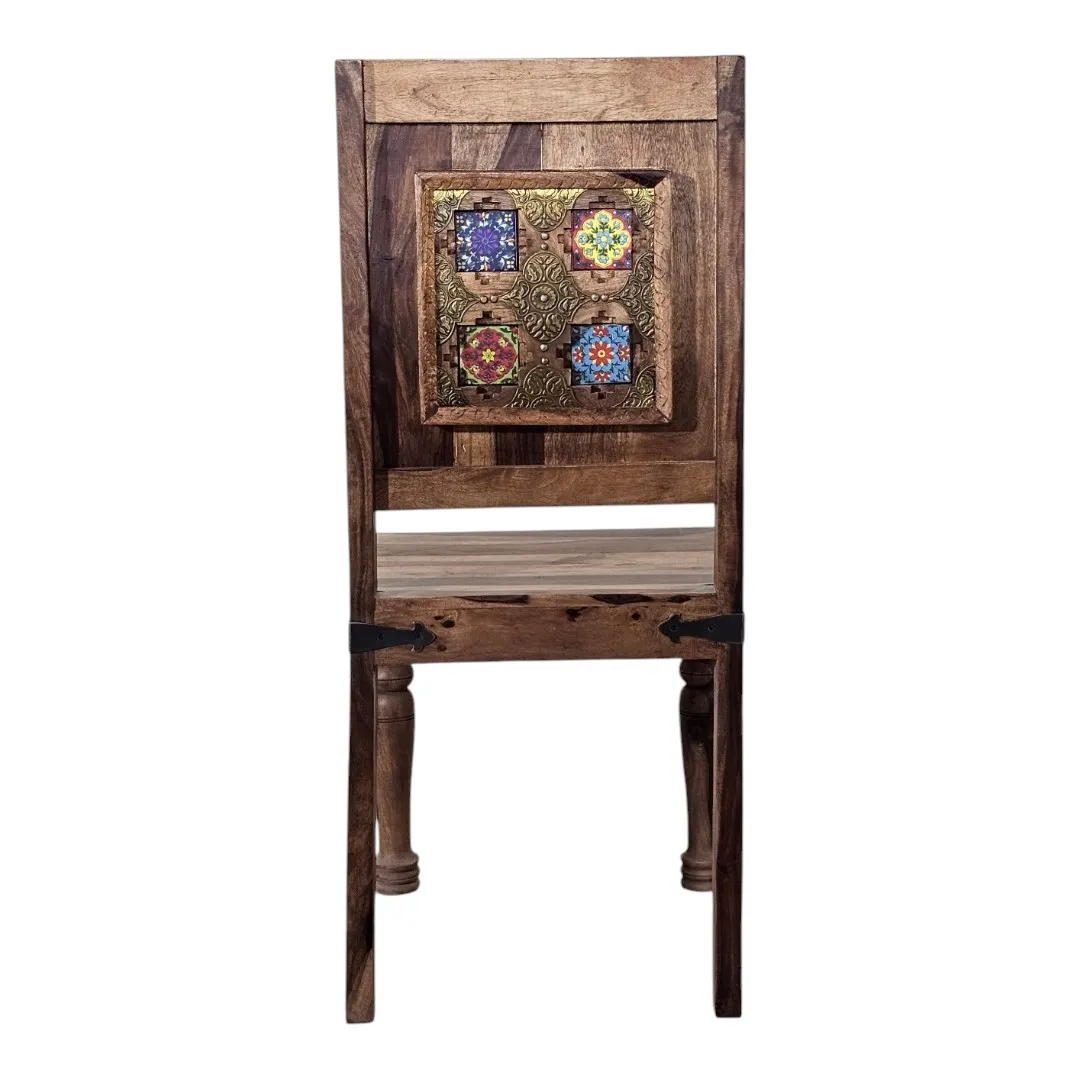
The Silla Gul-e-Zarrin Dining Chair stands as a dual-sided work of architectural artistry, balancing quiet wooden sculpture at the table facade with vibrant courtly ornamentation on its reverse frame. Named Gul-e-Zarrin—a Persian poetic phrase translating to "The Golden Blossom"—this chair draws direct inspiration from Mughal court flora and Rajasthani Haveli woodwork. The central sunburst rosette (Gul) carved into the front backrest symbolizes cosmic harmony and eternal renewal, a motif historically reserved for royal stone screens (jalis) across imperial palaces in Agra, Jaipur, and Delhi. On the reverse, four hand-painted ceramic tiles embedded in an embossed brass matrix pay homage to Kashi-kari tilework traditions that arrived along Silk Road trade routes into Northern India.
The creation of each chair is a multi-disciplinary effort executed by master artisans. Dense Indian rosewood is hand-selected and kiln-seasoned before woodcarvers chisel the high-relief floral rosette directly into the backrest panel. Simultaneously, metalsmiths hammer thin brass sheets into raised botanical relief frames, while ceramic painters execute fine floral brushwork on glazed tiles before setting them flush into the back casing. Front legs are individually hand-turned on wood lathes, and hand-forged wrought iron corner straps are riveted to the apron for structural reinforcement. This labor-intensive combination of wood sculpting, metal repoussé, and tile glazing ensures no two chairs share identical brushstrokes or grain paths.
Designed for sophisticated contemporary dining, the Silla Gul-e-Zarrin brings historical depth to formal dining halls, sunlit breakfast pavilions, or executive meeting areas. It seamlessly pairs with long solid-wood dining tables while acting as an artful sculptural element when viewed from behind.
Style Details
Architectural Influences: Mughal imperial court pavilions and Rajasthani Haveli interiors
Pattern Style: Relief floral sunburst rosettes, geometric brass repoussé, and hand-painted tile grids
Decorative Elements: Hand-carved wood medallion, pressed brass overlay, glazed tiles, and forged iron brackets
Craftsmanship Details
Technique Used and Significance: Multi-medium synthesis of deep wood relief carving, brass sheet repoussé, and ceramic tile setting
Skill Level Required: Master woodcarvers, metalsmiths, and ceramic painters with decades of generational training
Distinguishing Handcrafted Features: Hand-chiseled rosette relief depth, unique timber figure streaks, and hand-painted glaze variations
Finishing Process: Precision hand sanding, clear natural wax rubbing, brass patination, and manual tile flush-mounting
Indian Rosewood Finish Characteristics
Type and Grain Richness: Prime Indian rosewood (Sheesham) featuring dark chocolate and amber interlocking grain streaks
Depth and Texture of Finish: Smooth, velvety satin timber finish contrasting with cool brass embossing and glossy ceramic tiles
Difference from Mass-Produced Furniture: Real solid hardwood weight and authentic multi-medium handcraft devoid of synthetic overlays
Longevity and Aging Beauty: Exceptional timber density that deepens in warmth and character over decades of daily dining use
Why You’ll Love It / Investment Value
Dual-sided aesthetic reveals quiet relief carving from the front and vibrant tilework from the rear
Handcrafted from dense Indian rosewood engineered for generational stability
Integrates three distinct ancestral crafts: wood carving, metal repoussé, and ceramic tilework
Turned legs and forged iron brackets provide statement-making presence around dining tables
Elevates daily dining rituals into an immersive historical experience
Suggestions for Incorporation
Placement Ideas: Surrounding a solid rosewood or marble dining table, flanking a foyer console, or in a private lounge
Styling Tips: Pair with low warm lighting, linen placemats, and antique brass tabletop tableware
Lifestyle Use: Hosting multi-course dinner parties, daily family breakfasts, or formal salon seating
Detailed Specifications
Color: Deep chestnut and honey rosewood with golden brass accents and multi-color ceramic tiles (blue, red, yellow)
Finish: Hand-rubbed wax wood finish, burnished brass polish, glossy ceramic tile glaze
Origin: India
Age/Period Influence: 17th-Century Mughal and Rajasthani Haveli Revival
Perfect for
Room Placements: Formal dining room, breakfast pavilion, gallery hall, executive lounge
Functional Uses: Dining seating, accent salon chair, desk seating
Interior Types
Modern Luxury, Global Eclectic, Bohemian, Spanish Colonial, Transitional Classic
Dust wood and metal surfaces regularly with a soft dry microfiber cloth
Clean ceramic tile accents gently with a slightly damp microfiber towel
Avoid harsh liquid chemical sprays and direct moisture pooling on timber surfaces
No reviews for this product variant yet. Shop the product to add reviews