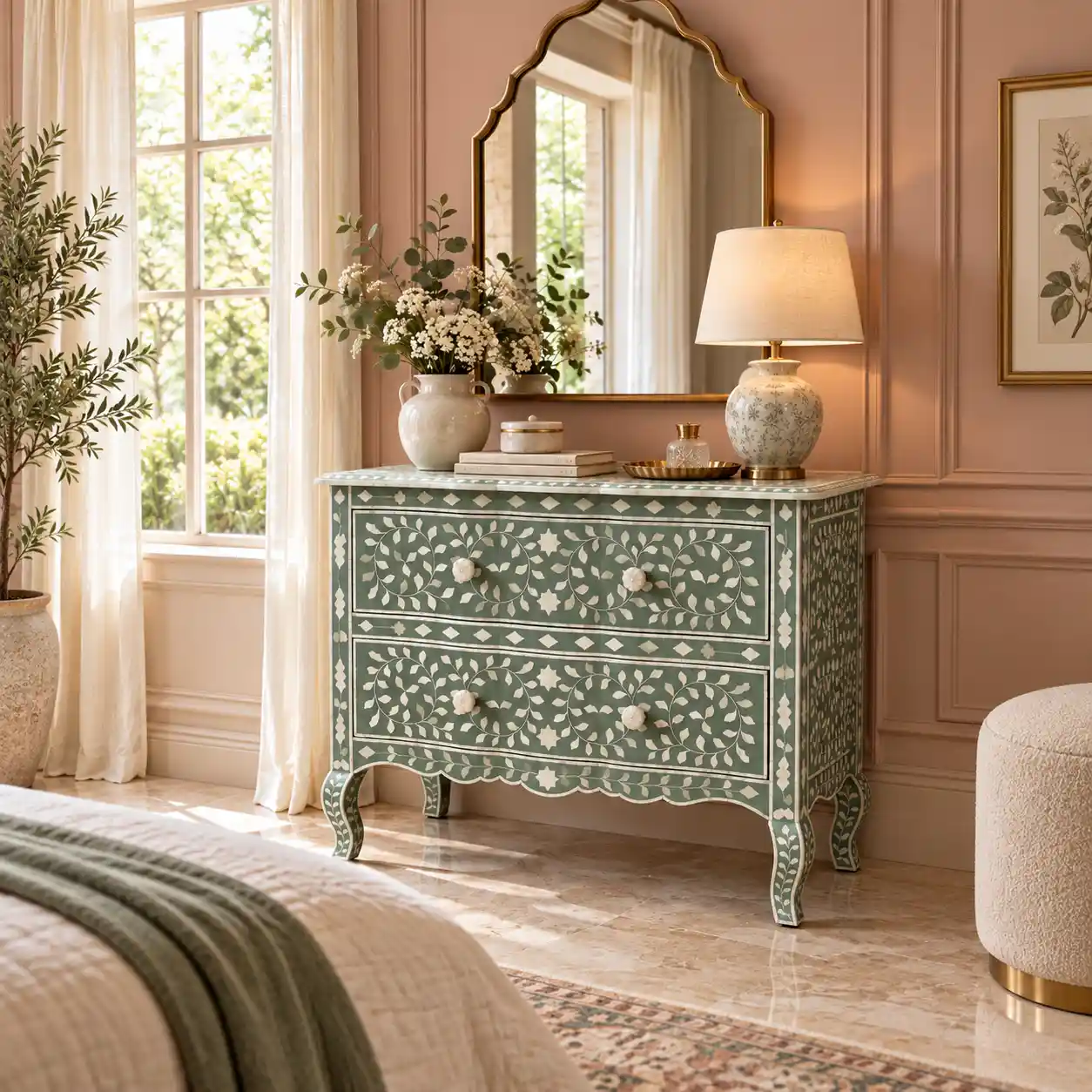
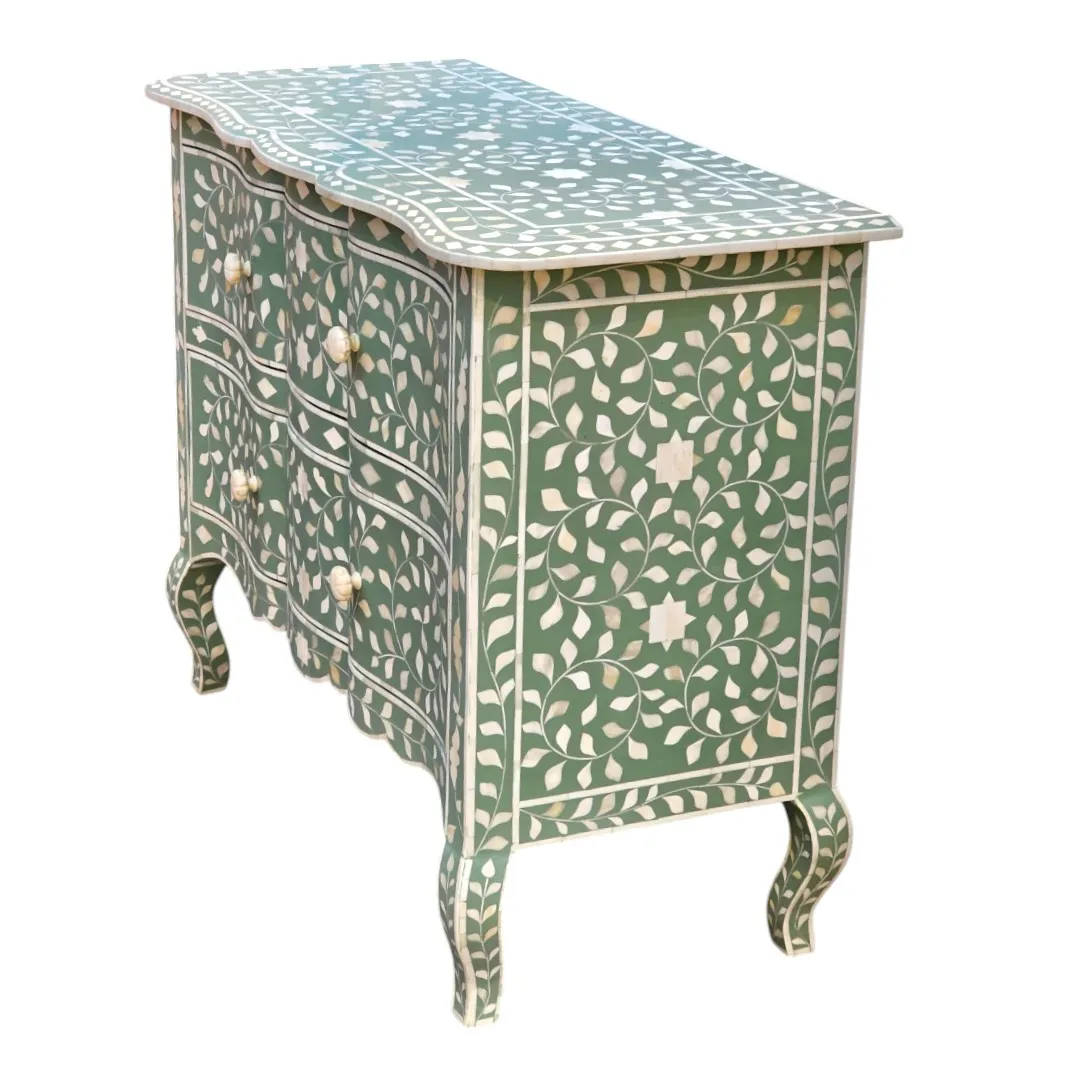
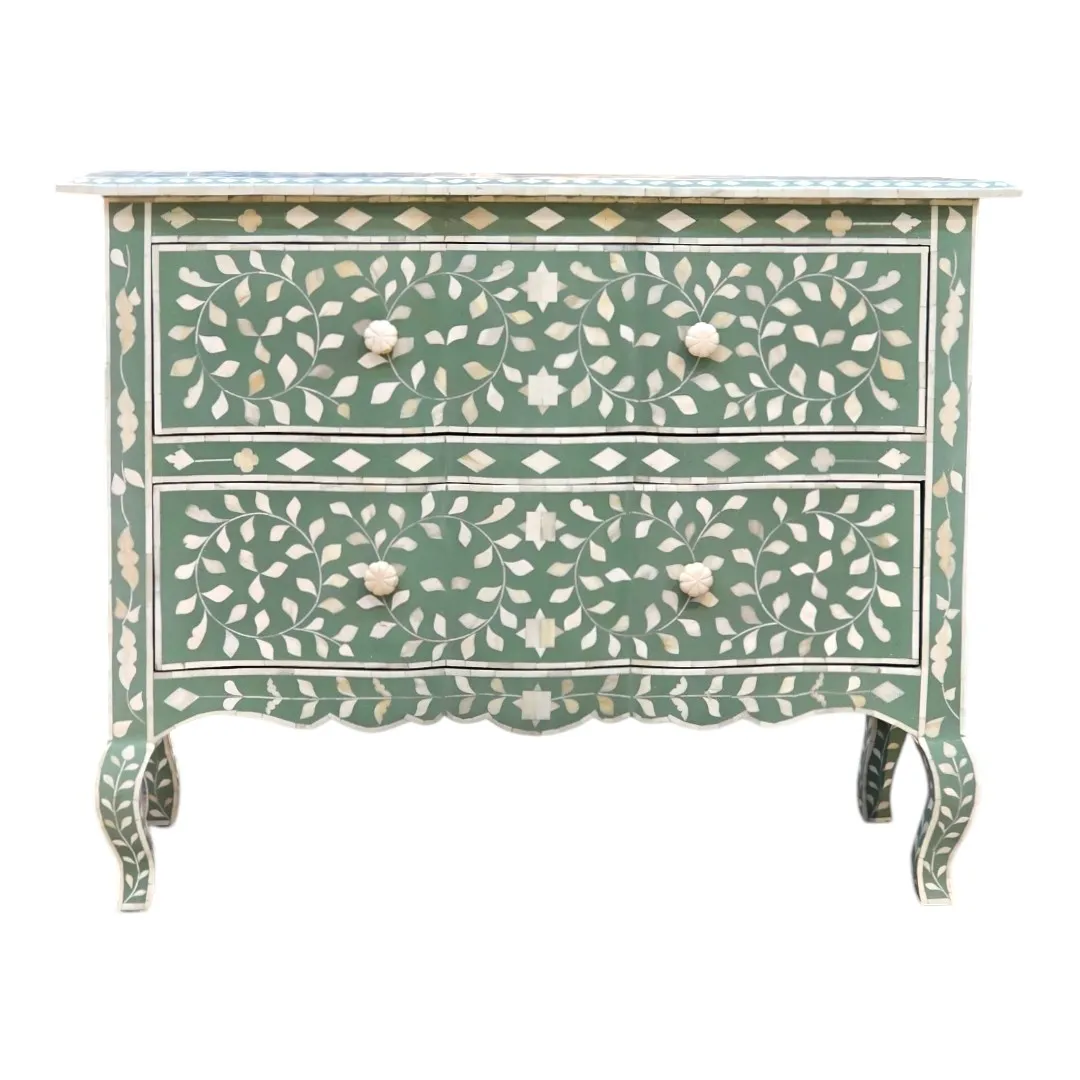
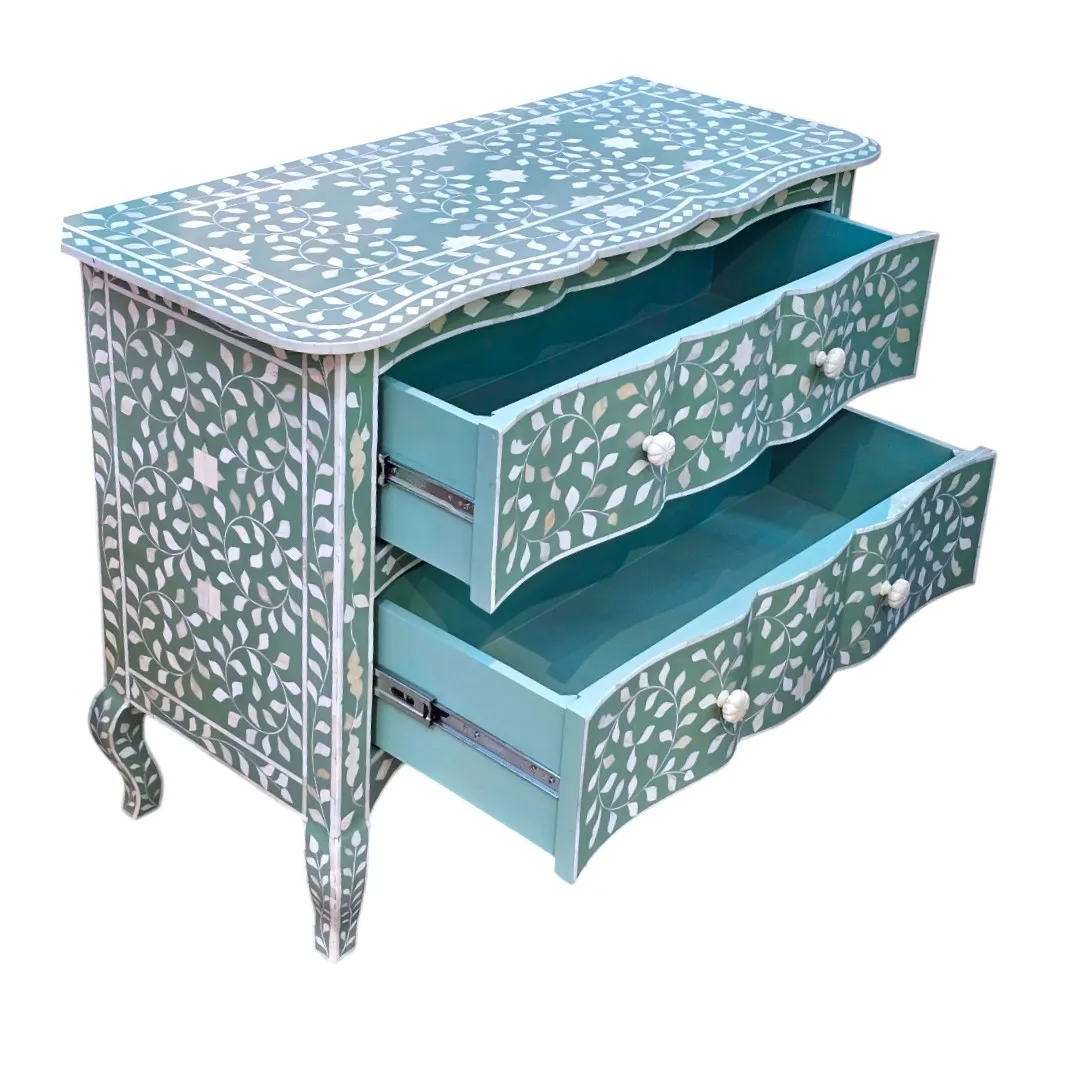
Named Jardin de Gulzar—a French-Persian synthesis translating to Garden of Rose-Blossoms—this piece celebrates the historical exchange between European court design and Indian royal workshops. Its sweeping commode arbalète serpentine facade and delicate cabriole legs echo 18th-century French furniture traditions, while its surface decoration pays homage to the imperial gardens of the Mughal dynasty.
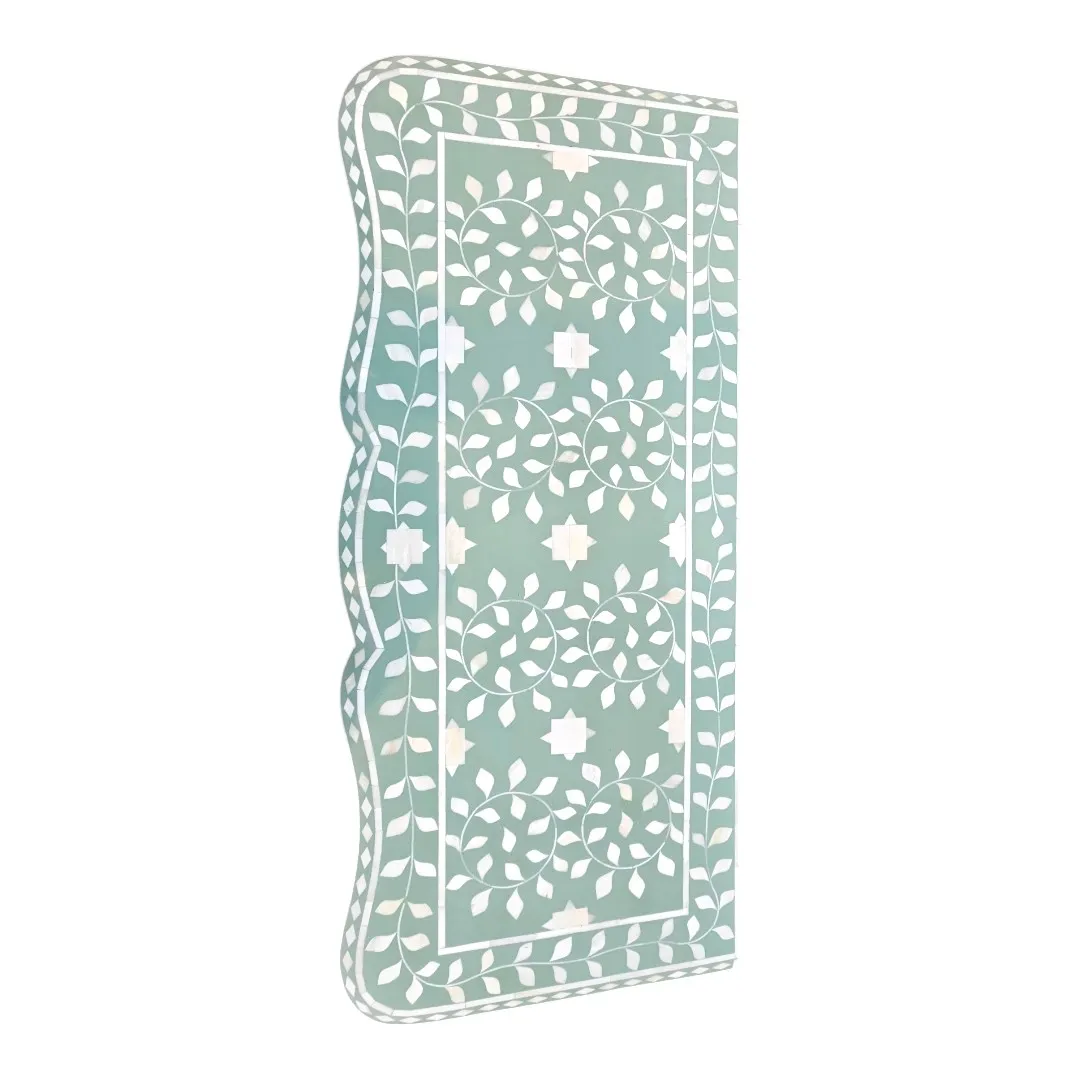
The continuous vine scrollwork (Arab-e-Gul) and eight-pointed geometric star motifs carry deep symbolic meaning: repeating vines represent eternal life and growth, while star cartouches symbolize celestial harmony. These motifs draw directly from the stone pietra dura inlays and marble frescos preserved in Rajasthan’s historical landmarks, such as the City Palace of Udaipur and the Amber Fort of Jaipur.
Constructed using traditional Nakashi bone inlay, each chest represents over 120 hours of manual craftsmanship. Artisans hand-cut ethically sourced bone fragments into leaf and petal shapes using fine manual saws. Patterns are etched into the wood composite core, where each bone fragment is individually set. A pigmented sage green resin is poured across the surface, cured, and repeatedly hand-sanded with natural stone pastes to create a smooth, unified finish.
The underlying wood composite core provides structural stability against seasonal moisture shifts, preventing warping. Free of mass-produced veneers, subtle tonal variations in the bone confirm authentic hand assembly, rendering each chest a one-of-a-kind creation.
STYLE DETAILS
Architectural Influences: French Louis XV serpentine commodes and Mughal palace garden architecture.
Pattern Style: Continuous botanical leaf scrollwork framed by geometric diamond borders.
Decorative Elements: Hand-cut bone inlay, scalloped apron trim, and hand-carved bone rosette hardware.
CRAFTSMANSHIP DETAILS
Technique Used: Indian Nakashi Bone Inlay over a wood composite core.
Skill Level Required: Master Artisan level, requiring generations of inherited craft knowledge.
Distinguishing Handcrafted Features: Micro-variations in leaf cutouts, natural bone tone shifts, and hand-contoured joinery.
Finishing Process: Multi-stage stone hand-sanding, resin flooding, and clear satin sealing.
FINISH CHARACTERISTICS
Type & Grain Richness: Smooth sage green resin matrix contrasted against natural ivory bone.
Depth & Texture: Luminous, flat-polished surface with subtle organic warmth under ambient light.
Difference from Mass-Produced: Assembled entirely by hand without printed patterns or synthetic top-layers.
Longevity & Aging: Natural bone acquires a gentle patina over decades while the composite structure remains stable.
WHY YOU’LL LOVE IT / INVESTMENT VALUE
Serves as a sculptural anchor in entryways, master suites, or formal salons.
Rooted in centuries of Rajasthani and French courtly design heritage.
Engineered wood composite core ensures lasting structural integrity.
A collectible statement piece that transcends seasonal decor trends.
SUGGESTIONS FOR INCORPORATION
Placement Ideas: Foyer entry console, master suite bedside table, or formal dressing room accent.
Styling Tips: Pair with a gilded wall mirror, soft alabaster lighting, and raw linen textiles.
Lifestyle Use: Provides elegant storage for personal mementos while serving as a daily visual art piece.
DETAILED SPECIFICATIONS
Color: Sage Green and Ivory Bone.
Finish: Smooth Hand-Polished Satin Seal.
Origin: India.
Age/Period Influence: Mughal Imperial Revival / French Serpentine.
PERFECT FOR
Room Placements: Master bedroom, formal foyer, executive study, dressing room.
Functional Uses: Bedside storage, accent console, vanity companion.
INTERIOR TYPES
Modern Luxury, Bohemian, Contemporary Transitional, Classic European, Eclectic.