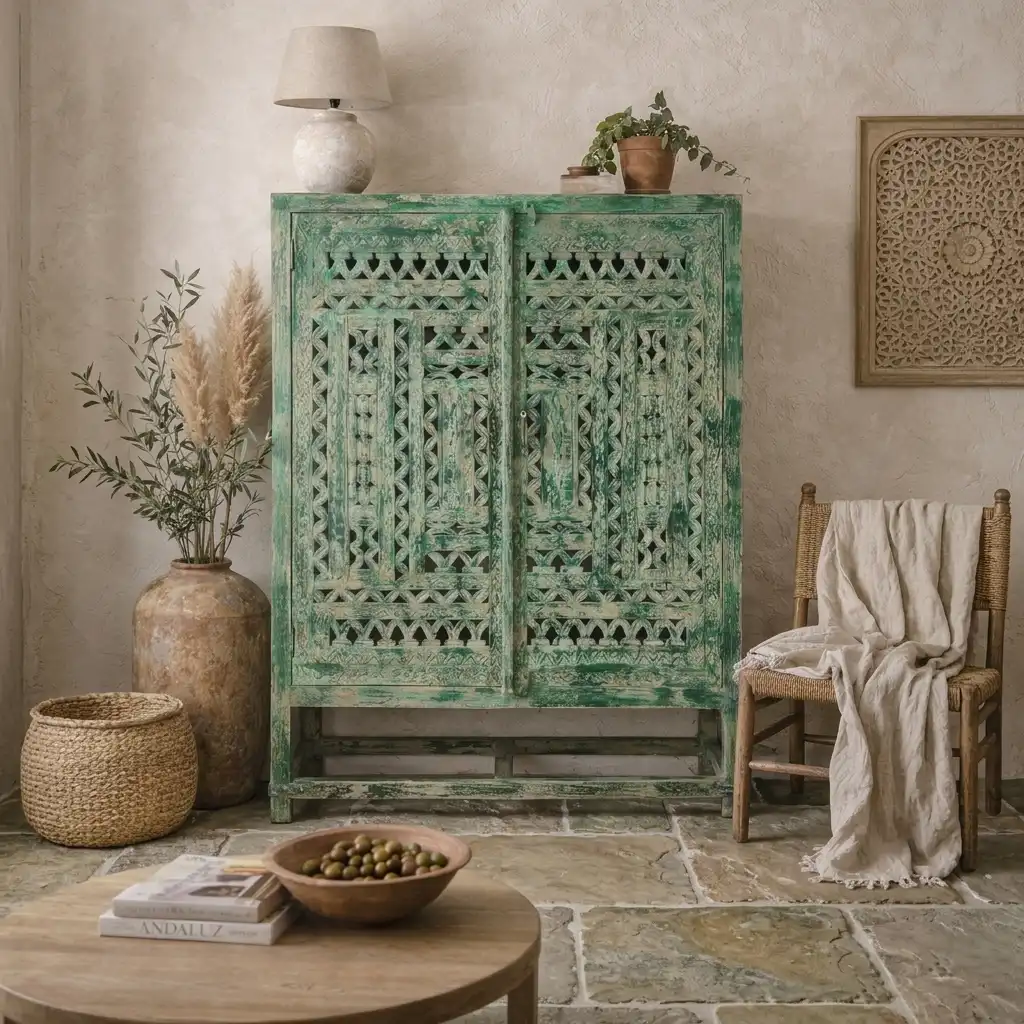
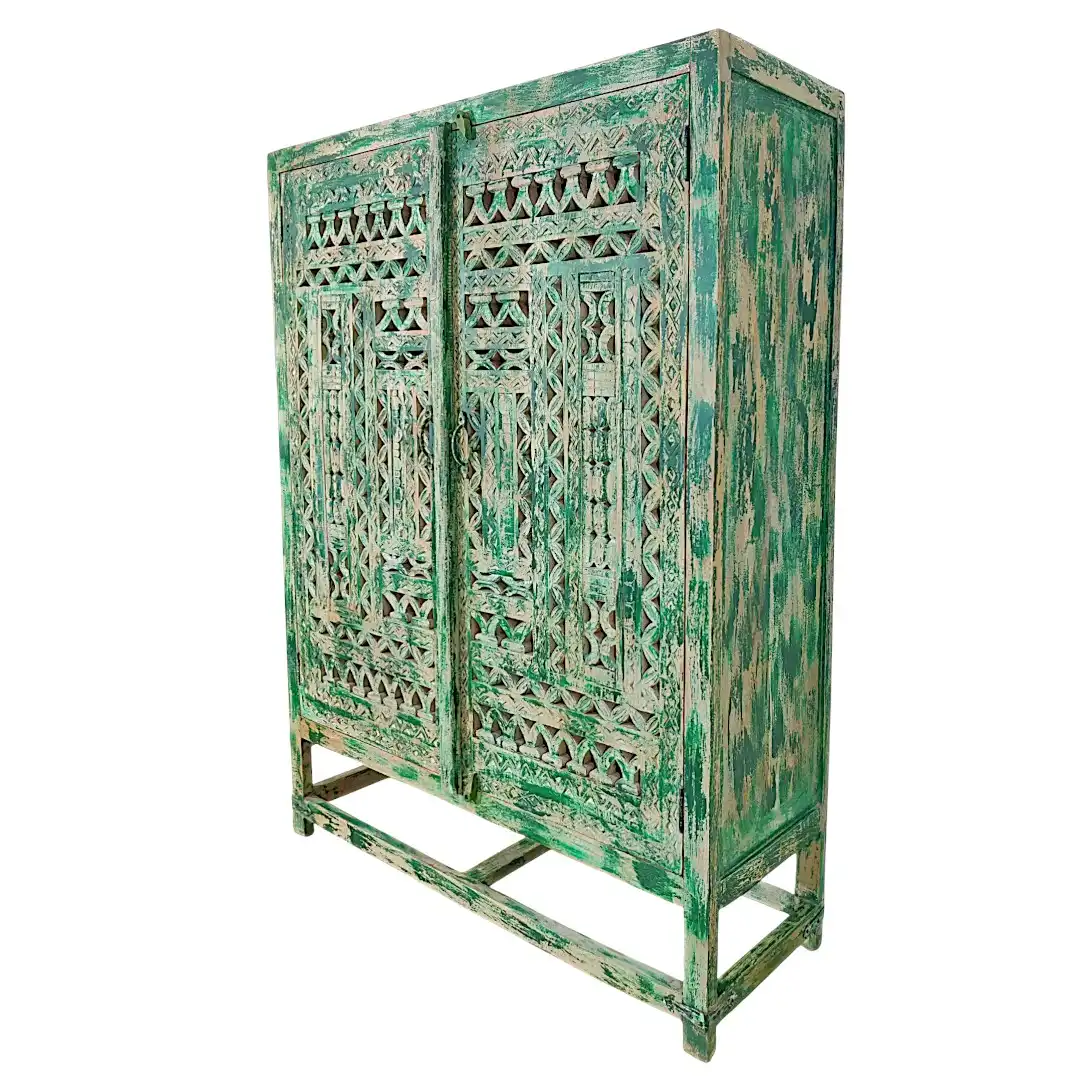
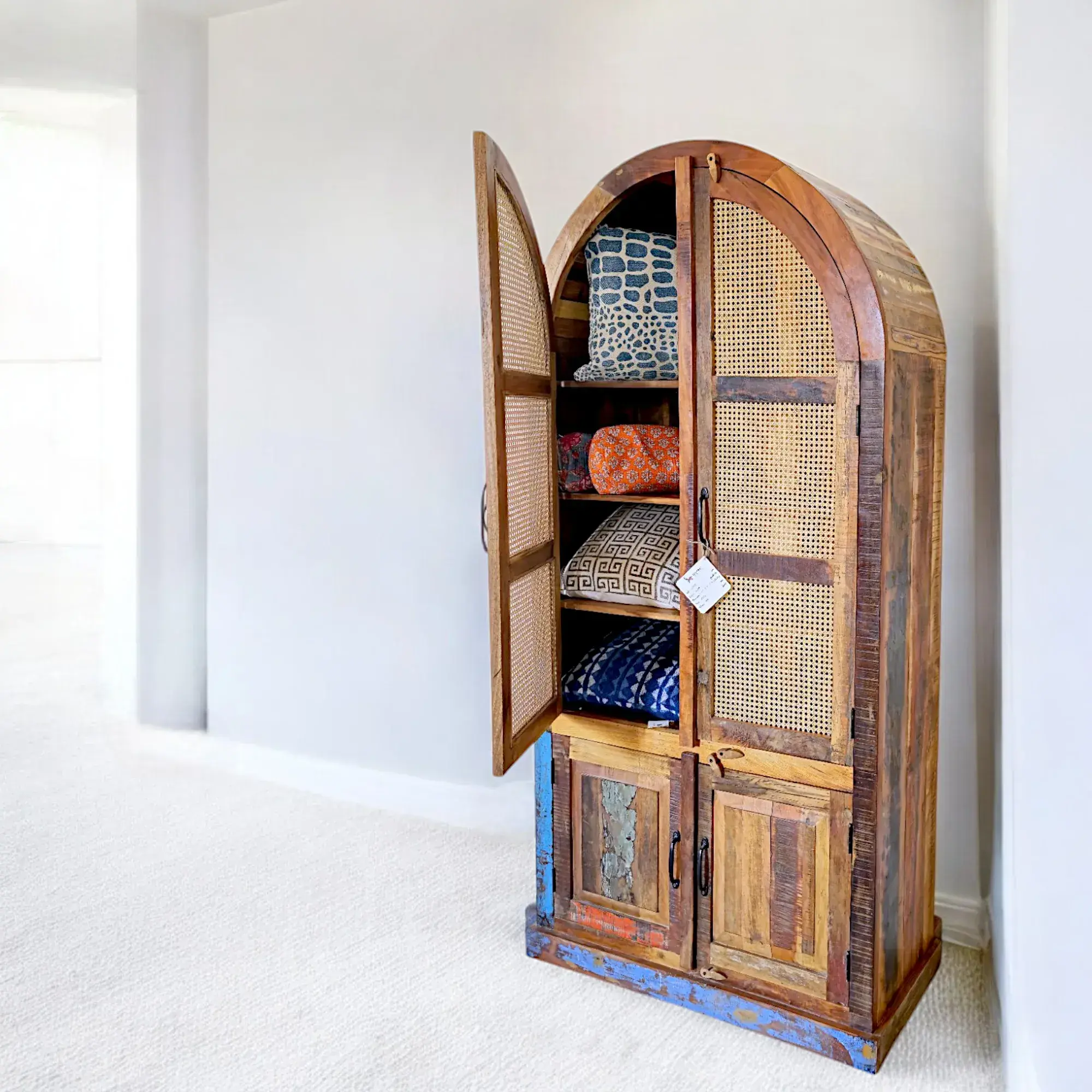
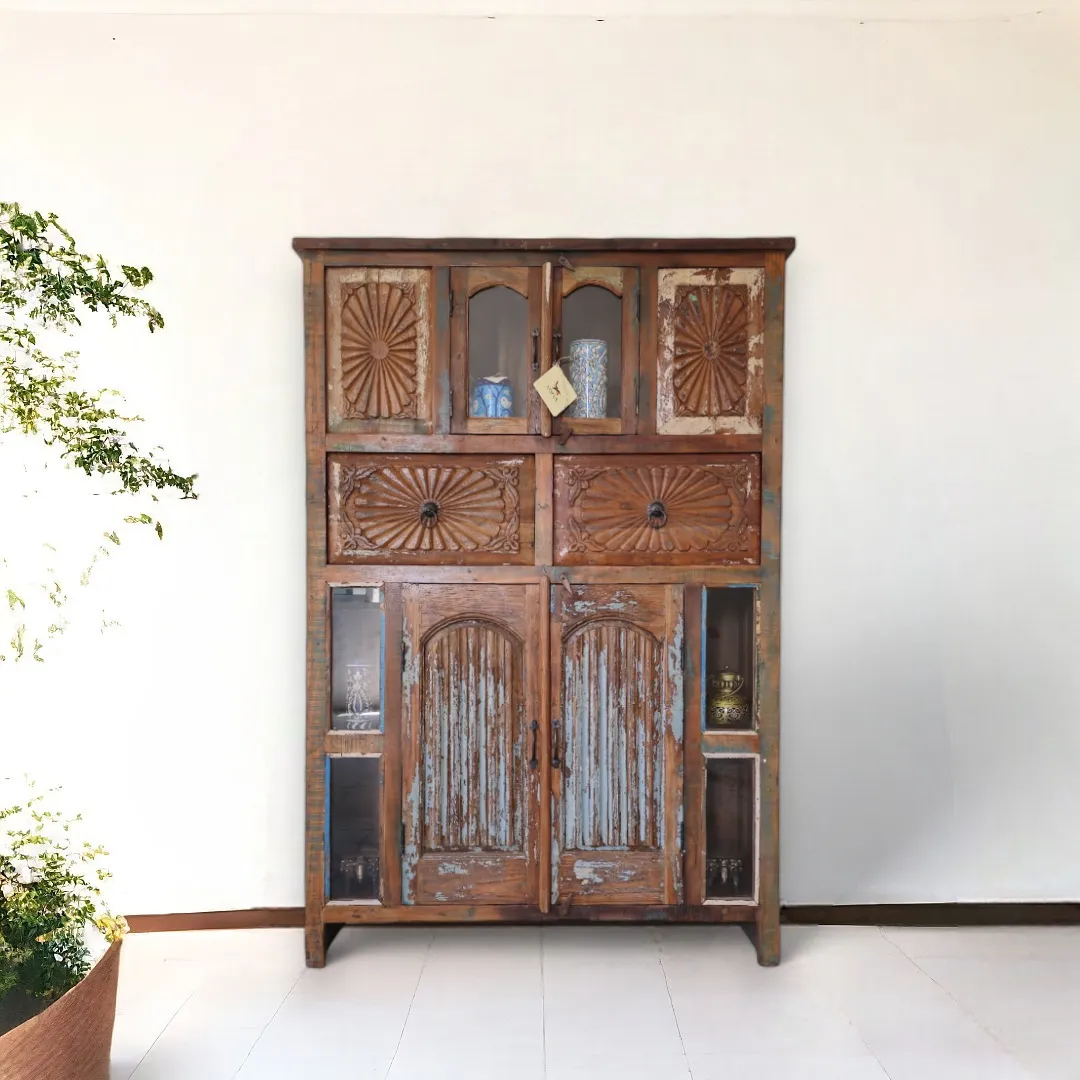
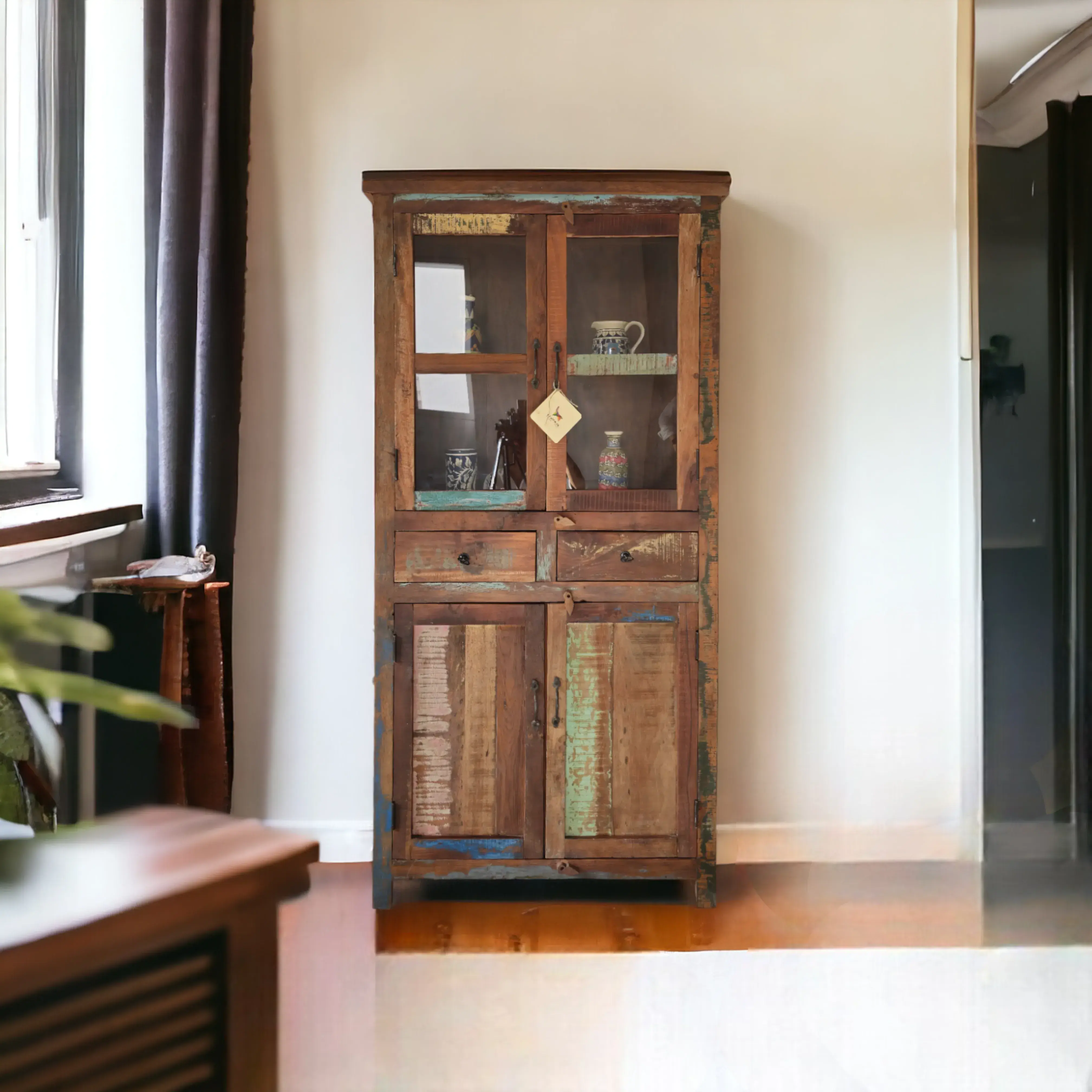
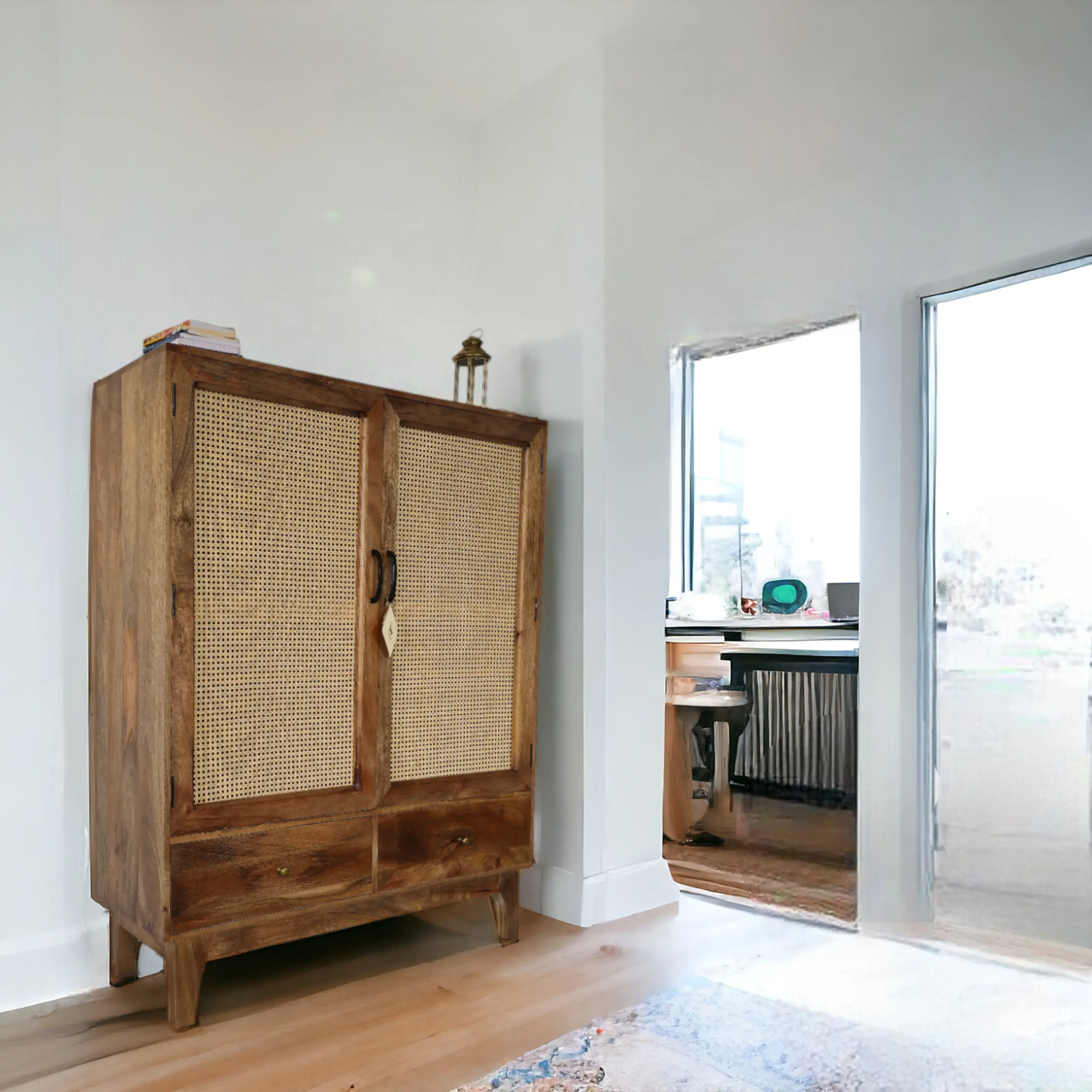
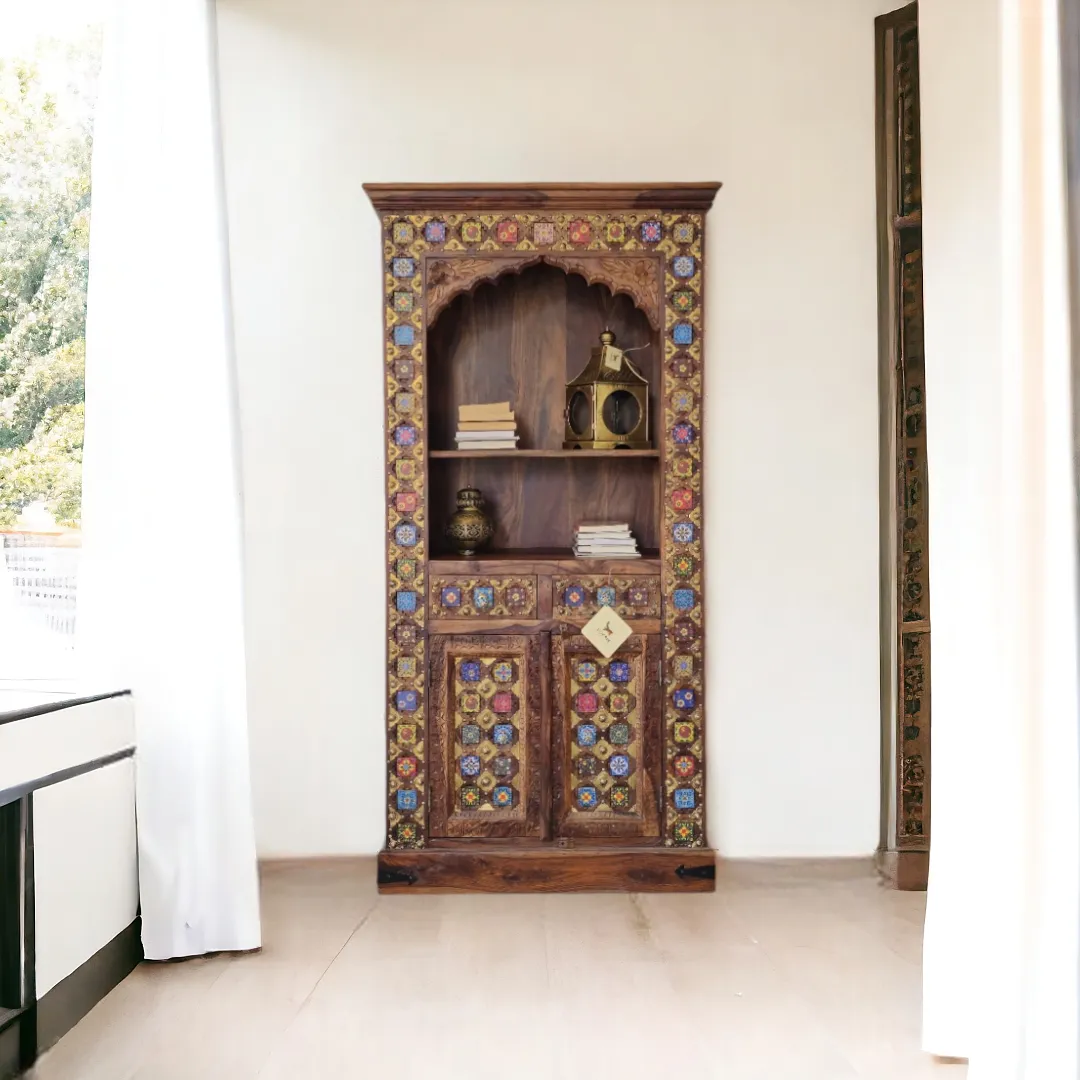
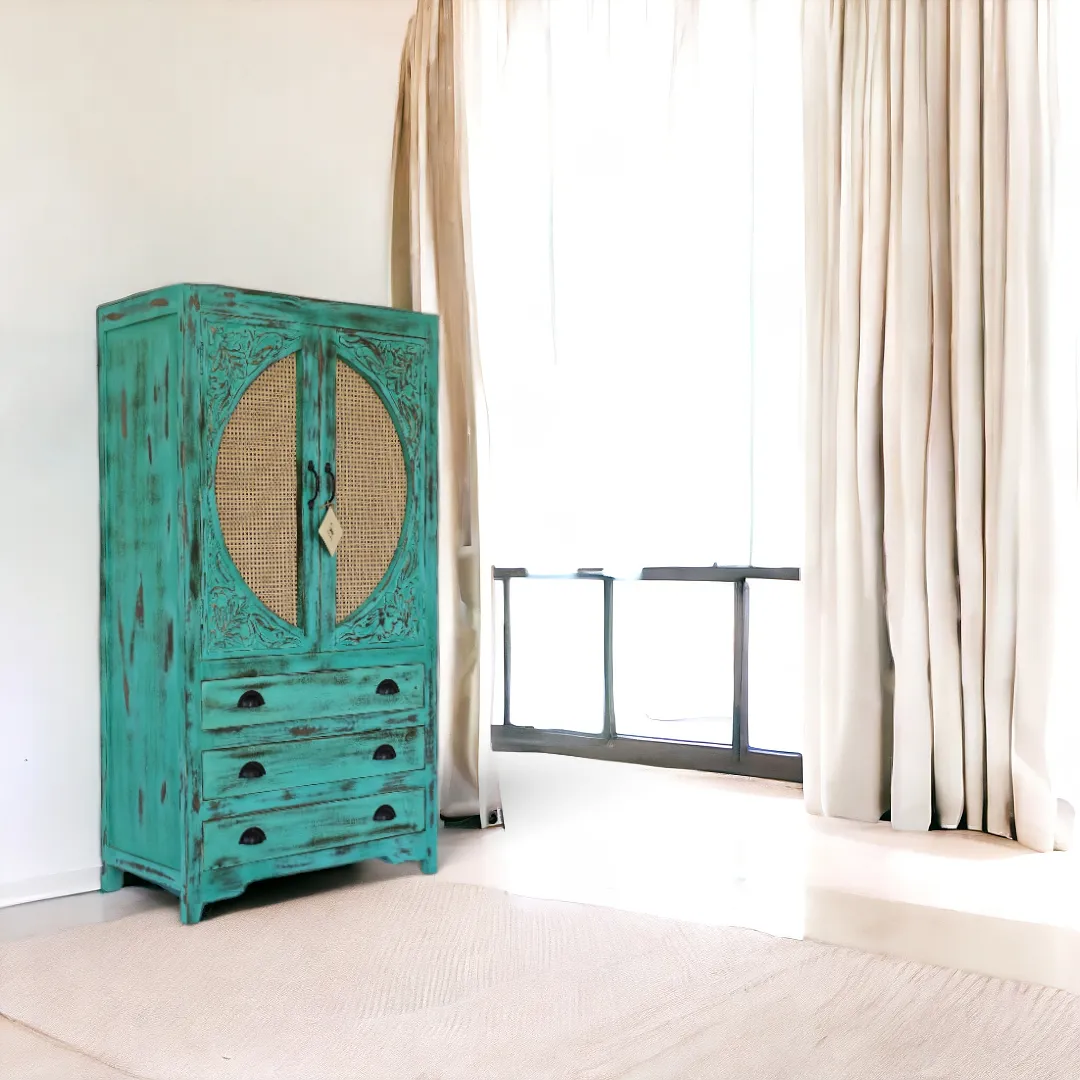
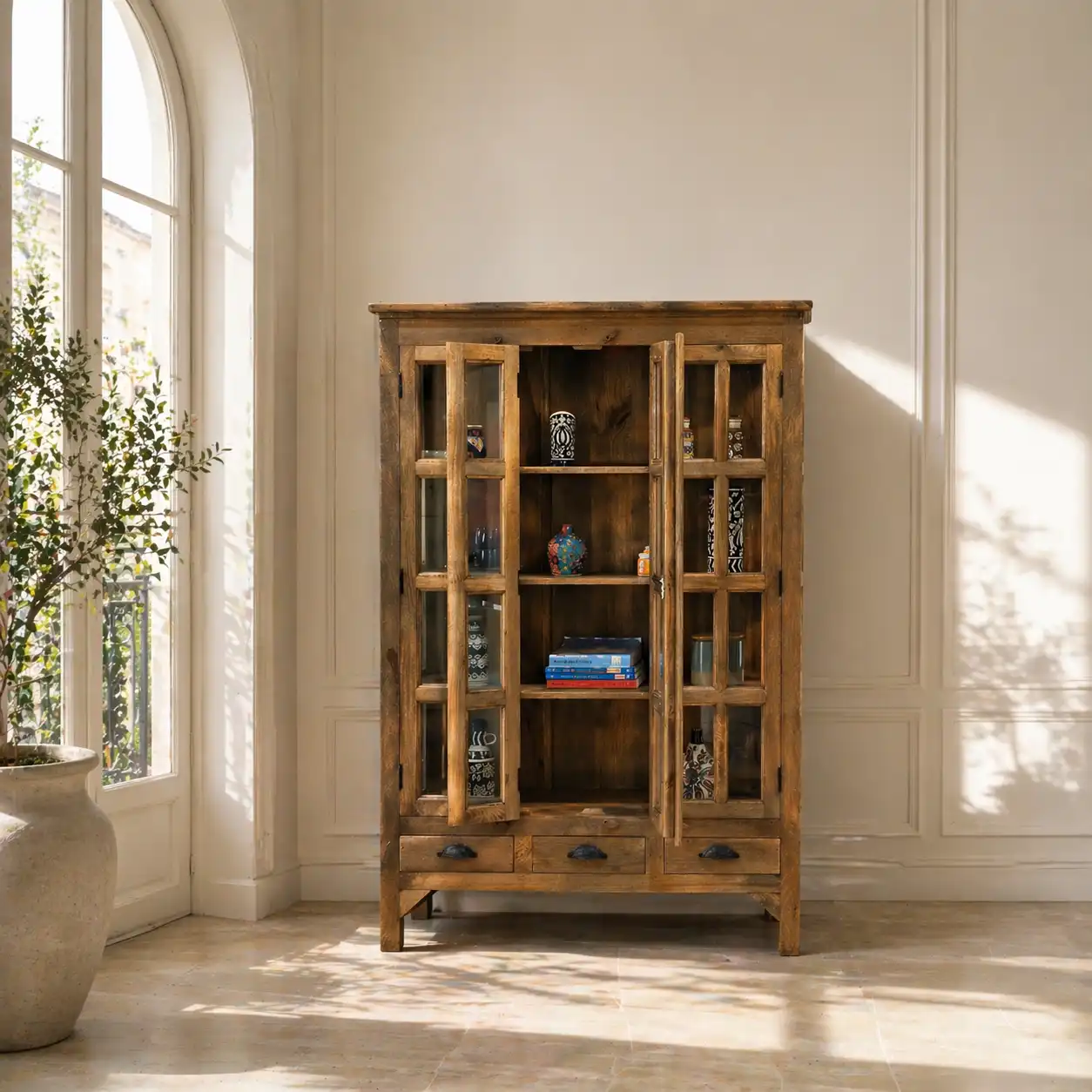
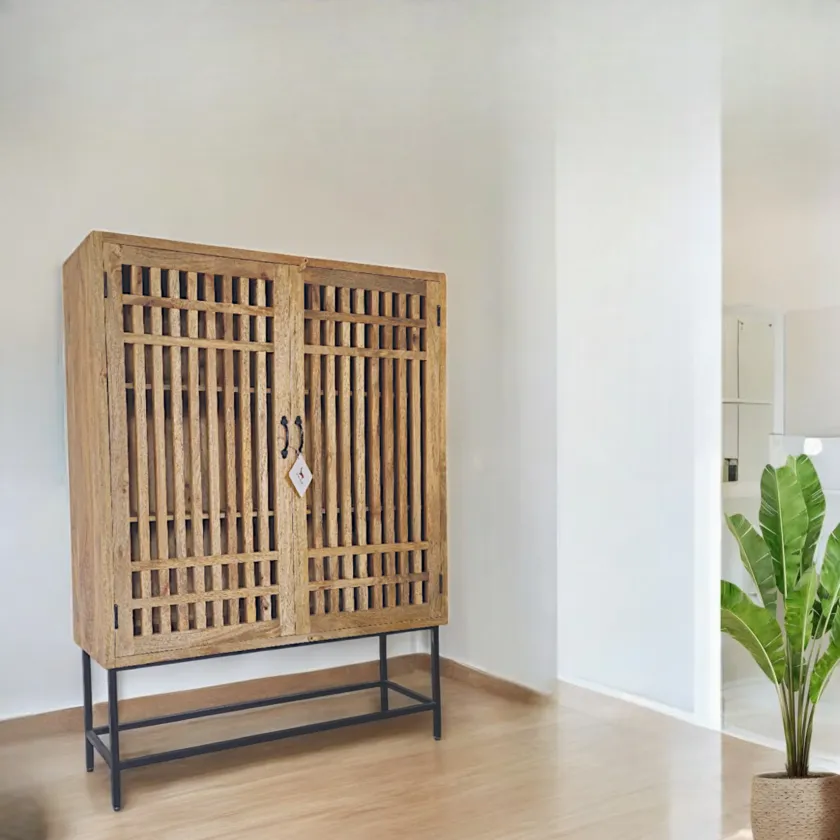
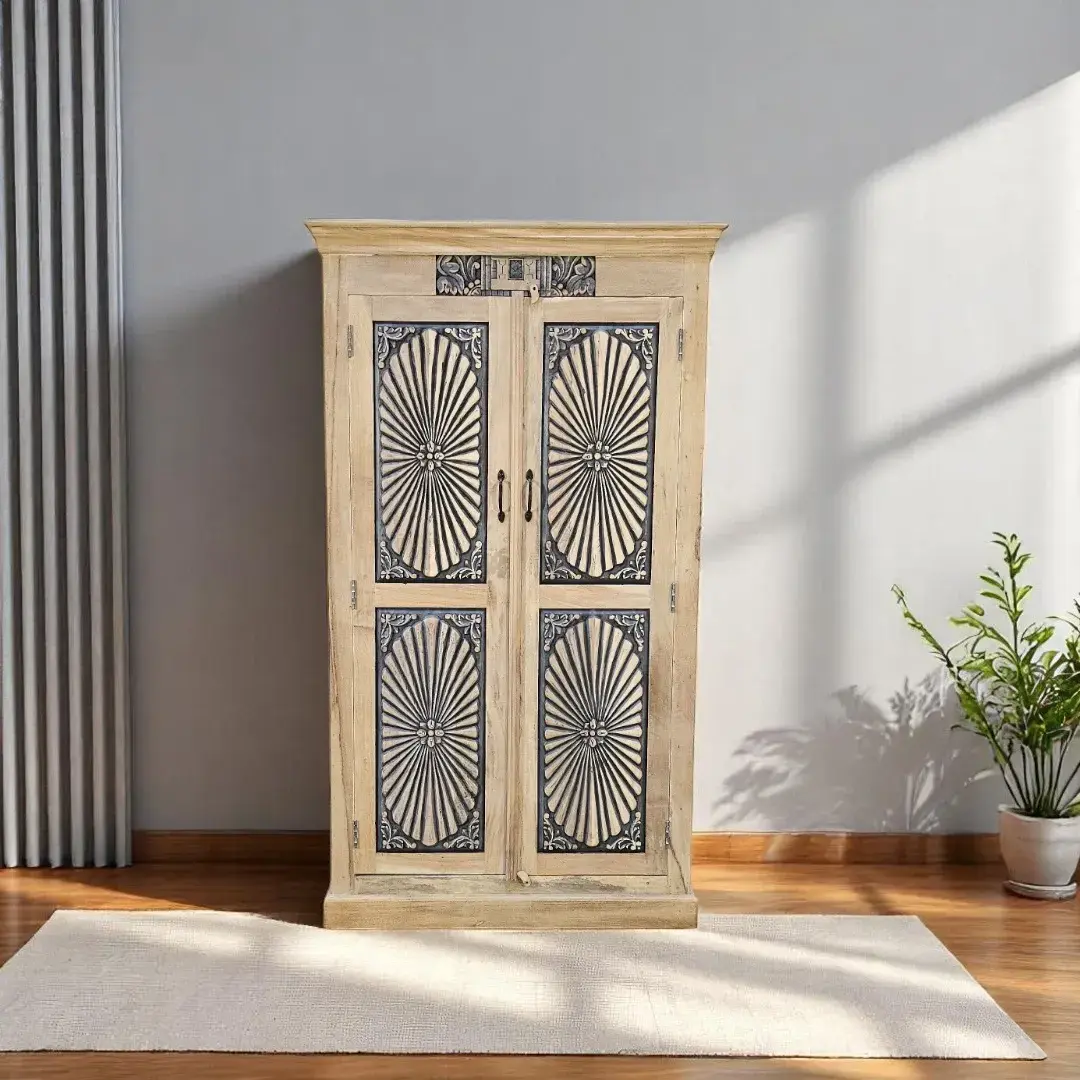
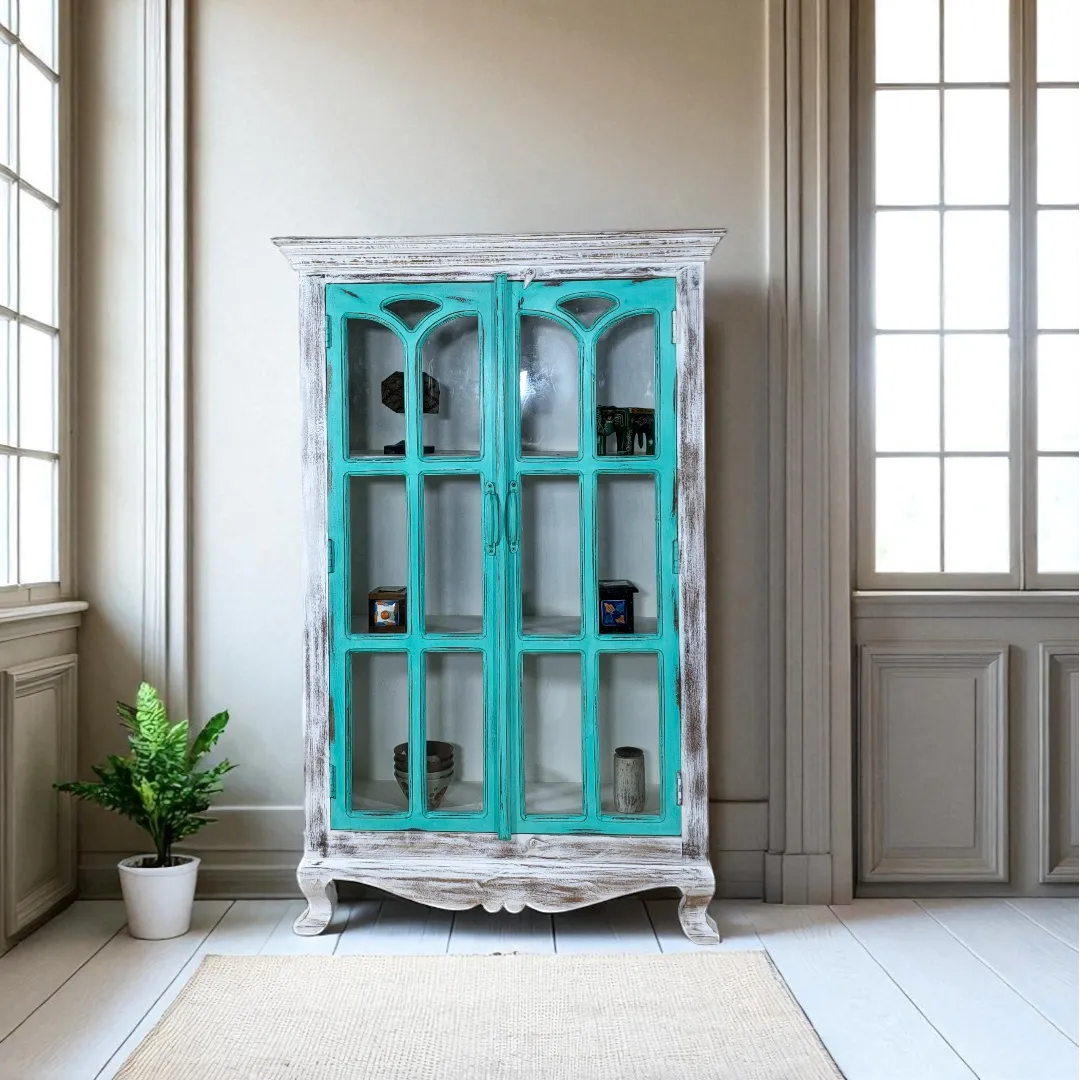
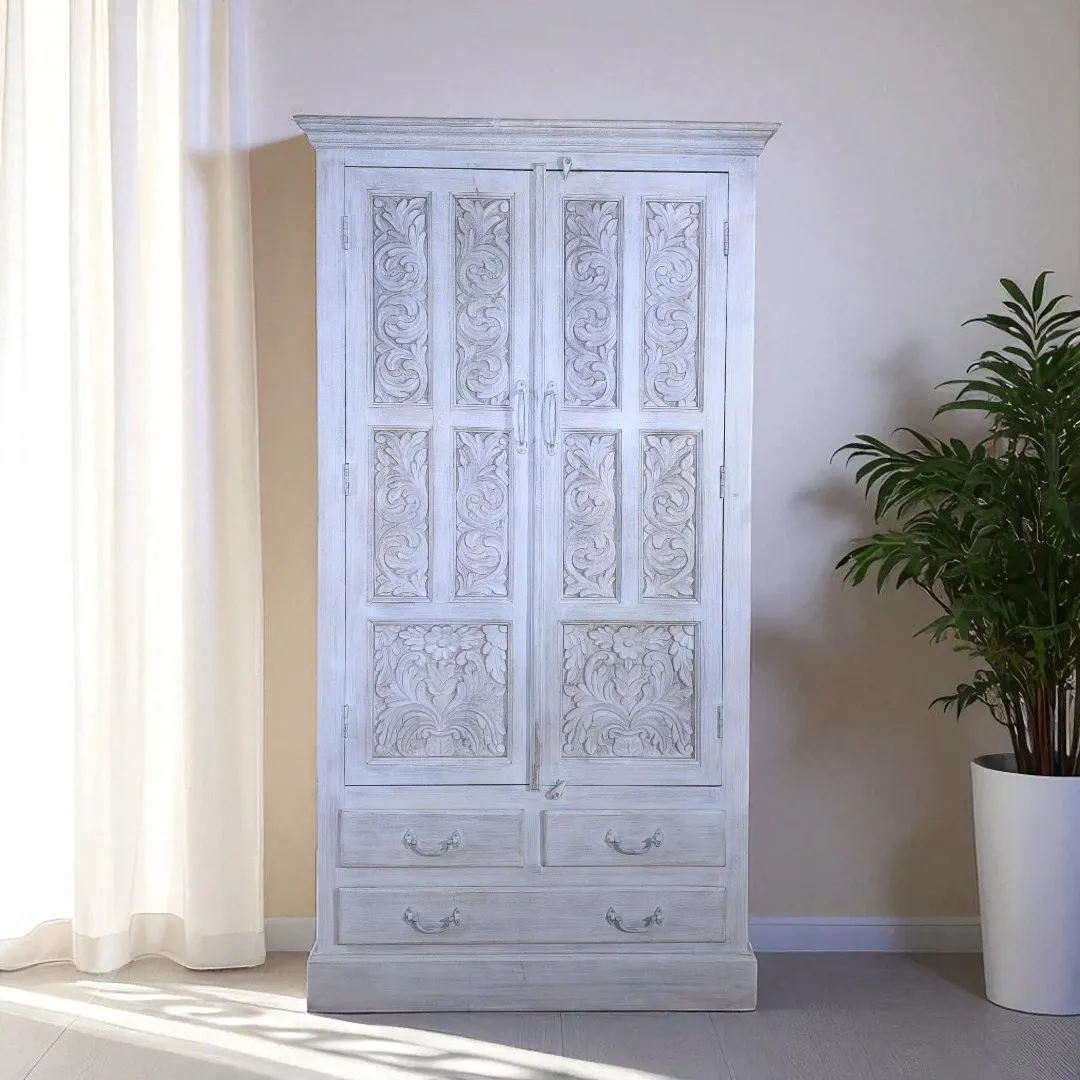
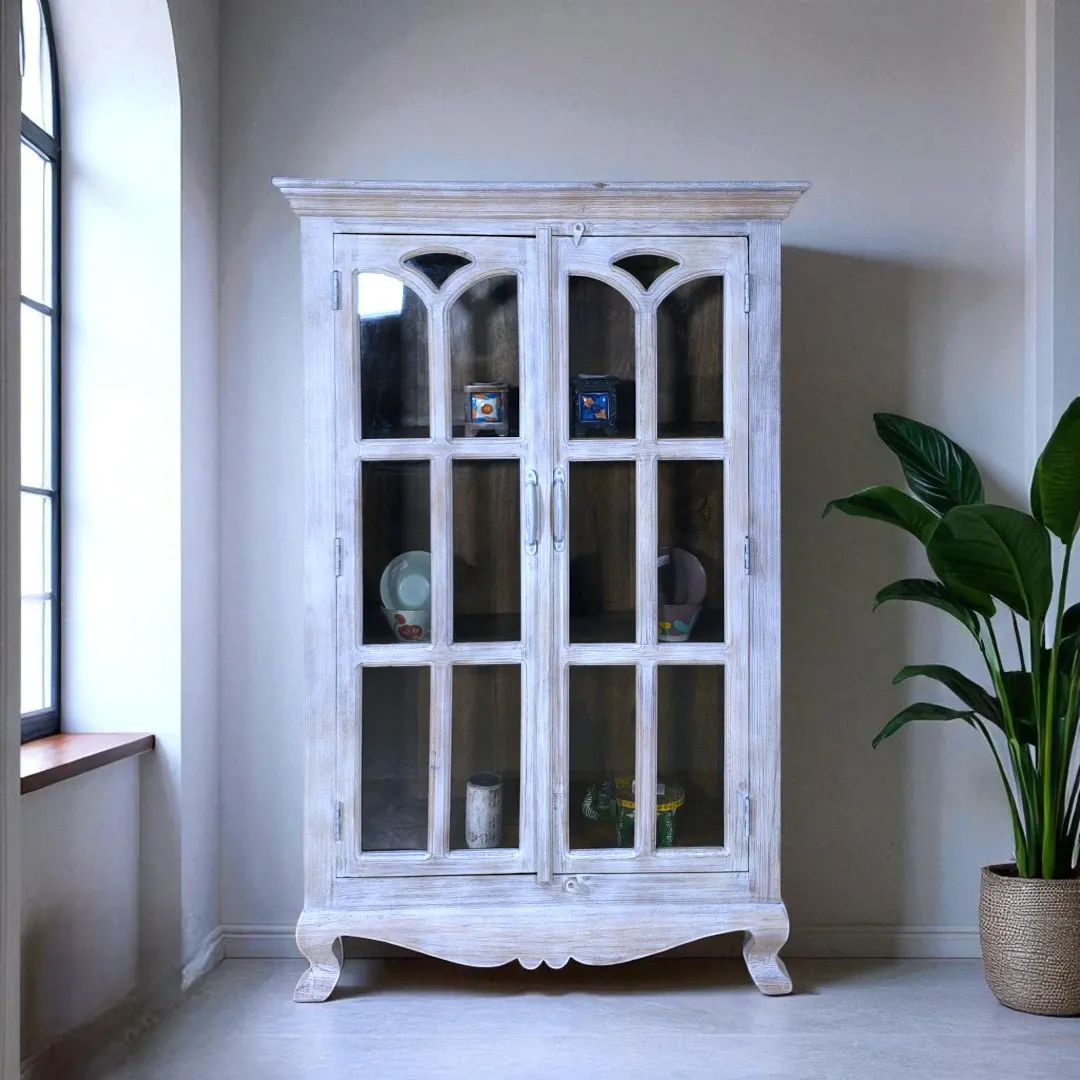
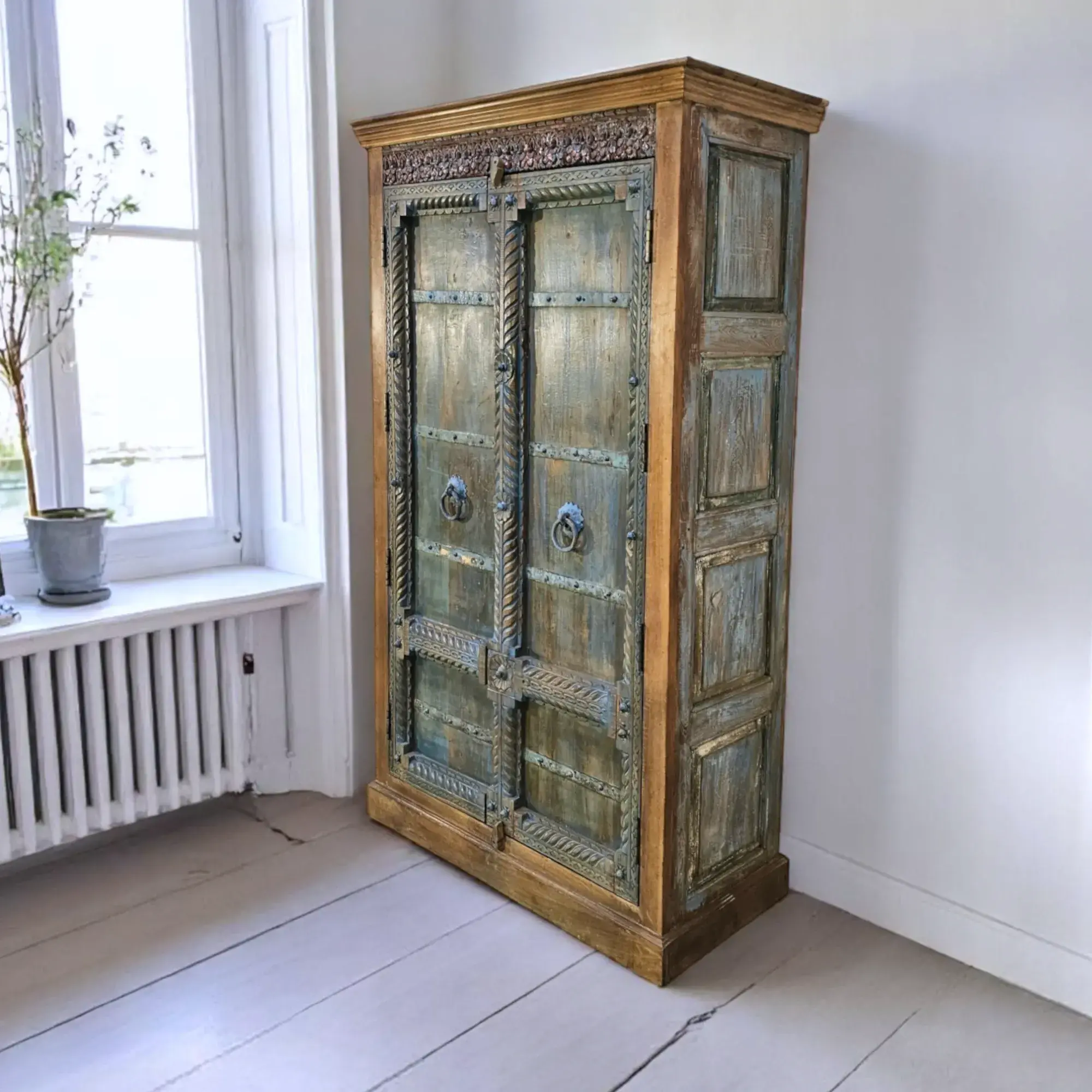
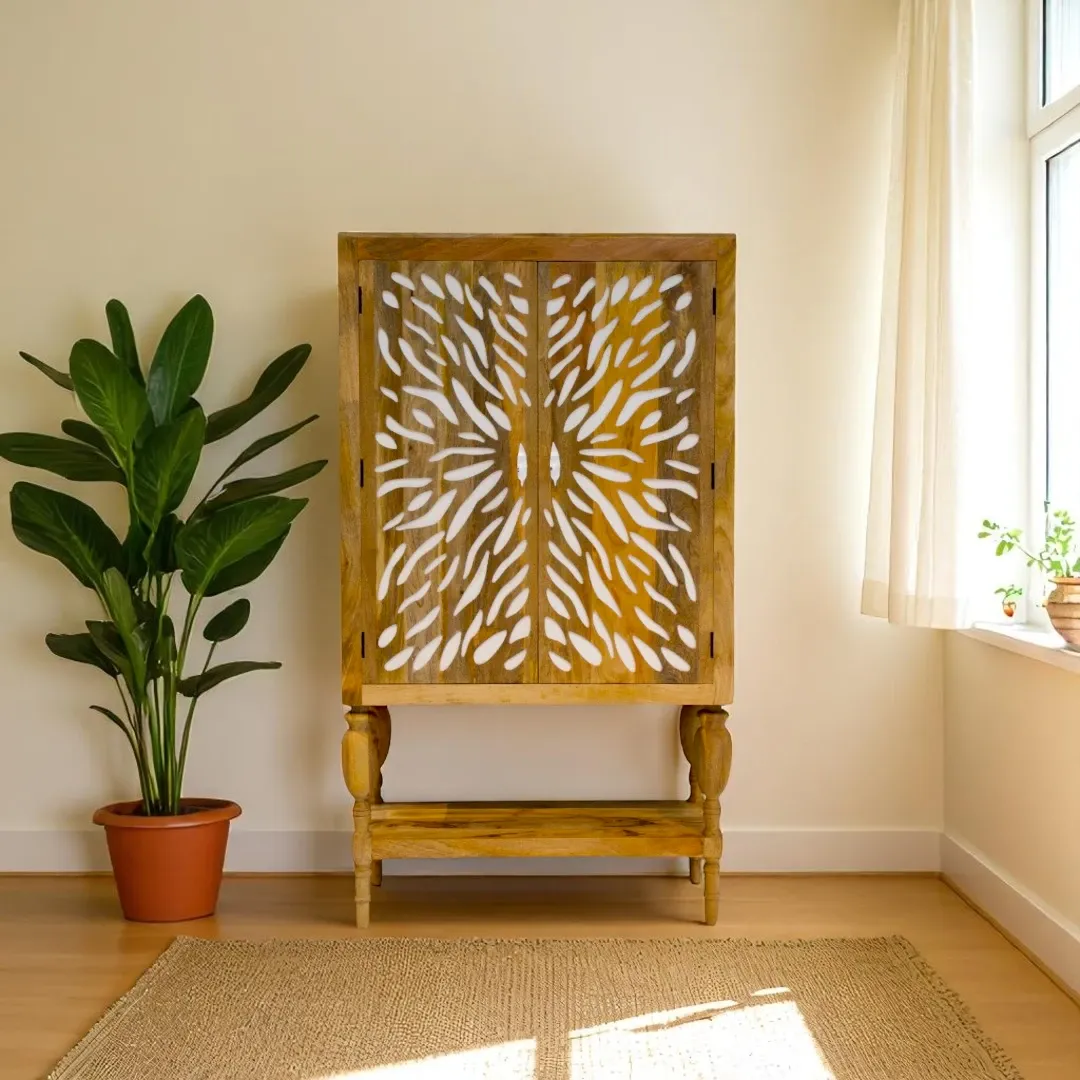
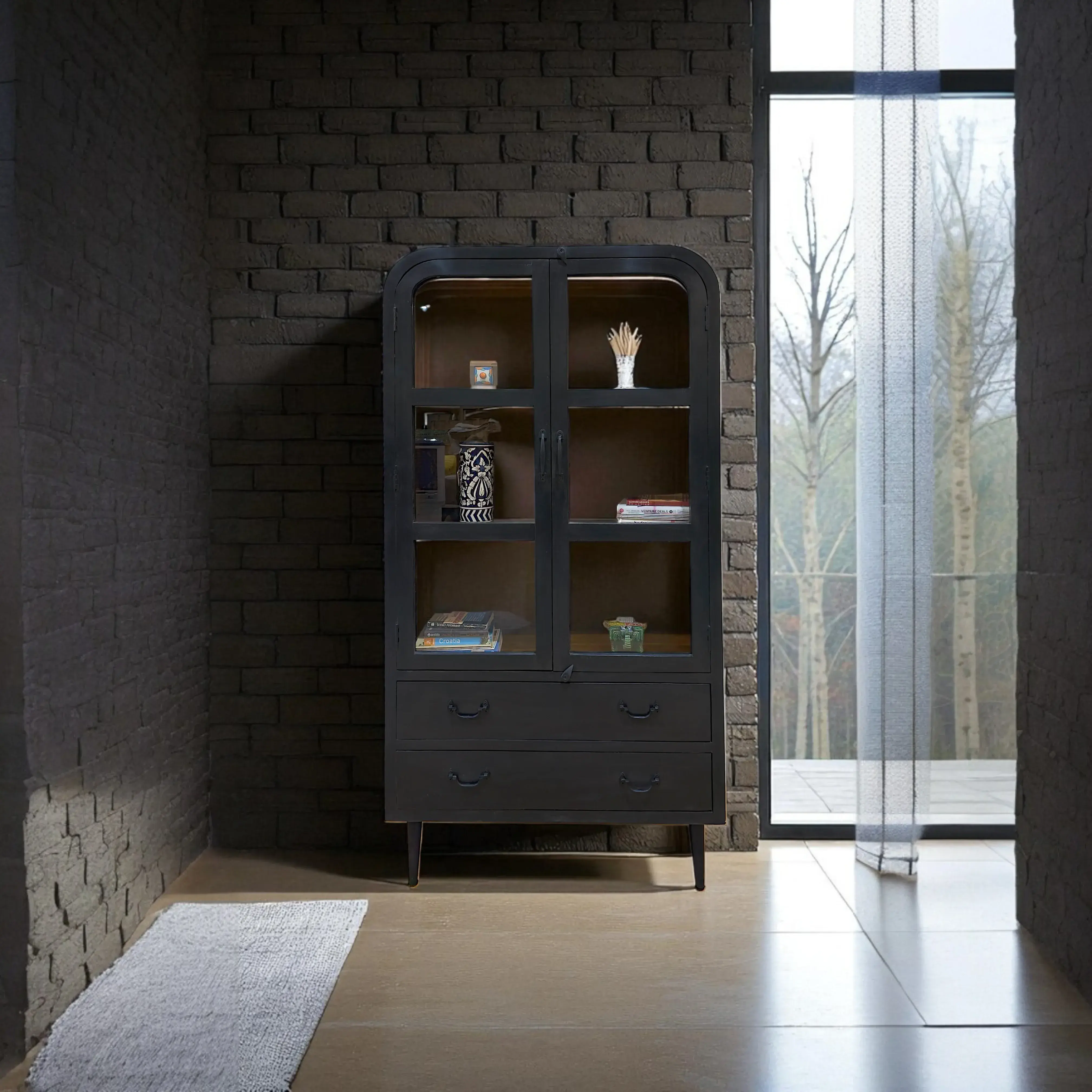
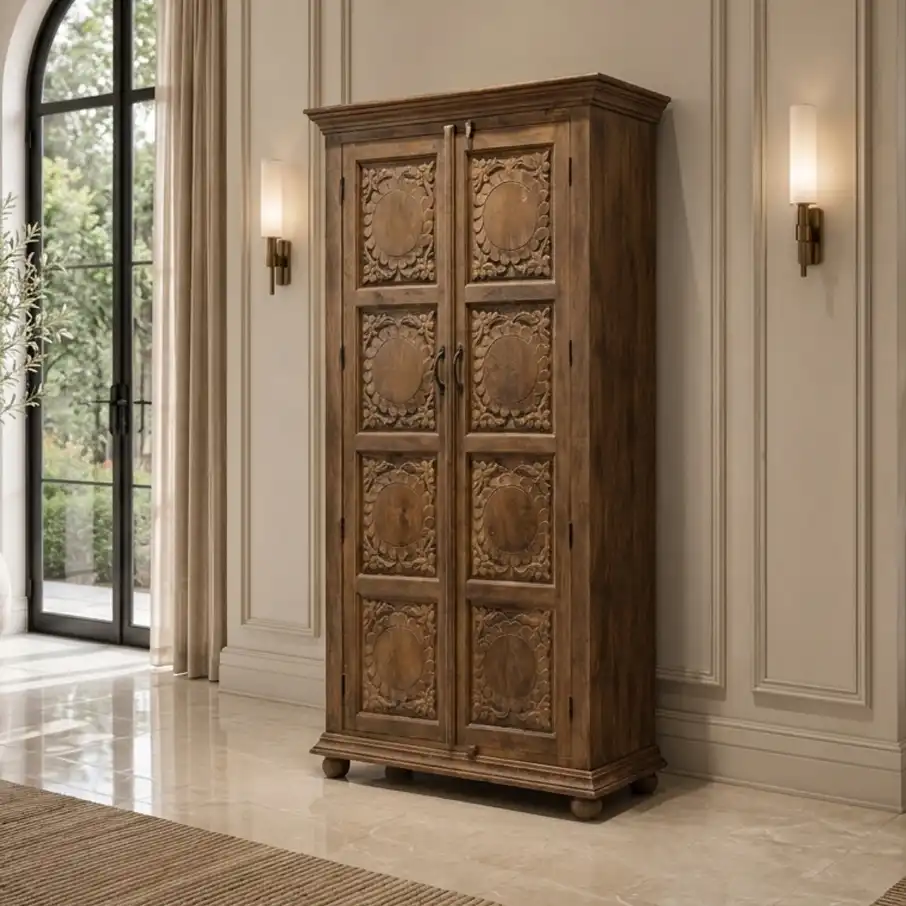
The Deccan Courtyard Armoire stands as a striking structural monument where functional permanence meets raw, organic expression. Drawing direct inspiration from the robust, unadorned solid timber architecture of the southern Indian plateaus, this piece commands attention through its monumental scale and geometric sobriety. The intricate, hand-chiseled openwork doors do not merely serve as storage closures; they act as a canvas of light and shadow, echoing the interiors of historic heritage homes where filtered sunlight was used to create shifting patterns across stone floors.
Each armoire is brought to life through the intensive ancestral technique of Pierced Fretwork (Jali Woodwork) and Chip Carving (Chhilai). Rather than relying on modern CNC laser machinery—which leaves artificial, perfectly scorched edge surfaces—master artisans patiently chip away at the solid timber planks using traditional hand-chisels, mallets, and fine-gauge gouges. An artisan uses a manual hand-drill to puncture foundational pilot holes into the negative spaces before navigating the dense mango wood fibers with hand-held saws to create the openwork screen. Every single notch, fret, and decorative groove carries the subtle, intentional variations of human touch, rendering the piece a living collectible rather than a mass-manufactured commodity.
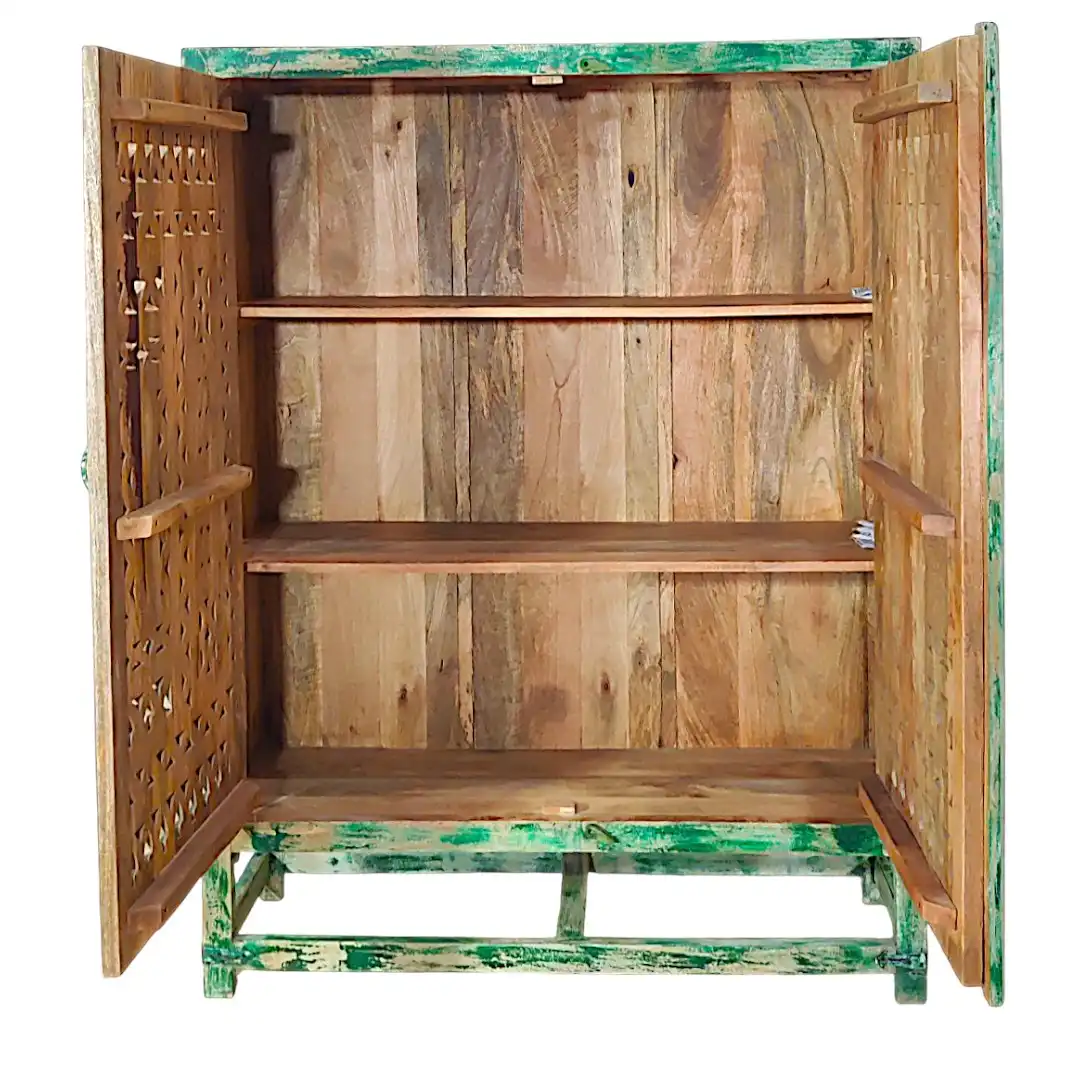
The choice of solid mango wood provides a dense, heavy foundation renowned for its structural resilience, structural strength, and highly workable grain topology. The wood is treated with a hand-applied sea-foam and emerald patina that is manually scrubbed back to reveal the natural grain and golden-brown undertones underneath. Over time, this natural surface will continue to mature, developing a rich, self-generated patina that tells the story of the home it inhabits. It bridges the gap between historical weight and contemporary curation, sitting effortlessly alongside modern minimalism or richly layered, eclectic environments.
Style Details
Architectural Influences: Southern Indian plateau vernacular and traditional Islamic geometric jali screenwork.
Pattern Style: Intricate repeating geometric lattices, linear border reliefs, and traditional stepped carvings.
Decorative Elements: Heavily distressed verdigris paint layers, exposed iron latching mechanisms, and an open structural under-frame.
Craftsmanship Details
Technique Used: Pierced hand-carving (Jali work), manual relief gouging (Chhilai), hand-scraping, and multi-stage hand-rubbed distressing.
Skill Level Required: Master woodcarvers with over a decade of ancestral training in geometric layout and deep structural carving.
Distinguishing Handcrafted Features: Minor asymmetry within the lattice cuts and highly variable paint-wear patterns along the side panels.
Finishing Process: Base sealing followed by layers of mineral-pigment teal and cream paint, which are meticulously scraped back by hand to mimic ancestral weathering.
Wood Quality & Finish Characteristics
Wood Type & Grain Richness: Grade-A solid Mango wood, showing organic fiber strength, exceptional density, and unique grain patterns underneath the distressed finish.
Depth & Texture of Finish: A dry, chalky, multi-toned tactile finish that boasts incredible physical texture and multi-layered depth.
Difference from Mass-Produced: Completely devoid of uniform synthetic laminates or printed wood-look decals, offering genuine historical character.
Longevity and Aging Beauty: Heavy, solid-core construction that is highly durable, designed to age gracefully while maintaining its structural rigidity.
Why You’ll Love It / Investment Value
This armoire is a striking statement of permanence in an era of transient design. Its immense visual weight and honest, unpretentious luxury offer an immediate grounding effect in any space. As an investment piece, its value lies in its uncompromising solid-wood construction and the scarcity of authentic hand-carving expertise, ensuring it remains an heirloom work of art for centuries to come.
Suggestions for Incorporation
Position this monumental piece against a gallery-white or deeply saturated accent wall in a grand foyer to instantly establish an aura of collected history. Alternatively, utilize it within a principal bedroom suite as a linen or wardrobe sanctuary. Accentuate its organic warmth by placing an architectural matte-black floor lamp nearby, allowing the light to catch the multi-toned wood grain.
Detailed Specifications
Color: Weathered verdigris green, sea-foam teal, distressed cream, and natural wood undertones.
Finish: Distressed matte mineral patina.
Origin: Southern Plateau tradition, India.
Age/Period Influence: 19th-Century Anglo-Indian / Southern Indian Vernacular.
Perfect For
Room Placements: Grand Entryways, Formal Dining Rooms, Living Room Focal Points, Master Bedrooms.
Functional Uses: Wardrobe expansion, luxury linen storage, media components concealment, private library casing.
Interior Types
Modern Luxury, Rustic Minimalist, Transitional, Anglo-Colonial, Bohemian Chic, Wabi-Sabi.