Dust with a soft, dry brush to reach into carvings. Avoid moisture.
Furniture >> Storage >> Sideboard >> Storage Furniture >> Reclaimed Wood
Product code: 16137
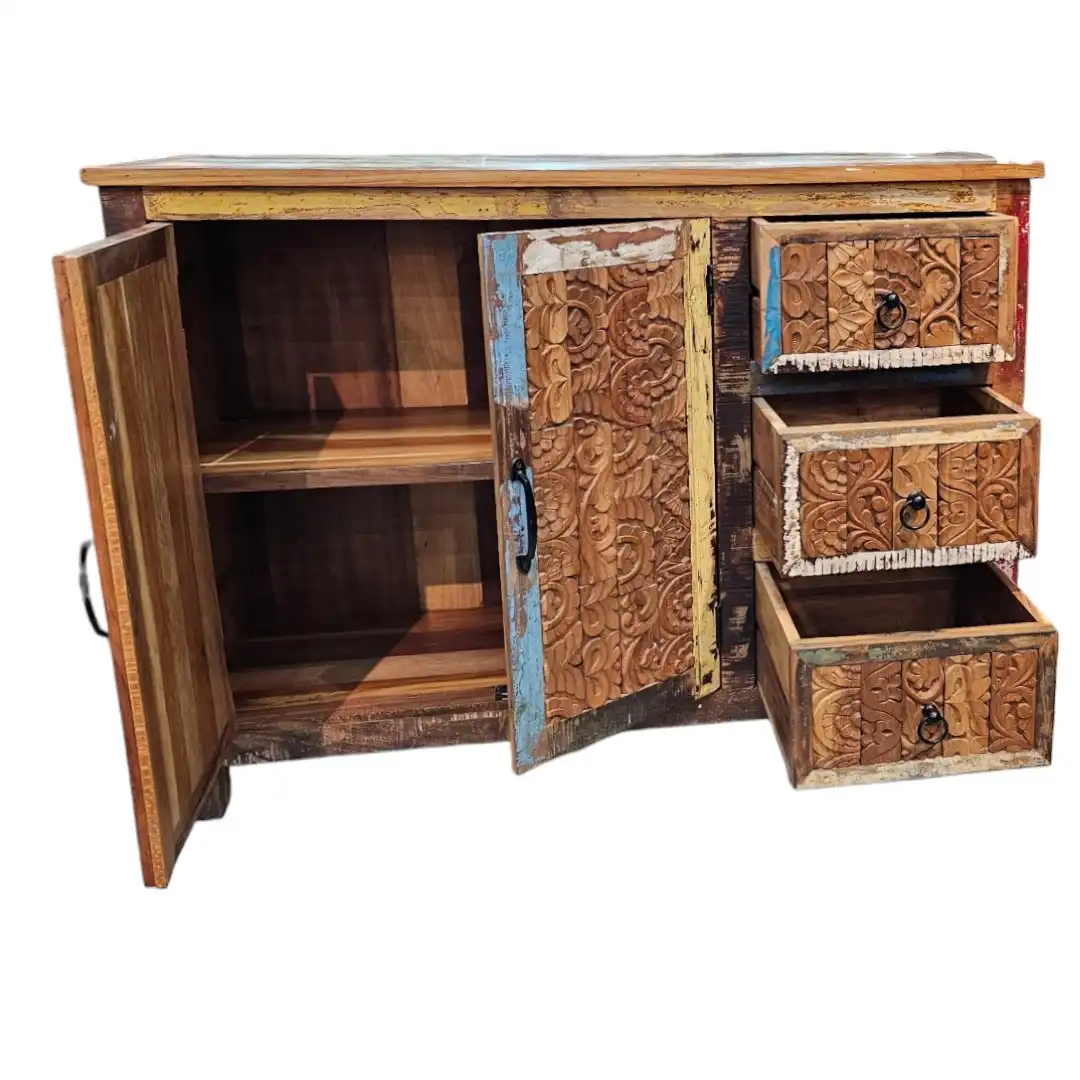
Dimensions: 125 (Length) x 42 (Width) x 89 (Height) cm
Material: Solid Reclaimed Teak and Mango Wood, Wrought Iron hardware.
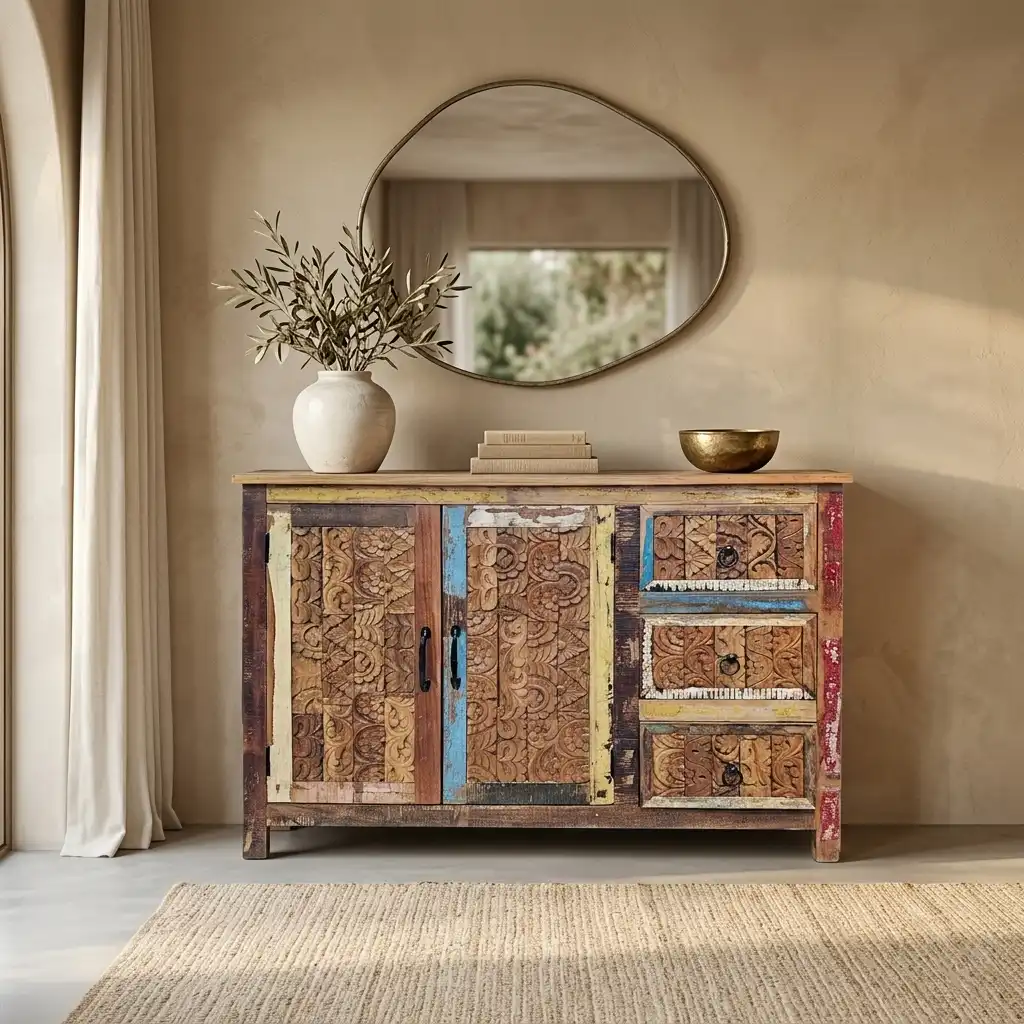
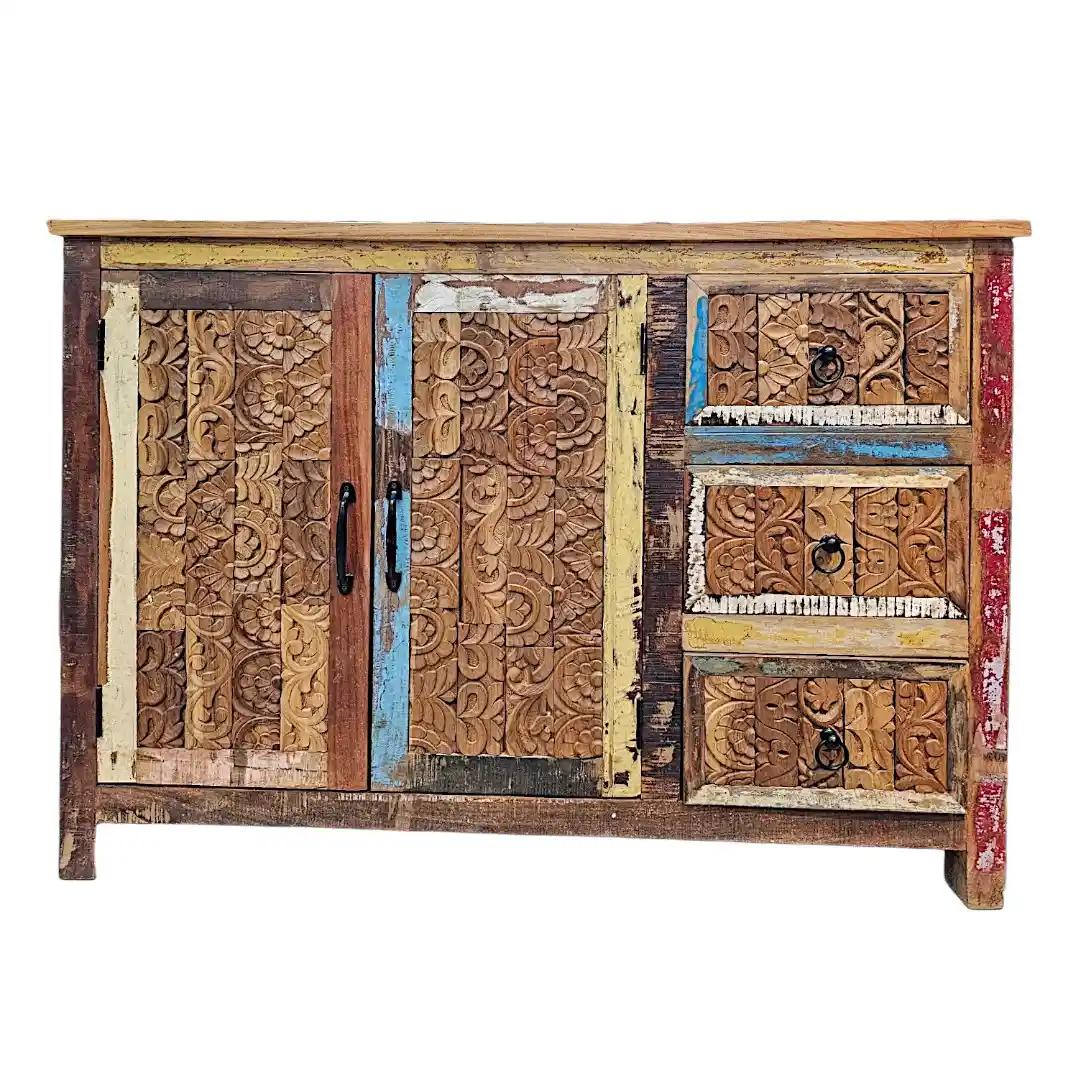
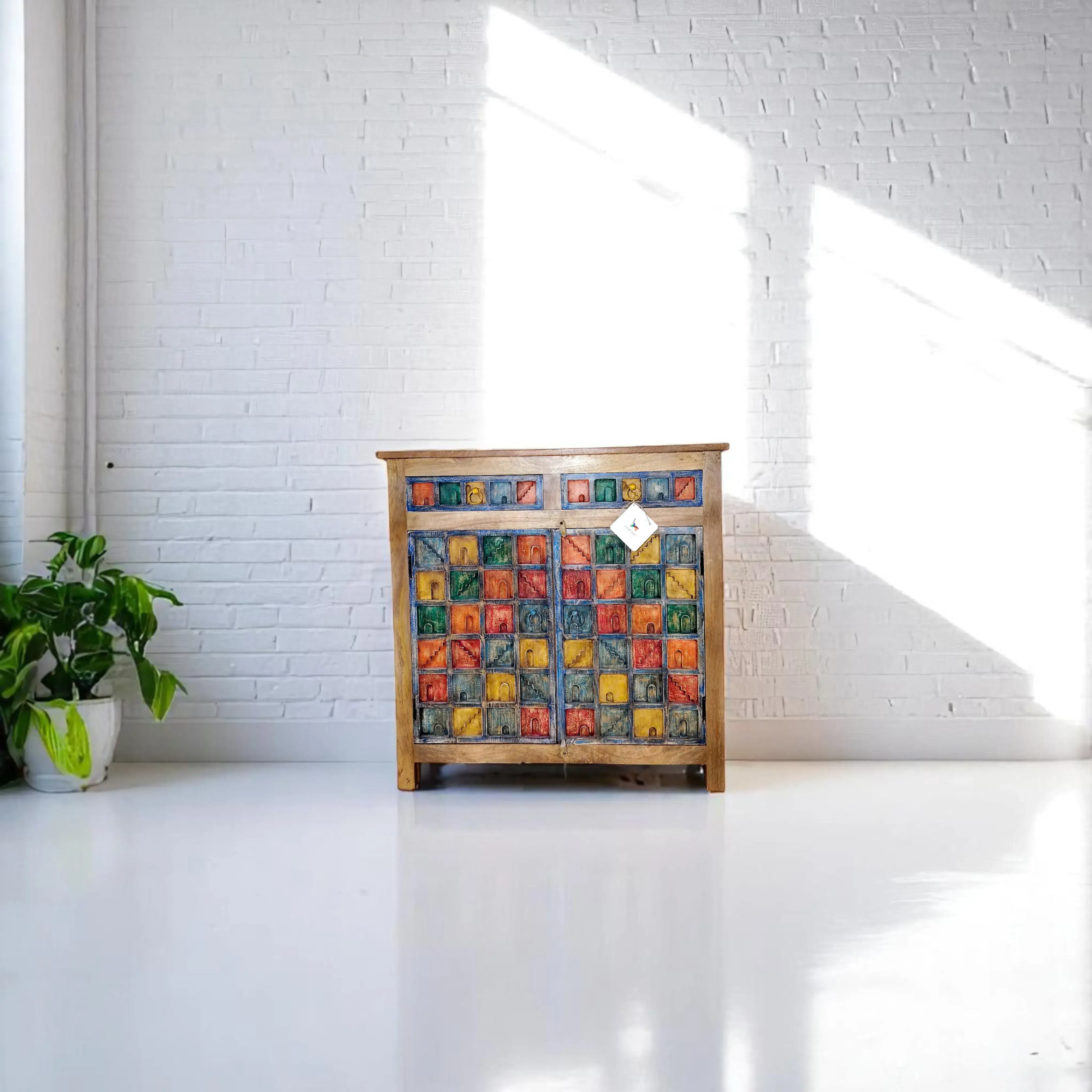
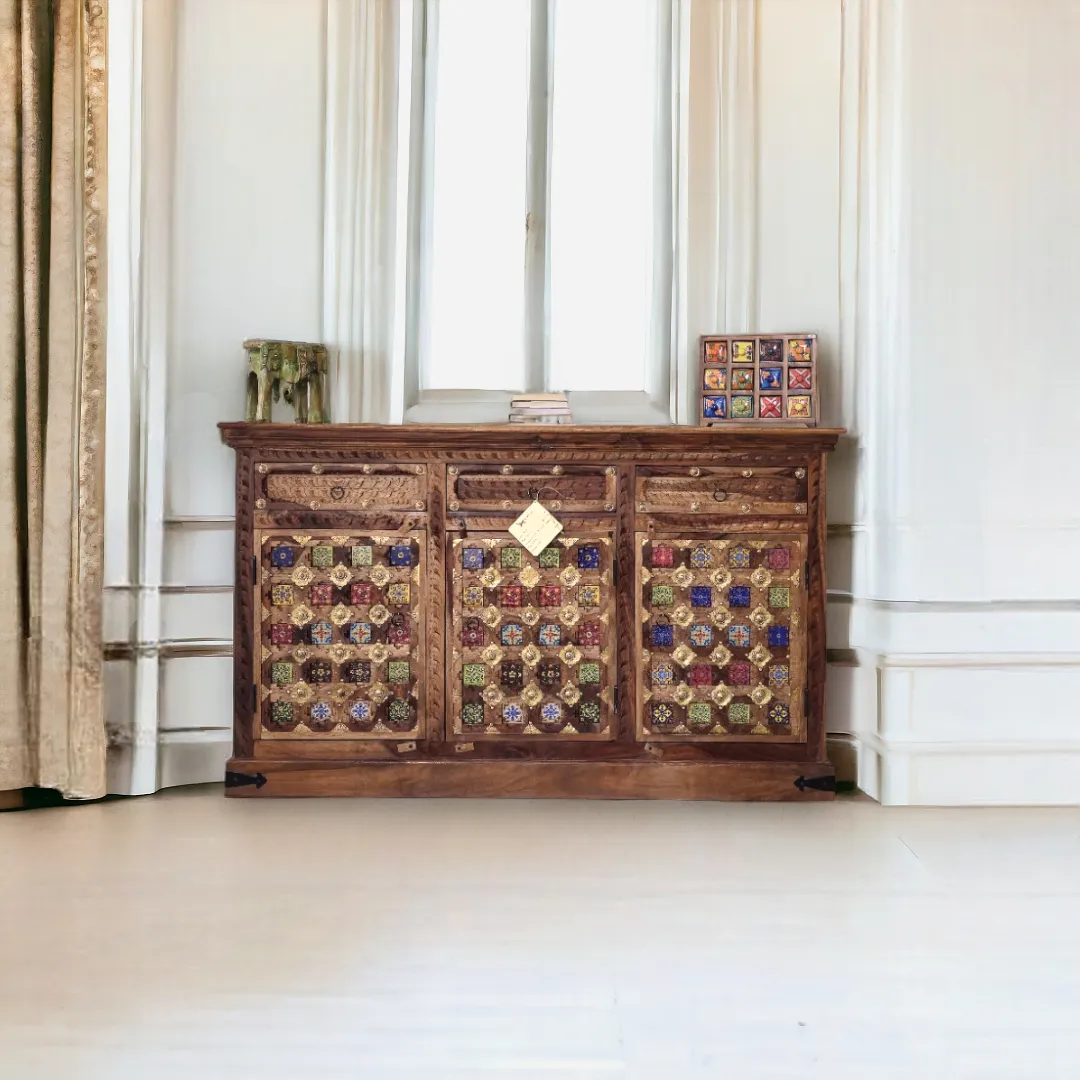
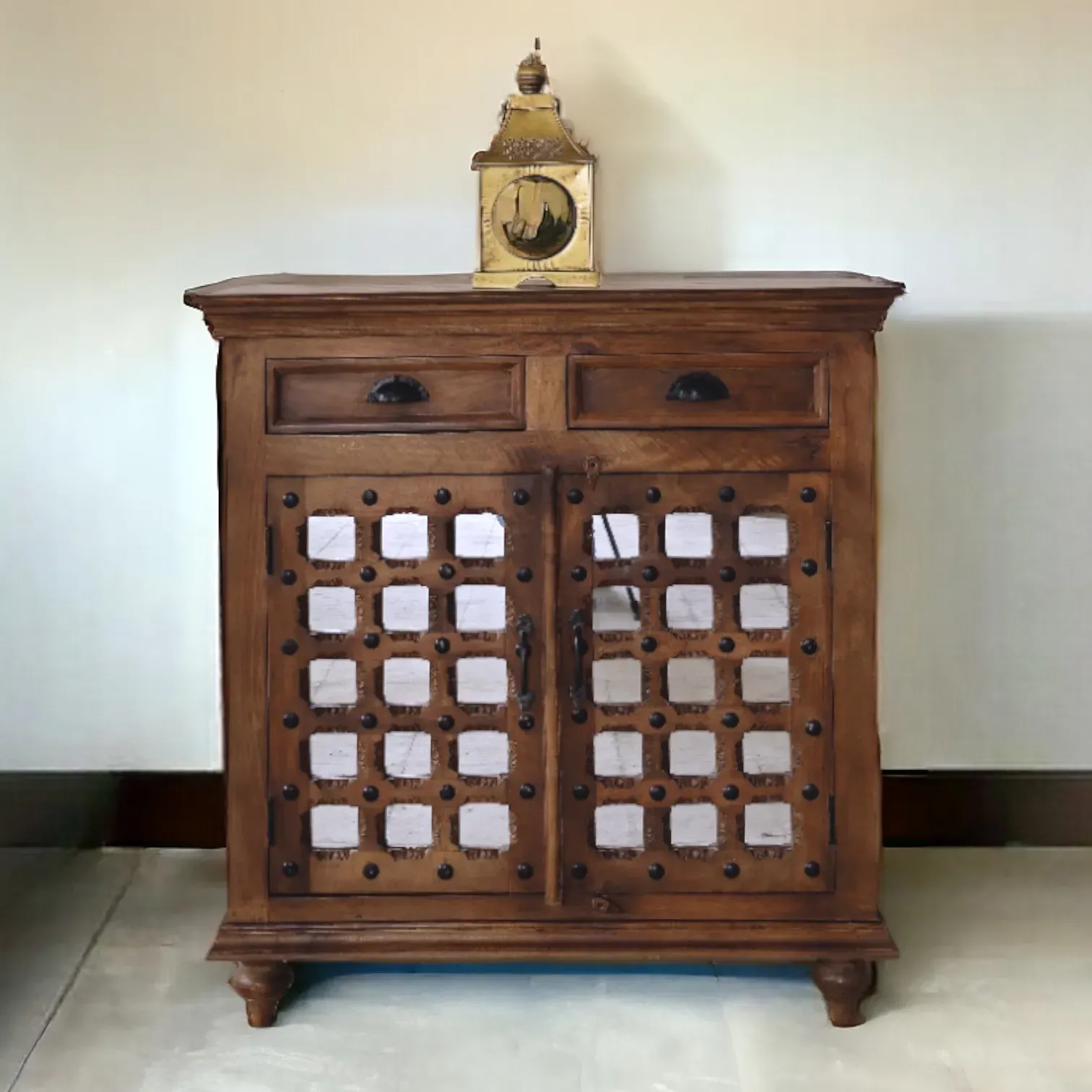
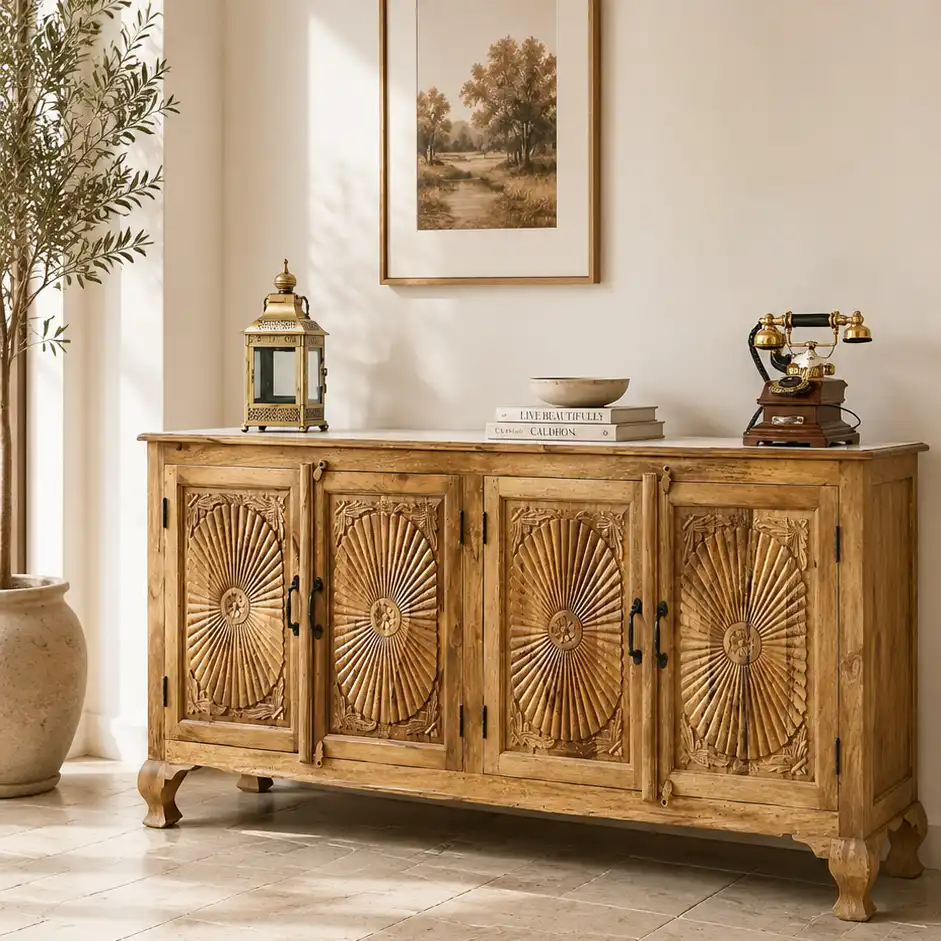
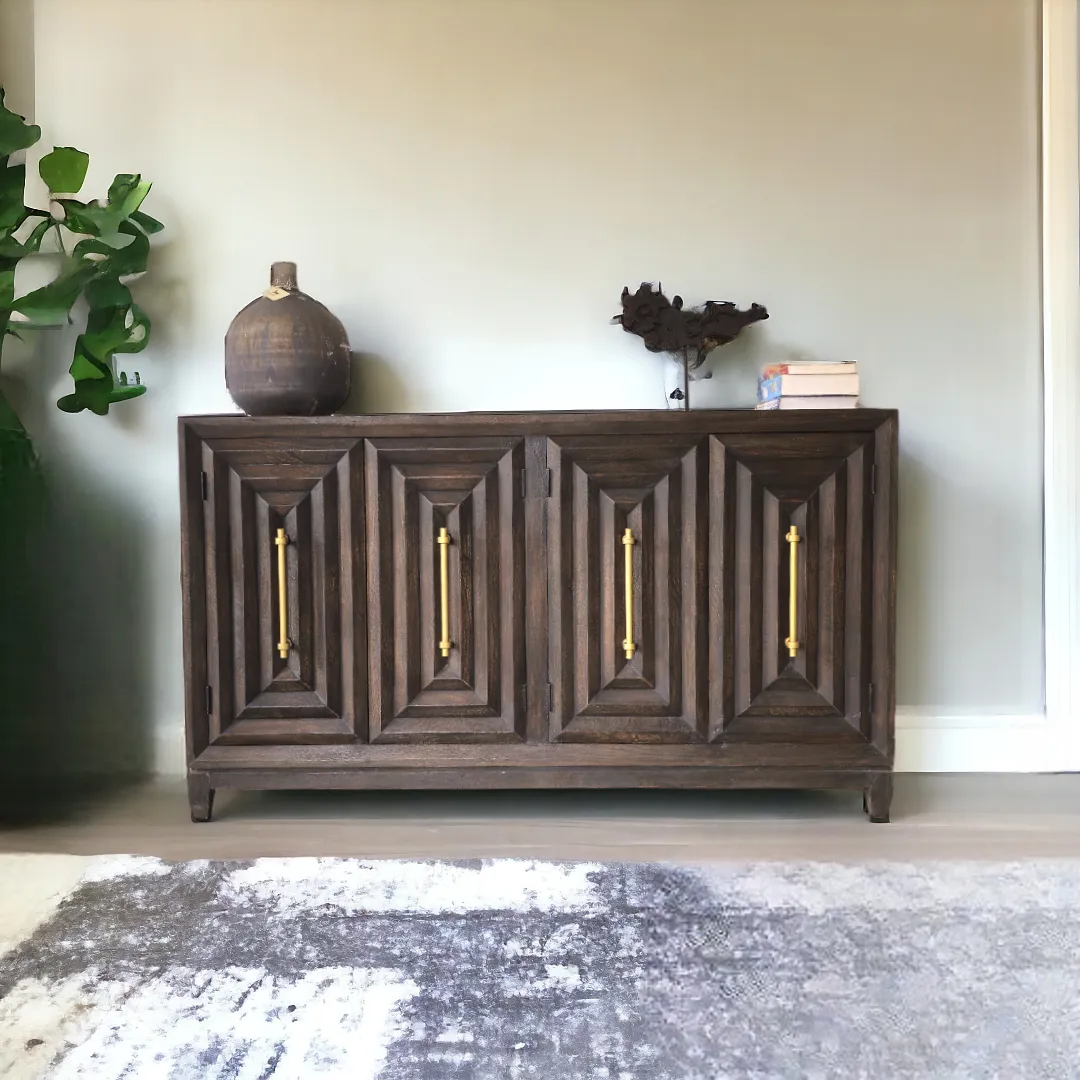
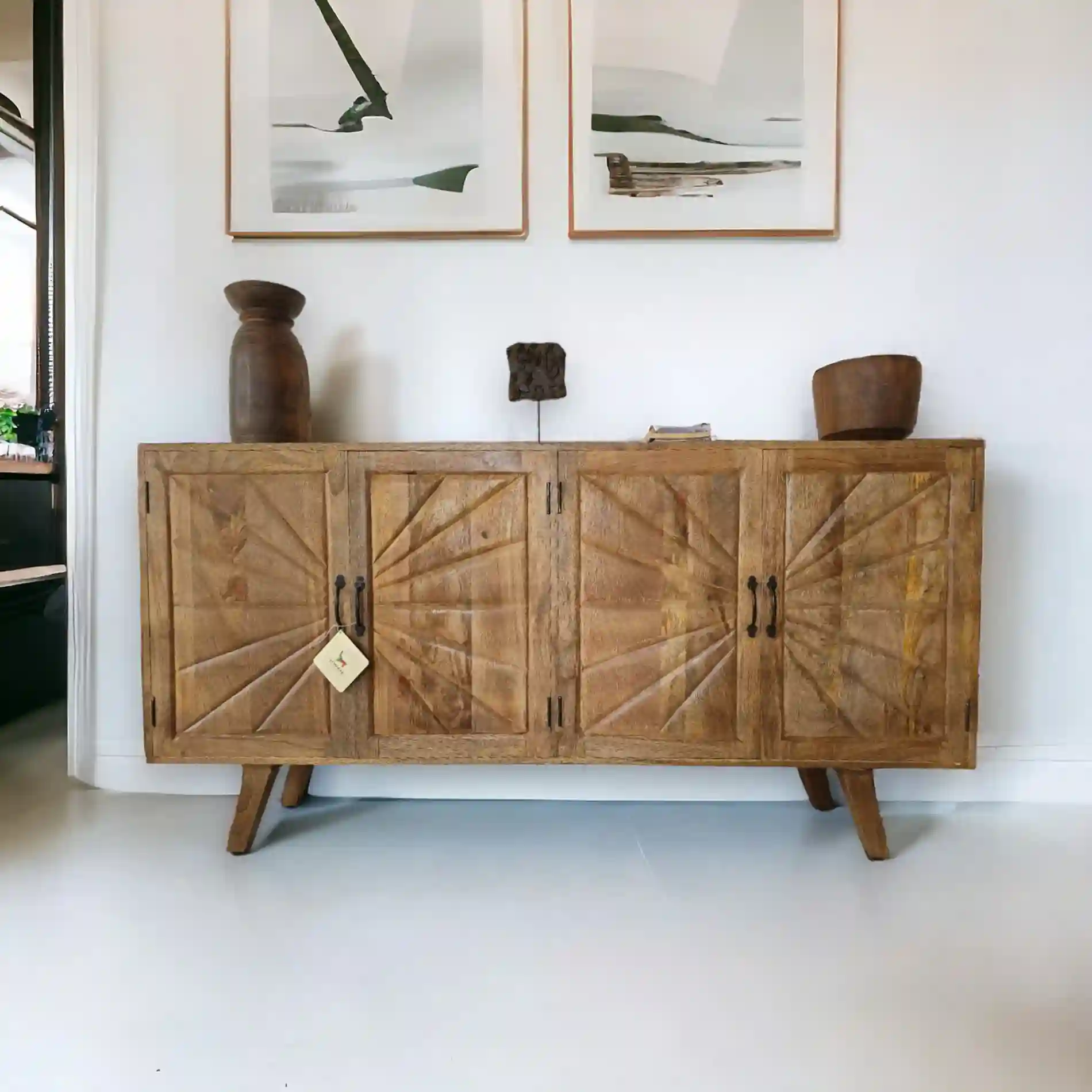
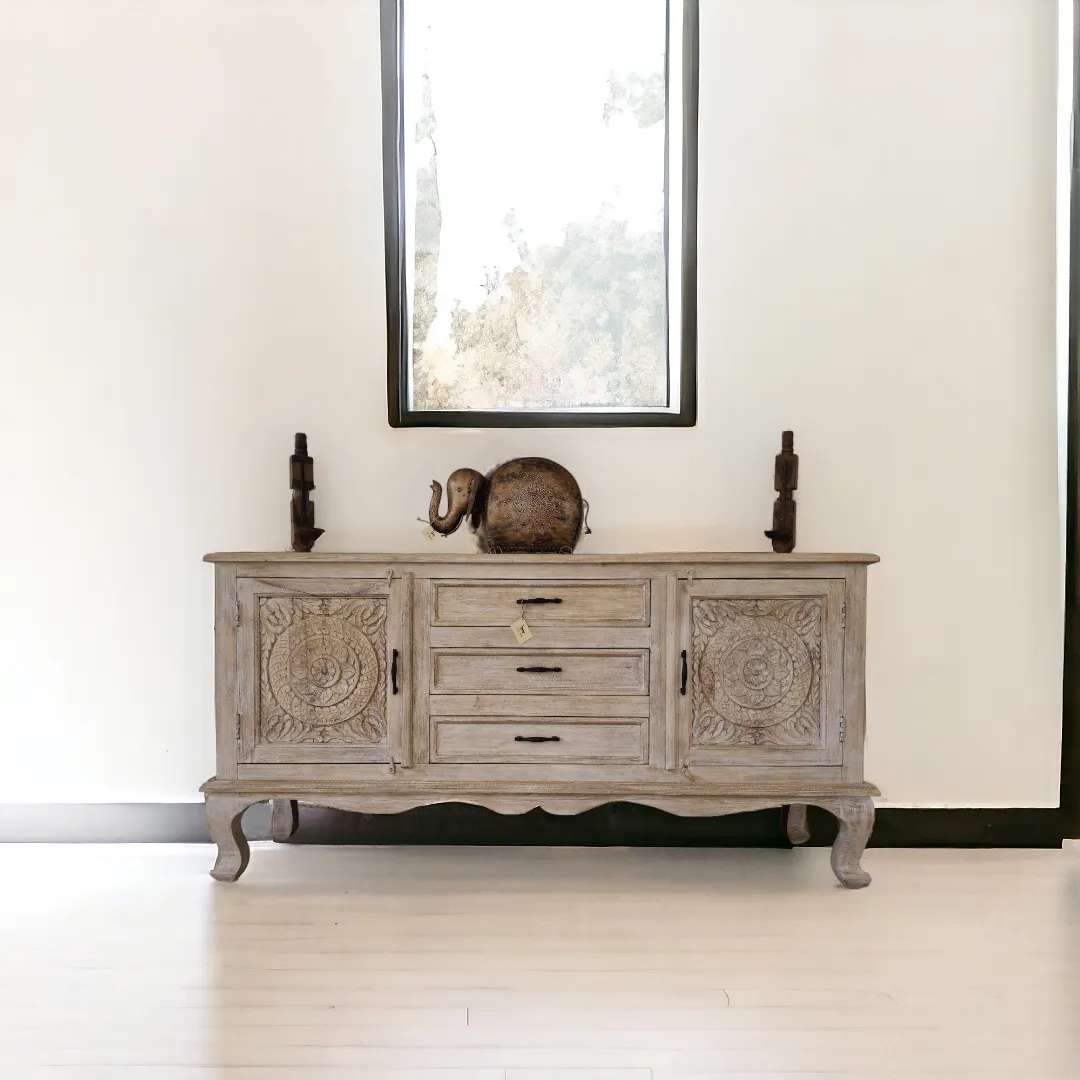
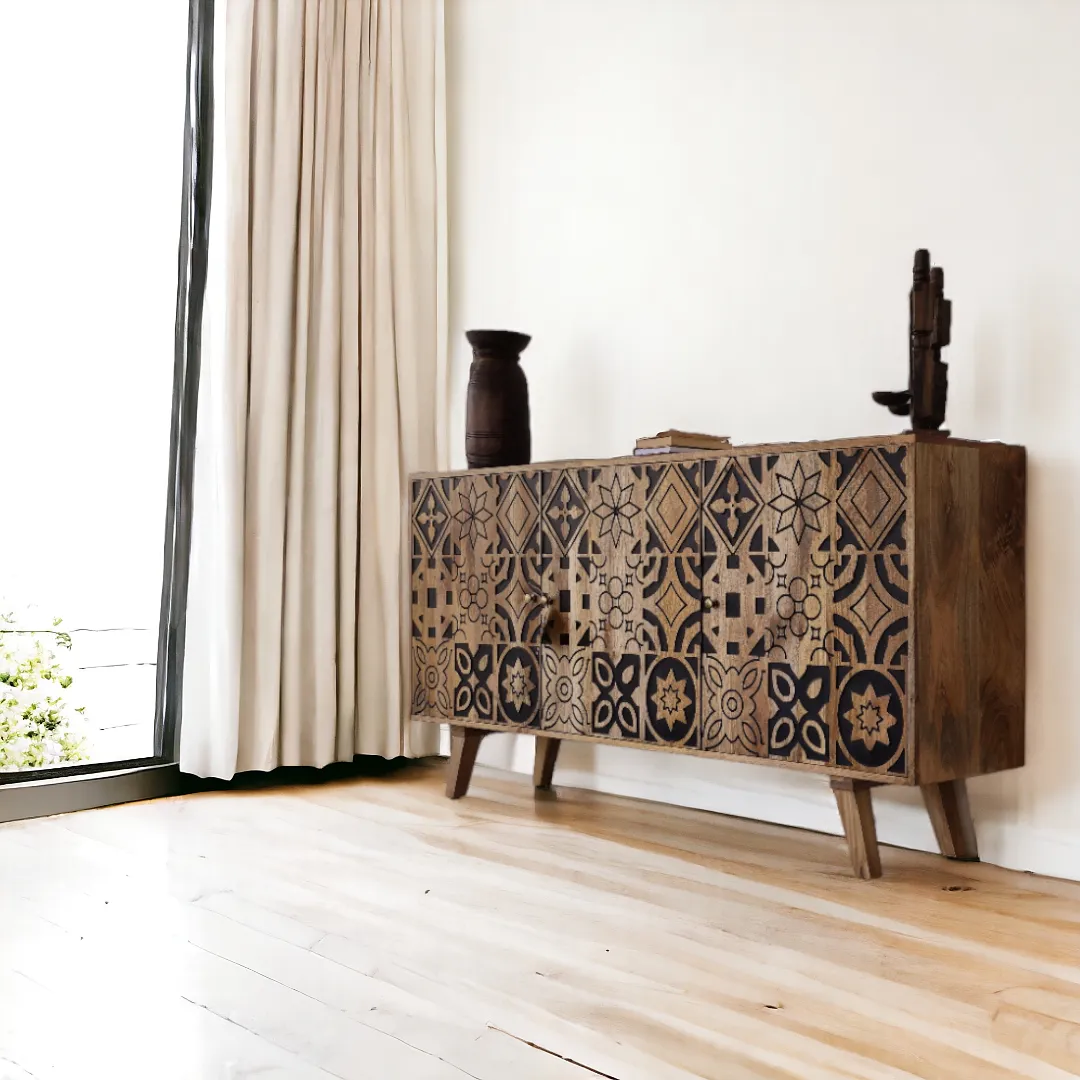
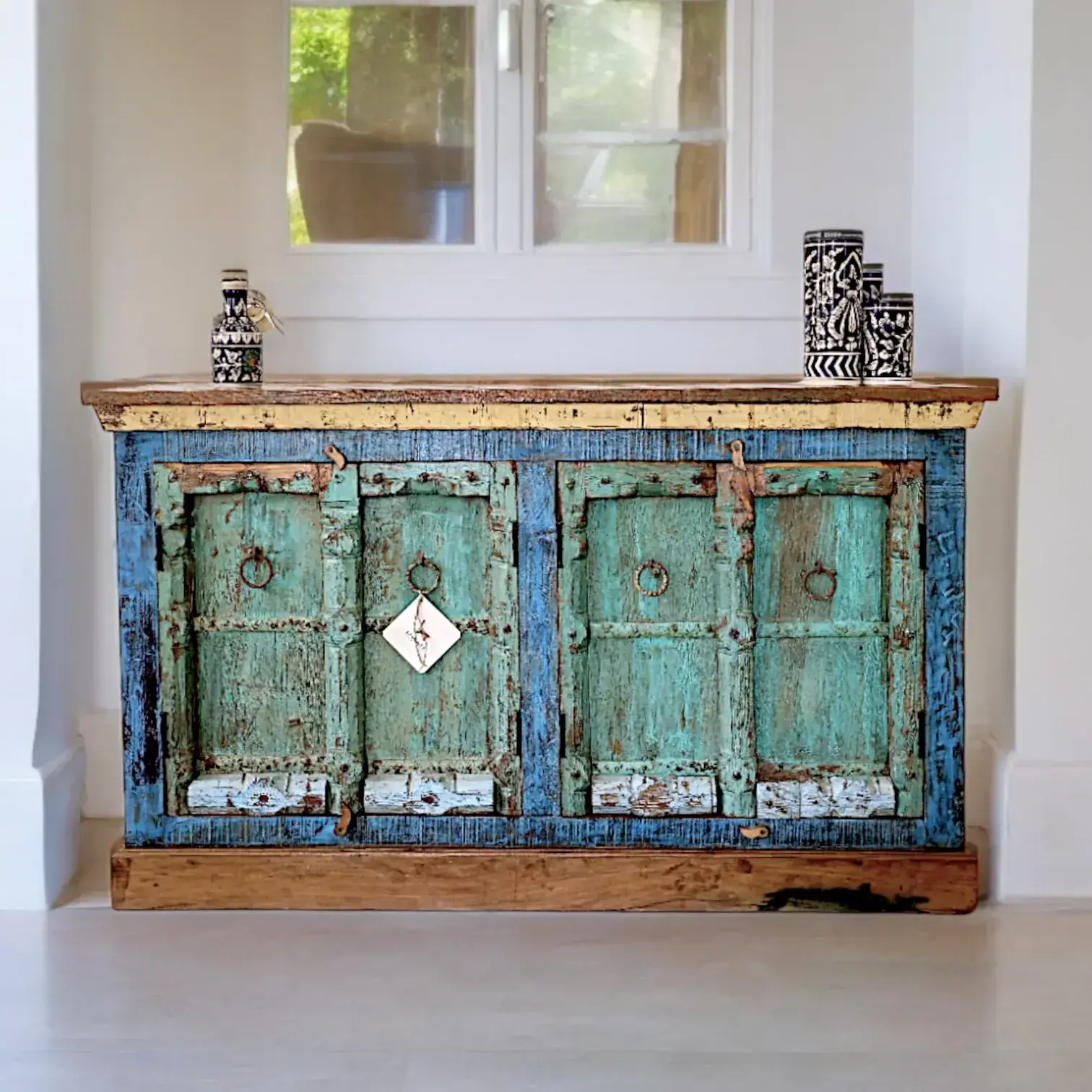
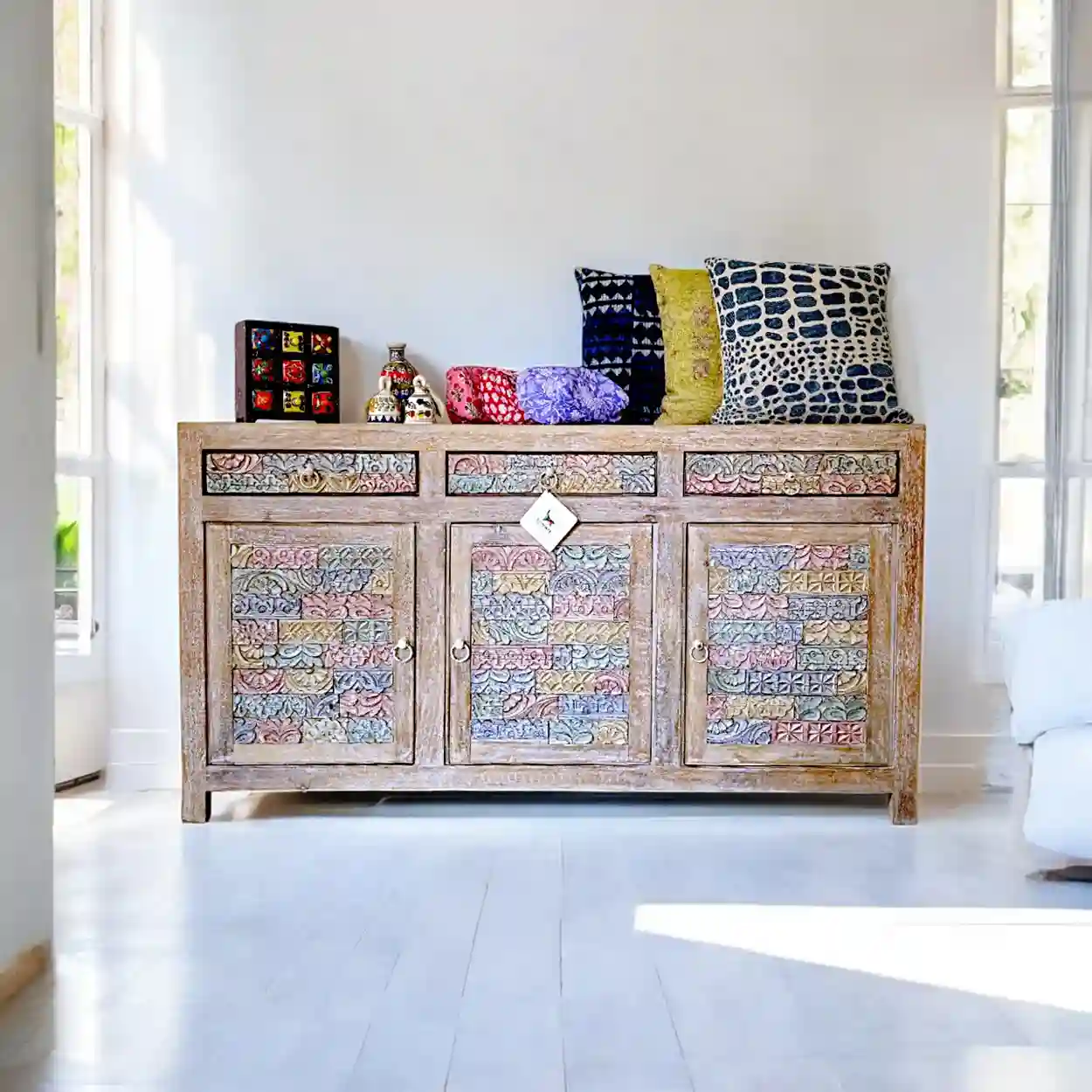
A soulful celebration of architectural rebirth, the Firdaus Reclaimed Sideboard is a tactile masterpiece of salvaged timber. Featuring a rhythmic "patchwork" of hand-carved floral panels, it showcases the rugged beauty of reclaimed wood enriched by original, sun-faded pigments of turquoise, saffron, and cream. This sideboard is a testament to the "imperfectly beautiful," offering a storied presence that transforms any space into a gallery of global heritage and sustainable luxury.
Features
The Firdaus Reclaimed Sideboard utilizes a technique distinct from contemporary carving—it is a study in Architectural Salvage and Marquetry-Style Relief. Rather than carving a single slab of wood, master artisans curate various hand-carved blocks, often recovered from vintage door frames and lintels across Northern India. These fragments are carefully cleaned, seasoned, and hand-fitted into a cohesive frame, creating a "tapestry" effect where no two floral patterns are exactly alike.
The technique of Relief Carving (Chiseling) seen on these panels is deeply rooted in 19th-century Mughal design. Because the wood is reclaimed, the carving possesses a softened, weathered edge that machine-cut furniture can never emulate. The process is one of Rebirth and Preservation: artisans must work around the wood’s existing history—knots, mineral streaks, and nail holes—integrating these "scars" into the final design. This labor-intensive selection process ensures that every sideboard is a singular artifact, a one-of-a-kind collectible that preserves a fragment of history.
The finishing process is equally rigorous. Instead of a uniform stain, the piece is treated with a Hand-Rubbed Wax Sealer that protects the wood while highlighting the original polychrome pigments. Traces of teal, yellow, and white appear as luminous "ghosts" of the wood's past life, creating a rich, multi-dimensional patina. This sideboard does not just occupy a room; it anchors it with a sense of gravity and heritage, offering a bridge between the raw, rustic past and the curated, modern lifestyle.
Style & Craftsmanship Details
Architectural Influences: Indian Haveli, Colonial Salvage, and Persian Botanical motifs.
Pattern Style: Asymmetrical "Patchwork" of varied floral and geometric reliefs.
Technique Significance: Architectural salvage requires the skill to balance disparate historical pieces into a structurally sound, aesthetic whole.
Finishing Process: Natural aging, hand-sanding, and a matte wax-seal to preserve original pigments.
Wood Quality & Finish Characteristics
The use of reclaimed timber ensures a density and stability that younger wood lacks. The finish is characterized by its high-contrast "distressed" look—rough-hewn in some areas, silky-smooth in others—celebrating the tactile variations that define high-end, artisan-made furniture.
Why You’ll Love It / Investment Value
As architectural salvage becomes increasingly rare, pieces like the Firdaus Sideboard become valuable collectibles. Its investment value lies in its authenticity and sustainability. It is a statement-making piece that appeals to the emotions, offering a connection to human history that mass-produced items lack.
Detailed Specifications
Color: Multi-tonal Natural Wood with Distressed Teal, Saffron, and White accents.
Origin: India.
Age/Period Influence: 19th-Century Architectural Salvage.
Interior Types
Eclectic Luxury, Modern Rustic, Global Chic, Bohemian Noir, Industrial Heritage.
No reviews for this product variant yet. Shop the product to add reviews